

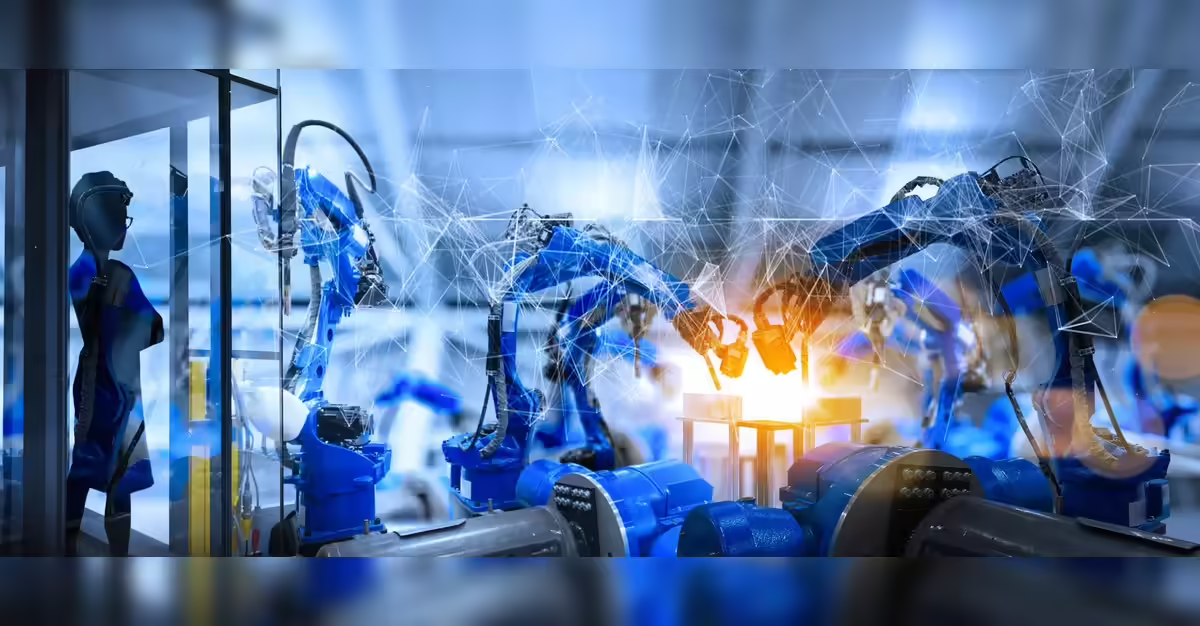
Tier 2 manufacturing revival is accelerating as state governments establish innovation centres designed to build local business clusters, upgrade supply chains and attract mid sized enterprises. These centres are reshaping how smaller cities participate in India’s industrial growth.
This topic is evergreen with current relevance, so the tone is detail oriented with factual reporting.
How innovation centres are reshaping Tier 2 manufacturing
The push for Tier 2 manufacturing revival is rooted in a clear trend. States are investing in innovation centres to accelerate technology adoption, skill development and cluster formation outside major metros. These facilities act as structured environments where manufacturers can access prototyping tools, process optimisation support and technology mentorship.
By locating them in cities like Indore, Coimbatore, Aurangabad, Bhubaneswar and Surat, states are intentionally redistributing industrial capacity. Smaller cities already have strong industrial bases but lacked the innovation infrastructure needed to compete with established ecosystems. Innovation centres fill this gap by giving local firms access to design labs, testing equipment and advisory support that would otherwise require travel or outsourcing to larger cities.
Why state governments are prioritising regional industrial clusters
A key driver behind state funded innovation centres is the need to build competitive local business clusters. Clusters help manufacturers share supply chains, talent pools and specialised services, reducing costs and speeding up production cycles.
States are also leveraging this approach to attract anchor companies. When a cluster gains traction, ancillary units, logistics providers and technology firms follow. This creates a multiplier effect that benefits local economies. For instance, industrial belts around cities such as Hosur and Rajkot have seen faster adoption of automation and lean manufacturing because of targeted state backed innovation programs.
The political and economic incentive is clear. A growing local manufacturing base increases employment, raises tax revenues and reduces dependence on a few major metro industries.
Innovation driven benefits for mid sized and traditional manufacturers
Innovation centres introduce tools that were once limited to large corporations. These facilities often include rapid prototyping labs, small batch manufacturing setups, automation test beds and digital training suites.
For mid sized manufacturers, access to advanced machinery helps them modernise product design, reduce defect rates and experiment with new product lines without incurring heavy capital costs. Traditional industries such as textiles, machine tools, agro processing and automotive components are using these centres to adopt digital quality checks, robotics assisted material handling and IoT driven monitoring.
The centres also help bridge the talent gap. Many host training programs where engineers and technicians learn practical applications of automation, 3D design, CAD CAM tools and process engineering. This supports a long term shift toward skill rich manufacturing workforces in smaller cities.
How clusters help local businesses integrate with national supply chains
As manufacturing clusters mature, local businesses gain wider access to national supply chains. Large OEMs, logistics networks and procurement teams increasingly look for decentralised production units that can deliver faster and distribute risk.
States promoting innovation led clusters become attractive destinations for companies looking for cost effective alternatives to metros. Tier 2 cities with strong clusters often offer faster turnaround times, easier land availability and lower workforce costs.
In industries like electronics assembly, textiles, pharma and industrial equipment, smaller city clusters are already supplementing metro capacity. Innovation centres help local firms meet quality and compliance standards required by national and international buyers.
Challenges to sustaining a Tier 2 manufacturing revival
While the progress is significant, challenges remain. Cluster success depends on consistent investment, skilled talent and strong industry partnerships. Some innovation centres struggle with utilisation if local businesses are not aware of the services or lack trained personnel to use advanced equipment.
Infrastructure gaps in logistics, power stability and export processing also slow adoption in certain regions. To sustain the revival, states need coordinated policies linking innovation centres, industrial parks, financing schemes and academic institutions.
If executed well, these centres can evolve from support hubs into full scale regional innovation ecosystems capable of producing globally competitive manufacturing units.
Takeaways
• State led innovation centres are helping smaller cities modernise manufacturing and build competitive industrial clusters.
• Mid sized and traditional firms gain access to infrastructure and skills that reduce production costs and improve product quality.
• Strong clusters integrate Tier 2 manufacturers into national supply chains and attract anchor investments.
• Long term success depends on infrastructure consistency, industry participation and skilled workforce development.
FAQ
Q: Why are states focusing on innovation centres instead of only building industrial parks?
A: Industrial parks provide land and utilities while innovation centres provide technology support, skills and process development. Both are required for modern manufacturing competitiveness.
Q: Which types of manufacturers benefit the most from these centres?
A: Mid sized and traditional sectors such as textiles, machine tools, automotive components, agro processing and electronics assembly benefit because they gain access to advanced tools without high capital costs.
Q: Do innovation centres create direct jobs?
A: They create limited direct jobs but enable wider employment growth by upgrading local industries, strengthening clusters and encouraging new units to set up operations.
Q: Can Tier 2 cities compete with established metro manufacturing hubs?
A: Yes, when supported by innovation infrastructure, skilled talent and reliable logistics, smaller cities can match or exceed metro efficiency in several sectors.












Leave a comment