

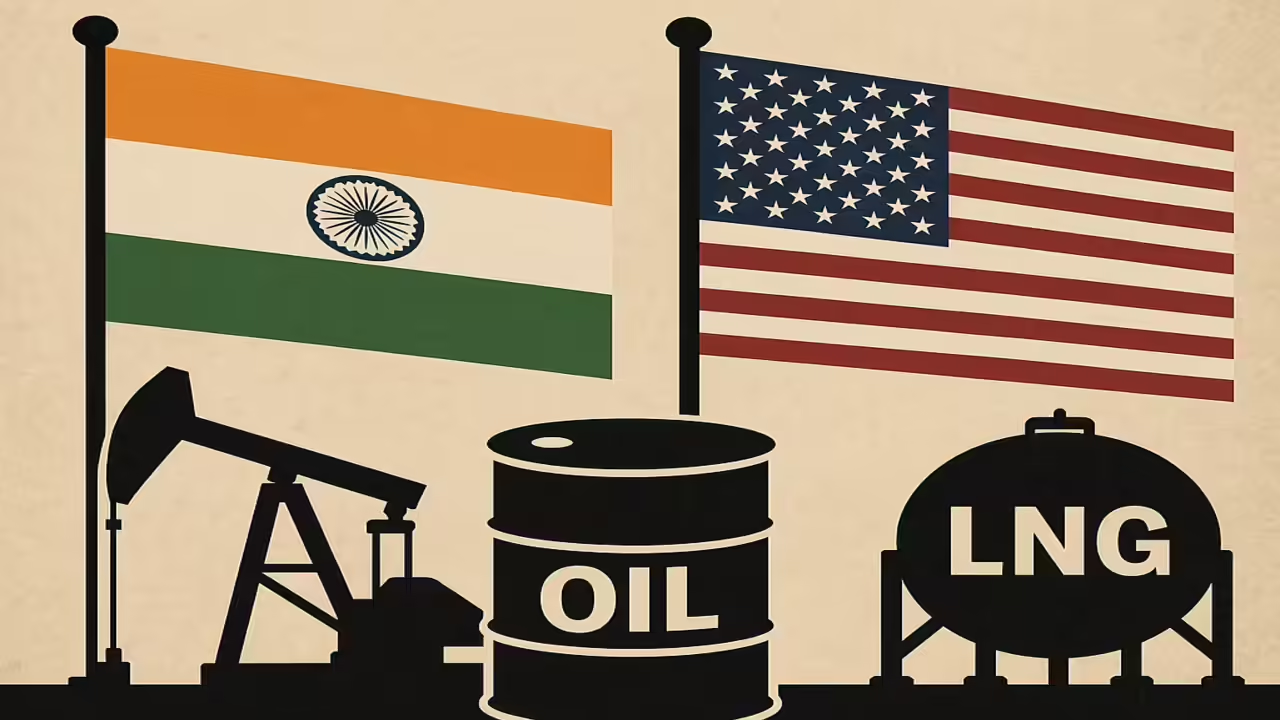
India US energy cooperation is quietly expanding even as the wider trade deal between the two countries remains stalled. The main keyword here is India US energy trade, and the story is time sensitive, so the tone is concise and news driven.
India and the United States have not moved closer to a comprehensive trade agreement in recent years, but energy flows between the two economies continue to deepen. This divergence has created a scenario where economic diplomacy looks slow, but commercial energy engagement keeps accelerating due to practical demand, pricing advantages and strategic alignment.
Energy imports grow despite limited movement on trade negotiations
A key trend is India’s steady purchase of crude oil and liquefied natural gas from American suppliers. This has grown over the past several years, driven by competitive pricing and the diversification strategy followed by Indian refiners. The share of US crude in India’s import basket increased particularly after volatility in Middle East supply routes. Indian refiners have been drawn to stable long term US supply contracts that help hedge against geopolitical disruptions.
US LNG has also found stronger traction in the Indian market, supported by relatively predictable contract structures. Several private sector companies have expanded long term LNG tie ups that guarantee consistent flow at benchmark aligned prices. This has occurred even as both governments show limited urgency on resolving tariff disputes or formalising a free trade understanding.
Why strategic alignment is stronger in energy than in trade policy
India US energy engagements have advanced faster than the trade deal because the interests are aligned at a commercial level. Indian companies need diversified supply. US producers want reliable large scale buyers. Energy sits in a space where both sides benefit immediately without requiring complex policy harmonisation.
Trade negotiations, on the other hand, involve tariff concessions, market access debates and sectoral protections that take far longer to settle. Differences in agricultural access, digital taxation, and goods market entry remain unresolved. As a result, formal negotiations have slowed while energy transactions continue because they are less dependent on political outcomes.
Impact of shifting global supply routes on India US energy cooperation
The global energy landscape has seen significant shifts that unintentionally strengthened India US ties. Russia’s discounted crude became a major input for Indian refiners, but shipping constraints and compliance requirements created operational fluctuations at times. Combined with uncertainty in Middle East shipping lanes, Indian refiners have focused on risk balancing across multiple sources.
US suppliers, backed by large production volumes and advanced logistics, have positioned themselves as a reliable offset. Indian refiners have used US crude to stabilise blends, manage sulphur content requirements and reduce exposure to any single geography. This commercial logic has kept the trade growing even without a larger diplomatic framework.
How energy cooperation influences broader economic signals
While energy trade cannot replace a full scale trade agreement, the growing cooperation sends a signal that commercial ties can progress in selective sectors despite policy disagreements. For Indian firms, the continued import of US energy products strengthens refinery resilience and supply chain security. For US producers, India remains one of the fastest expanding markets with long term demand potential.
This pattern also matters for regional markets. Energy security discussions in Asia increasingly account for the India US connection as an important balancing factor. India’s strategic petroleum reserve planning and climate transition investments are also using American technology and advisory inputs, reinforcing long term linkages.
What to expect next in India US energy and trade relations
The next phase is likely to deepen in clean energy and technology exchange. Battery storage, offshore wind expertise, grid modernisation tools and carbon capture partnerships are already on discussion tables. These areas offer opportunities that do not require a full trade deal to progress.
A comprehensive trade agreement may still take time, but both sides appear comfortable expanding energy relations independently. As long as India’s demand continues to rise and US producers remain cost competitive, the partnership will keep strengthening regardless of broader trade stagnation.
Takeaways
Energy trade is rising even without progress on a larger trade deal.
India relies on US crude and LNG to diversify supply and reduce risk.
Strategic alignment in energy is stronger than in tariff based trade areas.
Future cooperation will likely expand into clean energy technology.
FAQs
Why is the India US trade deal stalled?
Key differences remain on market access, digital taxation, agricultural imports and tariff structures, which require long negotiations.
Why is energy trade growing despite this?
Energy cooperation is commercially driven and less dependent on policy alignment, allowing transactions to expand independently.
Does this affect India’s energy security?
Yes. Stronger ties with US suppliers give India additional stability, especially when other supply routes face disruptions.
Will clean energy be part of future cooperation?
Yes. Both countries are already discussing collaboration in storage, renewables and grid technology.










Leave a comment