

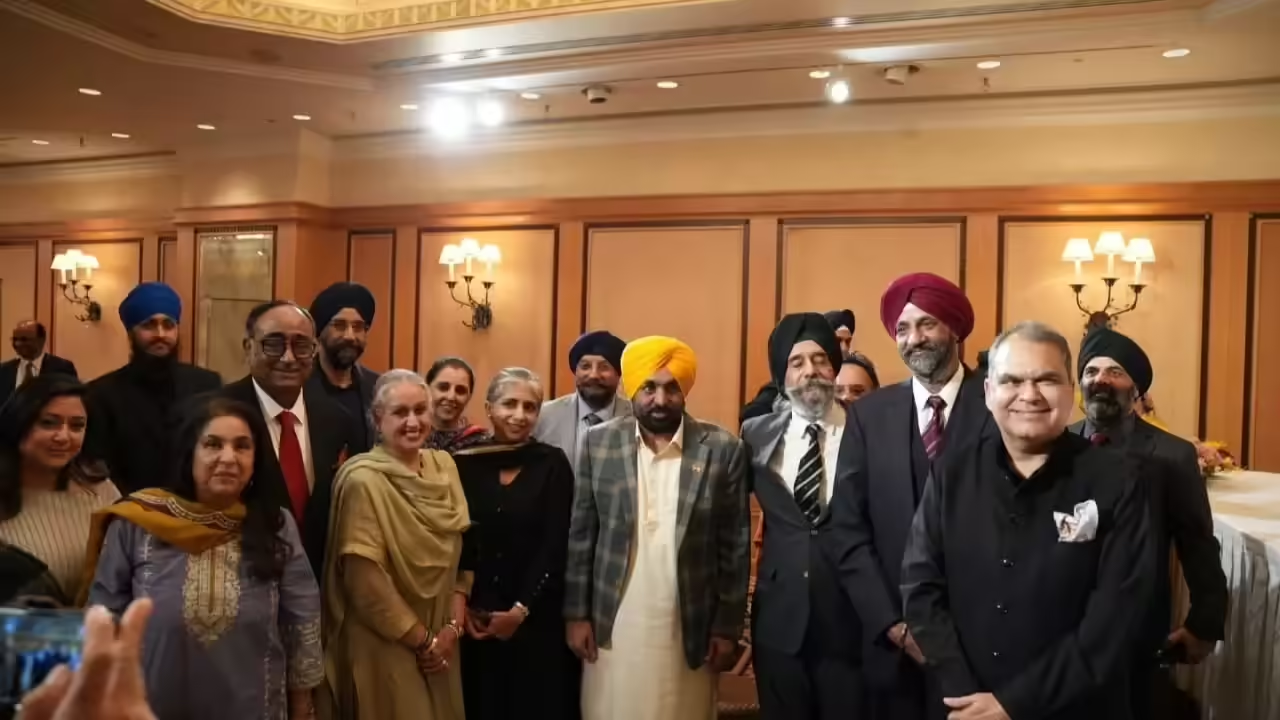
Bhagwant Mann’s Osaka roadshow is gaining attention as states push aggressively for investment, and the main keyword fits directly into this timely development. The event highlights how targeted international outreach can influence SME growth in Punjab and create spillover benefits for businesses across India.
The topic is time sensitive because it connects to an active investment promotion campaign. Several states are competing for Japanese partnerships in manufacturing, technology and infrastructure. Punjab’s engagement in Osaka signals a strategic attempt to reshape its industrial base while positioning local SMEs for global integration. The roadshow offers insights into how state level diplomacy is becoming a key driver of regional economic development.
What the Osaka roadshow aims to achieve for Punjab’s economy
Secondary keywords like state investment pitch and global partnership goals clarify the purpose. The visit focuses on attracting companies interested in food processing, automotive components, green energy and industrial machinery. Punjab has been seeking new anchors to diversify beyond agriculture and traditional manufacturing.
At a time when Japanese firms are reassessing supply chains and exploring India as part of a China plus strategy, this outreach increases the visibility of Punjab as an alternative base. Discussions at Osaka highlight plug and play infrastructure, industrial parks and incentives designed to shorten project timelines. This positioning matters for SMEs because large foreign investments create ecosystems where smaller suppliers can integrate into cross border value chains.
Why Japanese interest aligns with Punjab’s SME strengths
Secondary keywords such as SME ecosystem and Japan India collaboration help explain the alignment. Punjab’s SMEs are known for precision manufacturing, textiles, machine parts and agro processing. These sectors match well with Japanese priorities in quality driven production, automation and mid scale industrial operations.
Japanese companies often prefer locations with skilled labour, established vendor networks and cultural adaptability. Punjab offers these strengths, especially in districts like Ludhiana, Jalandhar and Mohali. The Osaka meetings showcase how local firms can collaborate on technology transfer, production upgrades and component level partnerships. Even if final investment decisions take time, the exposure builds long term trust that is essential for Japanese investors.
How investment outreach can shape SME growth beyond Punjab
The impact extends beyond the state. Secondary keywords like regional spillover and inter state SME advantages emphasise the broader effects. If Japanese companies set up manufacturing or R&D operations in Punjab, supply chains will naturally involve SMEs from neighbouring states such as Haryana, Himachal Pradesh and Rajasthan. Many of these companies already supply auto components, machinery parts and industrial tools that meet export grade requirements.
For India, state driven outreach strengthens the overall investment climate. It demonstrates that sub national competition can unlock opportunities faster than centralised initiatives alone. When one state wins a major contract, nearby regions often benefit through logistics, subcontracting and workforce mobility. The Osaka roadshow therefore contributes to India’s broader effort to attract high quality, long term manufacturing investments.
Improving infrastructure and policy signals intended for investors
Secondary keywords like industrial infrastructure and investor confidence highlight the policy environment. Punjab has been upgrading logistics corridors, warehousing capacity and transport connectivity. These improvements are part of the pitch presented in Osaka. Japanese investors typically evaluate factors such as land availability, power reliability and industrial compliance standards before committing.
By showcasing planned expansions and existing industrial complexes, the state aims to reduce investor hesitation. For SMEs, the focus on better infrastructure means more predictable supply chains and lower operational friction. Even domestic companies benefit when global investment pushes lead to policy reforms that streamline approvals and expand market access.
How SMEs can leverage state level investment drives
Secondary keywords like SME readiness and export potential add clarity. To benefit from such outreach, SMEs must prepare for higher compliance expectations, quality benchmarks and digital reporting standards. Collaboration with Japanese partners often requires process discipline and technological adoption.
SMEs that adapt quickly have opportunities to become suppliers, joint venture partners or service providers to incoming firms. Upgrading production systems, improving workforce skills and adopting lean manufacturing practices can position them to participate in new value chains. For sectors like auto components, food processing and light engineering, Punjab’s outreach could create a fresh growth cycle.
TAKEAWAYS
The Osaka roadshow positions Punjab as a strong contender for Japanese investment.
Japanese interests align closely with Punjab’s SME strengths in manufacturing.
Regional spillovers could benefit SMEs across multiple northern states.
Better infrastructure and policy signals improve investor confidence and SME readiness.
FAQs
Why is Japan an important target for Punjab’s investment outreach
Japan offers long term, high quality investments and seeks reliable manufacturing locations, making Punjab a competitive option for diversified expansion.
How do SMEs benefit if Japanese firms invest in the state
SMEs gain through supply chain integration, technology transfer and increased demand for components, services and support functions.
Will the impact be limited to Punjab only
No. Supply chains often extend across state borders. Nearby regions with strong SME clusters will also benefit from new manufacturing activity.
What should SMEs do to prepare for potential partnerships
They should upgrade quality systems, adopt efficient production practices and build capabilities that match international standards.









Leave a comment