

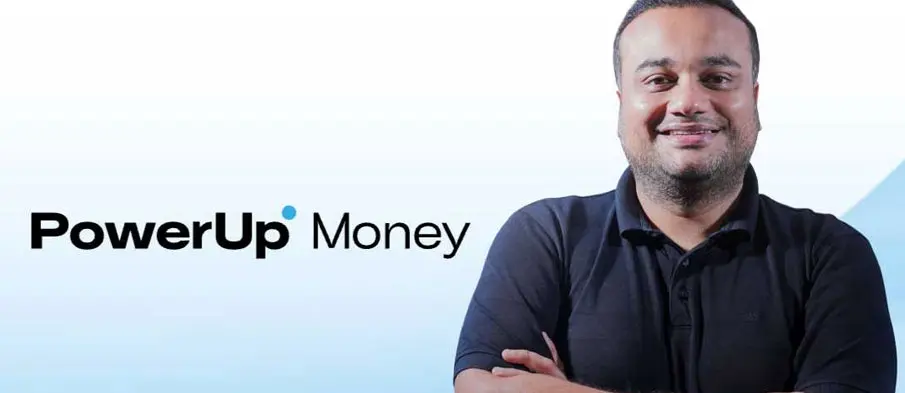
PowerUp Money secures $12 million in Series A funding from Peak XV as its zero commission advisory model gains traction among cost conscious retail investors, signaling growing appetite for transparent wealth platforms in India’s crowded fintech landscape.
Funding Round Signals Confidence in Zero Commission Advisory
The PowerUp Money Series A funding round comes at a time when Indian fintech investors are becoming more selective about business models and unit economics. Raising $12 million in the current environment reflects confidence not only in the company’s growth metrics but also in its core proposition of zero commission financial advisory.
Unlike traditional advisory platforms that earn through commissions on financial products, PowerUp Money positions itself as a conflict free advisor. The platform does not earn from product manufacturers, allowing it to recommend investments without embedded incentives. This approach has found resonance among salaried professionals and first time investors who are increasingly wary of hidden costs and biased advice.
The funding will be used to scale operations, invest in technology, and expand customer acquisition across Tier 2 and Tier 3 cities, where demand for affordable and trustworthy financial guidance is rising rapidly.
Why the Zero Commission Model Is Gaining Momentum
A key secondary keyword shaping this story is zero commission advisory model. For years, Indian retail investors have relied on distributors and agents whose income depended on commissions. While this structure helped expand reach, it also created misaligned incentives. Investors often ended up with unsuitable products, leading to erosion of trust.
PowerUp Money’s model addresses this gap directly. Instead of commissions, the platform charges users directly for advisory services or follows a subscription based structure. This clarity on revenue sources is becoming a competitive advantage as financial literacy improves and regulators push for greater transparency.
Globally, similar fee only advisory models have seen steady adoption. In India, where cost sensitivity is high, platforms that can combine low fees with digital scale are well placed to grow.
What Sets PowerUp Money Apart in a Crowded Fintech Space
India’s fintech sector is crowded with investment apps, robo advisors, and distribution platforms. What differentiates PowerUp Money is its focus on advice first rather than transactions. The platform emphasizes goal based planning, asset allocation, and long term wealth creation rather than frequent trading or product churn.
Technology plays a central role. Automated portfolio tracking, risk profiling, and personalized recommendations reduce the cost of servicing each user. This makes the zero commission model viable at scale. The company has also focused on simplifying the user experience, a critical factor for adoption beyond metro cities.
By prioritizing education and clarity, PowerUp Money aims to build long term relationships rather than maximize short term revenue per user.
Investor Perspective and Strategic Rationale
From an investor standpoint, backing a zero commission advisory platform is a bet on structural change in how Indians access financial advice. Peak XV’s participation signals belief that fee based models can scale in India despite historical dependence on commissions.
Investors are also betting on regulatory alignment. Over time, regulators have nudged the ecosystem toward transparency and investor protection. Platforms that are already aligned with this direction face lower compliance risk and enjoy stronger credibility with users.
The Series A round is expected to provide PowerUp Money with a longer runway to refine its unit economics, expand advisory offerings, and potentially introduce new financial planning tools without compromising its core principles.
Expansion Plans and Tier 2 Focus
A major part of the funding strategy involves expanding into Tier 2 and Tier 3 markets. These regions represent the next wave of retail investors, driven by rising incomes, digital penetration, and growing interest in mutual funds and long term savings products.
PowerUp Money plans to tailor its offerings to these segments by focusing on vernacular content, simplified onboarding, and mobile first experiences. Trust plays a crucial role in these markets, and a zero commission promise can serve as a strong differentiator against traditional agents.
The company also intends to strengthen its advisory team and invest in training to maintain quality as it scales.
Challenges Ahead for the Business Model
Despite its appeal, the zero commission model is not without challenges. Convincing users to pay directly for advice remains a hurdle in a market accustomed to free services subsidized by commissions. Customer acquisition costs must be carefully managed to ensure sustainable growth.
Competition is another factor. As the model gains popularity, more players may adopt similar structures, increasing pressure on pricing and differentiation. Execution quality, technology reliability, and consistent advisory outcomes will determine long term success.
The next phase will test whether PowerUp Money can balance rapid growth with advisory integrity and financial discipline.
Takeaways
- PowerUp Money raised $12 million in Series A funding led by Peak XV.
- The zero commission advisory model is gaining traction among retail investors.
- Transparency and conflict free advice are key drivers of user adoption.
- Scaling sustainably while maintaining trust will be the core challenge ahead.
FAQs
What is PowerUp Money’s zero commission model?
It offers financial advice without earning commissions from product manufacturers, charging users directly instead.
Why did investors back this model?
Investors see growing demand for transparent and unbiased financial advice aligned with regulatory trends.
Who are PowerUp Money’s target users?
Primarily salaried professionals, first time investors, and users in Tier 2 and Tier 3 cities seeking affordable advisory services.
How will the funding be used?
The capital will support technology development, team expansion, and customer acquisition across new markets.












Leave a comment