

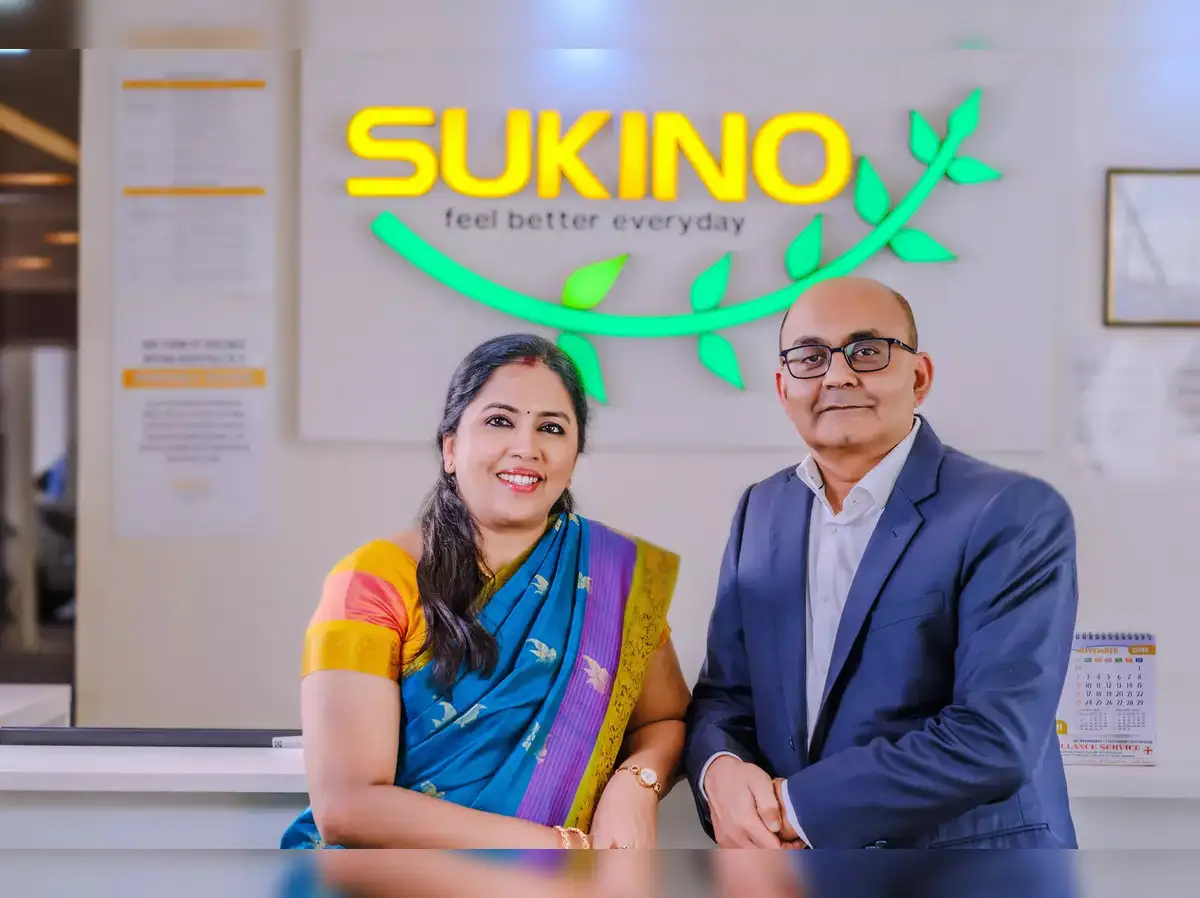
Sukino has secured 31 million dollars in a Series B round to expand its chronic care services across South India, marking a significant funding milestone for the healthcare startup. The capital will be used to deepen clinical capacity, expand regional presence, and strengthen technology driven patient care models.
Sukino securing 31 million dollars in Series B funding signals growing investor confidence in India’s chronic care healthcare segment. The Bengaluru based company operates in a space that is increasingly critical as India faces a rising burden of long term illnesses such as diabetes, renal disorders, and post acute care needs. The funding round positions Sukino to scale its integrated care delivery model across key southern markets, where demand for structured chronic care is accelerating.
Why chronic care services are attracting investor attention
Chronic care services have moved into focus as healthcare consumption patterns change in India. Longer life expectancy, lifestyle related diseases, and pressure on hospital infrastructure have created a gap between acute treatment and long term recovery. Startups like Sukino are addressing this gap by offering specialized facilities and care programs for patients who require extended medical supervision.
Investors see chronic care as a defensible and scalable segment. Unlike episodic healthcare, chronic care offers predictable demand, longer patient engagement cycles, and stable revenue visibility. Sukino’s model aligns with this trend by focusing on post acute care, rehabilitation, and long duration treatment support, particularly for patients transitioning out of hospitals.
How Sukino plans to use the Series B capital
The Series B funding is expected to support Sukino’s expansion across South India, including new facilities, enhanced clinical infrastructure, and talent acquisition. A portion of the capital will be directed toward setting up additional care centers in urban and semi urban locations where access to organized chronic care remains limited.
Technology investment is another priority. Sukino has emphasized the role of digital monitoring, electronic medical records, and care coordination tools to improve patient outcomes. Strengthening these systems allows the company to manage complex cases efficiently while maintaining consistency in care delivery across locations.
South India as a strategic growth market
South India represents a natural expansion market for chronic care providers due to its higher healthcare awareness, stronger hospital ecosystems, and aging population pockets. States such as Karnataka, Tamil Nadu, and Kerala have a growing base of patients requiring long term care following surgeries, neurological events, or chronic illnesses.
Sukino’s focus on this region allows it to integrate closely with existing hospital networks and referral systems. By positioning itself as a continuation of hospital care rather than a replacement, the company strengthens its credibility with clinicians and families. This regional strategy also helps manage operational complexity while scaling in a phased manner.
Business model and differentiation in chronic care
Sukino’s differentiation lies in its clinical depth and structured care pathways. The company operates specialized care centers staffed with trained medical professionals, rather than relying solely on home based care. This approach suits patients who need round the clock supervision, medical equipment, and rehabilitation support.
From a business perspective, this model requires higher upfront investment but offers better control over quality and outcomes. It also allows Sukino to work closely with insurers and corporate healthcare programs, which are increasingly recognizing chronic care as a cost effective alternative to prolonged hospital stays.
What this funding means for the healthcare startup ecosystem
The Sukino Series B round reflects a broader shift in healthcare startup funding. Investors are increasingly favoring models with clear clinical relevance and long term demand drivers over purely consumer focused health apps. Chronic care sits at the intersection of healthcare delivery and infrastructure, making it attractive for patient capital.
This deal also highlights growing interest in region focused healthcare expansion. Instead of spreading thin nationally, startups are prioritizing depth in specific geographies. For the ecosystem, it signals that disciplined growth and operational execution are being rewarded in the current funding environment.
Challenges ahead despite strong funding
While the funding strengthens Sukino’s position, challenges remain. Scaling healthcare services requires maintaining clinical quality, managing regulatory compliance, and recruiting skilled medical staff. Cost control is critical, as chronic care facilities can become capital intensive if occupancy levels are not optimized.
Competition is also increasing, with hospitals and other startups exploring post acute and long term care offerings. Sukino will need to continue differentiating through outcomes, partnerships, and operational efficiency to defend its market position as it expands.
Outlook for chronic care expansion in India
India’s chronic care market is expected to grow steadily as healthcare systems adapt to demographic and disease profile changes. Companies like Sukino are well placed if they can balance scale with quality. The Series B funding provides runway, but long term success will depend on execution across facilities, technology, and partnerships.
For patients and families, the expansion of organized chronic care services offers better continuity and dignity of care. For investors, it represents a healthcare segment with durable demand and structural relevance.
Takeaways
- Sukino raised 31 million dollars in Series B funding to expand chronic care
- Capital will be used for new facilities, technology, and clinical capacity
- South India is a strategic focus due to strong healthcare demand
- Chronic care is emerging as a stable and scalable healthcare segment
FAQs
What does Sukino do as a healthcare startup?
Sukino provides structured chronic and post acute care services for patients requiring long term medical supervision and rehabilitation.
Why is chronic care attracting investor interest?
Chronic care offers predictable demand, longer patient engagement, and addresses gaps between hospital treatment and recovery.
How will Sukino use the Series B funding?
The company plans to expand facilities across South India, invest in technology, and strengthen clinical teams.
Is chronic care different from home healthcare?
Yes. Chronic care often involves specialized facilities with continuous medical supervision, unlike basic home healthcare services.












Leave a comment