

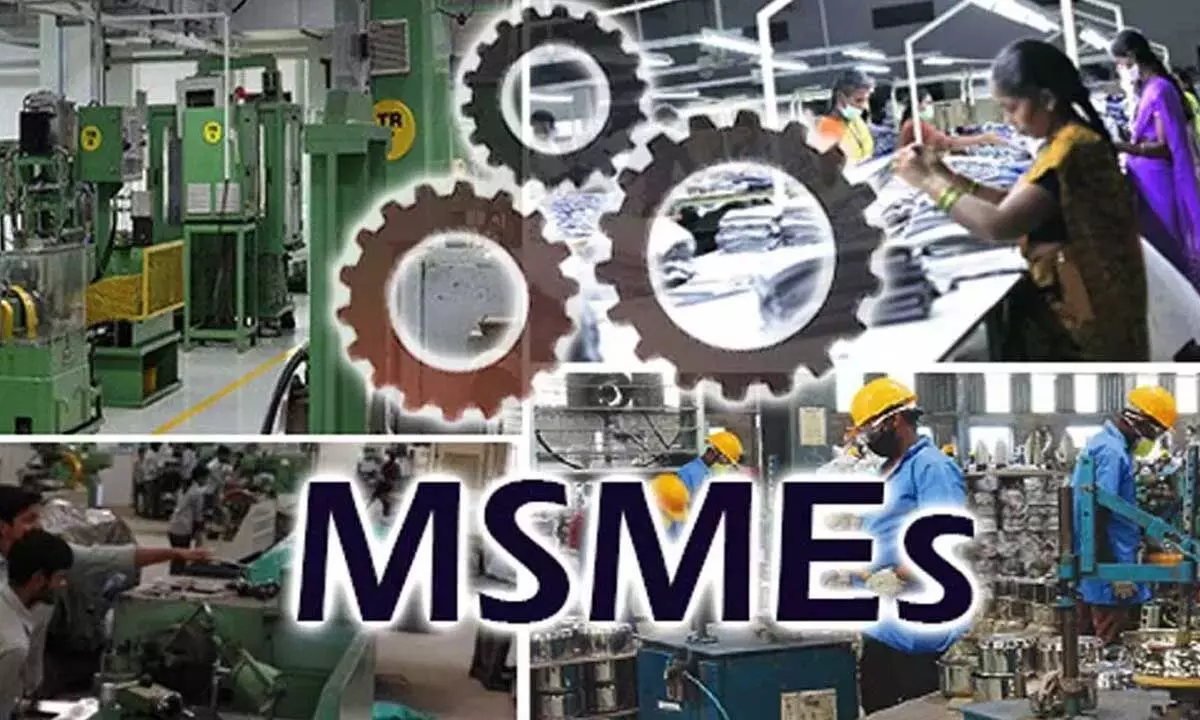
India has proposed the creation of a BRICS Startup Innovation Fund and a BRICS Incubator Network during the 10th BRICS Industry Ministers’ Meeting in Jaipur. If implemented, the initiative could improve funding access, cross-border collaboration, technology transfer, and global market opportunities for Indian MSMEs and startups.
The BRICS Startup Innovation Fund Proposal has emerged as one of India’s key initiatives during its BRICS Presidency in 2026. At the 10th BRICS Industry Ministers’ Meeting held in Jaipur, India proposed establishing a BRICS Startup Innovation Fund alongside a BRICS Incubator Network to strengthen innovation-led industrial growth across member countries. The proposal is currently at the discussion stage and has not yet been approved or operationalized.
If adopted by BRICS members, the initiative could create new opportunities for India’s micro, small and medium enterprises (MSMEs), particularly businesses located in Tier-2 and Tier-3 cities that often face challenges in accessing global investors, technology partnerships and international markets.
India Pushes for Stronger BRICS Startup Cooperation
The proposal was announced during the ministerial meeting where BRICS nations adopted a joint declaration focusing on industrial cooperation in areas such as MSMEs, startups, photovoltaics and logistics. India suggested creating both a Startup Innovation Fund and an incubator network to encourage collaborative innovation among BRICS economies.
Unlike traditional government grant schemes that primarily focus on domestic businesses, this proposal aims to encourage cross-border cooperation. It could enable startups and MSMEs from BRICS countries to jointly develop technologies, access incubation support and collaborate on commercial opportunities.
The proposal also aligns with India’s broader strategy of strengthening innovation-led manufacturing and entrepreneurship under its BRICS Presidency.
What the Proposal Could Mean for Indian MSMEs
Indian MSMEs contribute significantly to employment, exports and manufacturing output. However, many businesses continue to struggle with financing, international expansion and access to advanced technologies.
If the Startup Innovation Fund becomes operational, Indian MSMEs may benefit in several ways.
One potential advantage is improved access to collaborative funding for innovation-driven projects. Instead of relying only on domestic investors or government schemes, eligible businesses could participate in multinational innovation initiatives involving other BRICS countries.
Another possible benefit is easier access to incubation ecosystems across BRICS economies. Startups from cities such as Nagpur, Indore, Coimbatore, Surat or Bhubaneswar could gain opportunities to work with international incubators and research institutions without relocating permanently.
The proposal could also support technology exchange, helping MSMEs adopt advanced manufacturing practices, artificial intelligence, clean energy solutions and digital tools through international partnerships.
Cross-Border Market Access Could Expand Business Opportunities
One of the biggest challenges for small businesses is expanding beyond domestic markets.
A BRICS-backed innovation ecosystem may help Indian companies connect with distributors, investors, manufacturers and customers across member countries. This is particularly relevant because BRICS now represents a large share of the global population and an expanding consumer market.
For export-oriented MSMEs, participation in collaborative projects could improve product visibility and create opportunities for joint ventures.
Businesses working in sectors such as agritech, healthcare, logistics, manufacturing, renewable energy and digital services could potentially benefit the most if the proposal evolves into a structured funding mechanism.
Complementing India’s Existing Startup Ecosystem
India has already strengthened its domestic startup ecosystem through initiatives such as Startup India and the recently approved Startup India Fund of Funds 2.0, which aims to mobilise venture capital for technology-driven and manufacturing-focused startups.
The proposed BRICS Startup Innovation Fund would not replace these existing programmes. Instead, it could complement them by adding an international collaboration layer.
Founders may eventually gain opportunities to combine domestic financial support with international partnerships, opening access to larger markets and shared research capabilities.
This approach could also encourage more innovation outside major metropolitan hubs by giving regional startups greater visibility on an international platform.
Challenges Before the Proposal Becomes Reality
Although the proposal has attracted attention, it remains a policy proposal rather than an approved programme.
Several issues still need to be addressed before implementation.
BRICS member countries would need to agree on funding structures, governance mechanisms, eligibility criteria and contribution models. Operational guidelines for selecting startups, managing investments and evaluating projects would also have to be finalised.
In addition, balancing participation among member countries while ensuring transparency and efficient fund utilisation will be important for the initiative’s long-term success.
Until formal approval is announced, businesses should treat the proposal as a developing policy rather than an active funding opportunity.
Why the Proposal Matters Beyond Major Cities
The proposal has particular significance for entrepreneurs outside India’s largest startup hubs.
Many promising businesses in Tier-2 and Tier-3 cities have innovative products but limited exposure to international investors or technology partners. A BRICS innovation ecosystem could help reduce this gap by creating structured collaboration opportunities.
For India’s growing MSME sector, global partnerships increasingly matter as much as financial support. Access to knowledge, markets, advanced technology and international networks often determines whether a business can scale successfully.
If the BRICS Startup Innovation Fund moves from proposal to implementation, it could become another important channel supporting India’s ambition to become a global innovation and manufacturing leader.
Key Takeaways
- India has proposed a BRICS Startup Innovation Fund and Incubator Network during the BRICS Industry Ministers’ Meeting in Jaipur.
- The proposal aims to strengthen collaboration among startups, MSMEs and innovation ecosystems across BRICS countries.
- Indian MSMEs could benefit through improved funding access, technology partnerships and international market opportunities.
- The initiative remains a proposal and will require approval and implementation by BRICS member countries before businesses can apply.
Frequently Asked Questions
Q1. Has the BRICS Startup Innovation Fund been launched?
No. The fund has been proposed by India but has not yet been approved or implemented by BRICS member countries.
Q2. Who could benefit from the proposal?
If implemented, startups, MSMEs, incubators, innovation centres and research organisations across BRICS countries could potentially participate.
Q3. Will the fund replace Startup India schemes?
No. The proposed BRICS fund would likely complement existing Indian startup initiatives by supporting international collaboration rather than replacing domestic programmes.
Q4. Why is the proposal important for Tier-2 and Tier-3 cities?
It could provide regional startups and MSMEs with greater access to international incubators, investors, technology partners and export opportunities that are often concentrated in larger metropolitan ecosystems.
(Internal keyword suggestions: BRICS Startup Innovation Fund, BRICS Incubator Network, Indian MSMEs, BRICS startup proposal, Startup India, MSME funding, cross-border innovation, BRICS investment, Tier-2 startups, startup collaboration, industrial innovation, MSME exports)











Leave a comment