

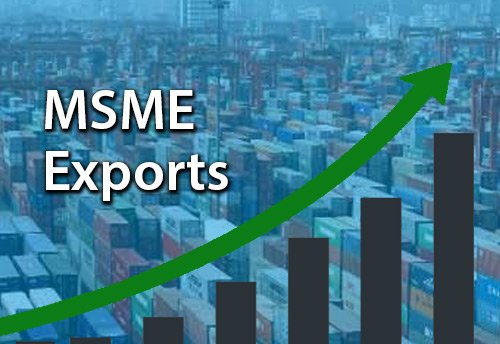
India’s MSME export ecosystem is entering a new phase of growth, supported by government initiatives, digital commerce, manufacturing expansion and global supply chain diversification. As export opportunities increase, small businesses are investing in technology, quality standards and international market access to stay competitive.
Time-sensitive or evergreen?
This is a trend-based business article with current relevance. While the topic is evergreen in nature, it is supported by recent policy developments, export trends and MSME initiatives in 2026. The article follows an explanatory style with references to the latest business environment.
India’s MSME export ecosystem is preparing for a new growth phase as small businesses adapt to changing global trade patterns, digital commerce and expanding manufacturing opportunities. Micro, Small and Medium Enterprises account for nearly one-third of India’s GDP and contribute around 45 percent of the country’s total exports. With global companies diversifying supply chains and India strengthening its export infrastructure, MSMEs are expected to play an even bigger role in the country’s international trade ambitions.
Government reforms, digital platforms, logistics improvements and easier access to export financing are encouraging more businesses, including those from Tier-2 and Tier-3 cities, to explore overseas markets. While challenges remain, the ecosystem is gradually becoming more competitive and technology driven.
Government Policies Are Strengthening Export Readiness
One of the biggest drivers behind the next phase of MSME exports is continued policy support.
The Foreign Trade Policy 2023, which remains in force with ongoing updates, focuses on simplifying export procedures, promoting e-commerce exports and encouraging district-level export development. Initiatives such as the Districts as Export Hubs programme aim to identify products with export potential from different regions and connect local businesses with international markets.
In addition, schemes like the Credit Guarantee Fund Trust for Micro and Small Enterprises (CGTMSE), interest support programmes and export promotion councils continue to improve financial access for eligible businesses.
These measures are helping reduce procedural barriers that previously discouraged smaller enterprises from entering global markets.
Digital Commerce Is Opening International Opportunities
Technology is changing how Indian MSMEs reach overseas customers.
Cross-border e-commerce platforms, business-to-business marketplaces and digital payment systems have made it easier for manufacturers and service providers to connect with international buyers without maintaining a physical presence abroad.
Many exporters now use online catalogues, virtual trade fairs and digital marketing to generate leads across multiple countries.
Artificial intelligence, inventory management software and cloud-based supply chain solutions are also helping businesses improve efficiency and respond more quickly to changing customer demand.
For businesses in smaller cities, digital commerce has reduced the importance of geographical location, allowing them to compete with larger companies on a global scale.
Manufacturing Expansion Is Supporting Export Growth
India’s manufacturing sector continues to create new opportunities for MSME exporters.
Production Linked Incentive (PLI) schemes, investments in electronics manufacturing, defence production, pharmaceuticals, renewable energy and engineering goods have strengthened domestic supply chains.
As larger manufacturers expand production, MSMEs increasingly participate as suppliers of components, packaging materials, engineering services and specialised products.
This integration into manufacturing value chains enables smaller businesses to improve quality standards while gaining experience in serving international customers.
Global companies looking to diversify sourcing beyond traditional manufacturing destinations are also creating fresh opportunities for Indian suppliers.
Better Logistics and Trade Infrastructure Are Reducing Costs
Efficient logistics remains essential for export competitiveness.
Infrastructure initiatives such as PM Gati Shakti, Dedicated Freight Corridors, modernised ports and improvements under the National Logistics Policy are helping reduce transportation bottlenecks.
Faster cargo movement and better warehousing facilities improve delivery timelines while lowering operational costs.
Several airports and ports have expanded cargo handling capacity, making exports more accessible for businesses located outside traditional industrial centres.
Regional logistics parks and multimodal transportation systems are also expected to strengthen export connectivity for Tier-2 and Tier-3 manufacturing clusters over the coming years.
Quality Standards and Product Certifications Are Becoming Priorities
International buyers increasingly expect products to meet strict quality, safety and sustainability standards.
As a result, many Indian MSMEs are investing in internationally recognised certifications, product testing and improved manufacturing processes.
Compliance with environmental, labour and quality requirements is becoming a competitive advantage rather than simply a regulatory obligation.
Businesses exporting food products, pharmaceuticals, engineering goods, textiles and electronics are particularly focused on strengthening quality assurance systems.
Companies that consistently meet global standards are more likely to secure long-term contracts and expand into new markets.
Financing and Technology Adoption Remain Key Challenges
Despite steady progress, several challenges continue to affect MSME exporters.
Limited access to affordable working capital, foreign exchange risks, fluctuating shipping costs and compliance with international regulations remain concerns for many businesses.
Smaller enterprises also need to invest in digital technologies, cybersecurity, workforce training and supply chain management to remain globally competitive.
Access to export insurance and trade finance has improved, but awareness remains limited among many first-time exporters.
Industry experts believe that stronger collaboration between financial institutions, export promotion agencies and technology providers will be important for sustaining long-term growth.
Tier-2 and Tier-3 Cities Are Emerging as Export Contributors
Regional businesses are becoming increasingly important to India’s export ecosystem.
Cities such as Coimbatore, Surat, Rajkot, Indore, Nagpur, Kanpur, Ludhiana and Moradabad have developed specialised manufacturing capabilities across engineering, textiles, handicrafts, food processing and automotive components.
Government initiatives promoting district-level exports are encouraging more entrepreneurs to explore international markets.
Improved digital connectivity and better logistics infrastructure have reduced barriers that once limited export participation outside major metropolitan regions.
This wider geographical participation is expected to strengthen India’s export resilience while creating employment opportunities across the country.
Outlook for India’s MSME Export Ecosystem
India’s MSME export ecosystem is entering a period of structural transformation rather than temporary expansion.
Global supply chain diversification, digital trade, manufacturing growth and supportive government policies are creating favourable conditions for long-term export growth.
Businesses that invest in technology, product quality, international compliance and market diversification are likely to benefit the most.
Although global economic uncertainties remain, India’s growing manufacturing base and expanding export infrastructure position MSMEs to play an increasingly significant role in the country’s future trade performance.
Key Takeaways
- Government policies and export reforms are improving opportunities for MSMEs to access international markets.
- Digital commerce and technology adoption are helping small businesses expand globally.
- Better logistics infrastructure and manufacturing growth are strengthening export competitiveness.
- Tier-2 and Tier-3 cities are becoming important contributors to India’s export ecosystem.
Frequently Asked Questions
Q1. Why are MSMEs important for India’s exports?
MSMEs contribute nearly 45 percent of India’s exports and play a major role in manufacturing, employment and regional economic development.
Q2. How does digital commerce support MSME exports?
Digital platforms help businesses connect with international buyers, market products globally and manage cross-border transactions more efficiently.
Q3. What challenges do MSME exporters still face?
Common challenges include access to finance, compliance with international standards, logistics costs, foreign exchange risks and technology adoption.
Q4. Why are Tier-2 cities becoming important for exports?
Improved infrastructure, district-level export promotion, specialised manufacturing clusters and digital connectivity have enabled businesses in smaller cities to participate more actively in global trade.
(Internal keyword suggestions: MSME export ecosystem, India exports 2026, MSME exports India, Districts as Export Hubs, Foreign Trade Policy, MSME manufacturing, export growth India, digital exports, cross-border e-commerce, National Logistics Policy, Tier-2 exporters, Indian export ecosystem)








Leave a comment