

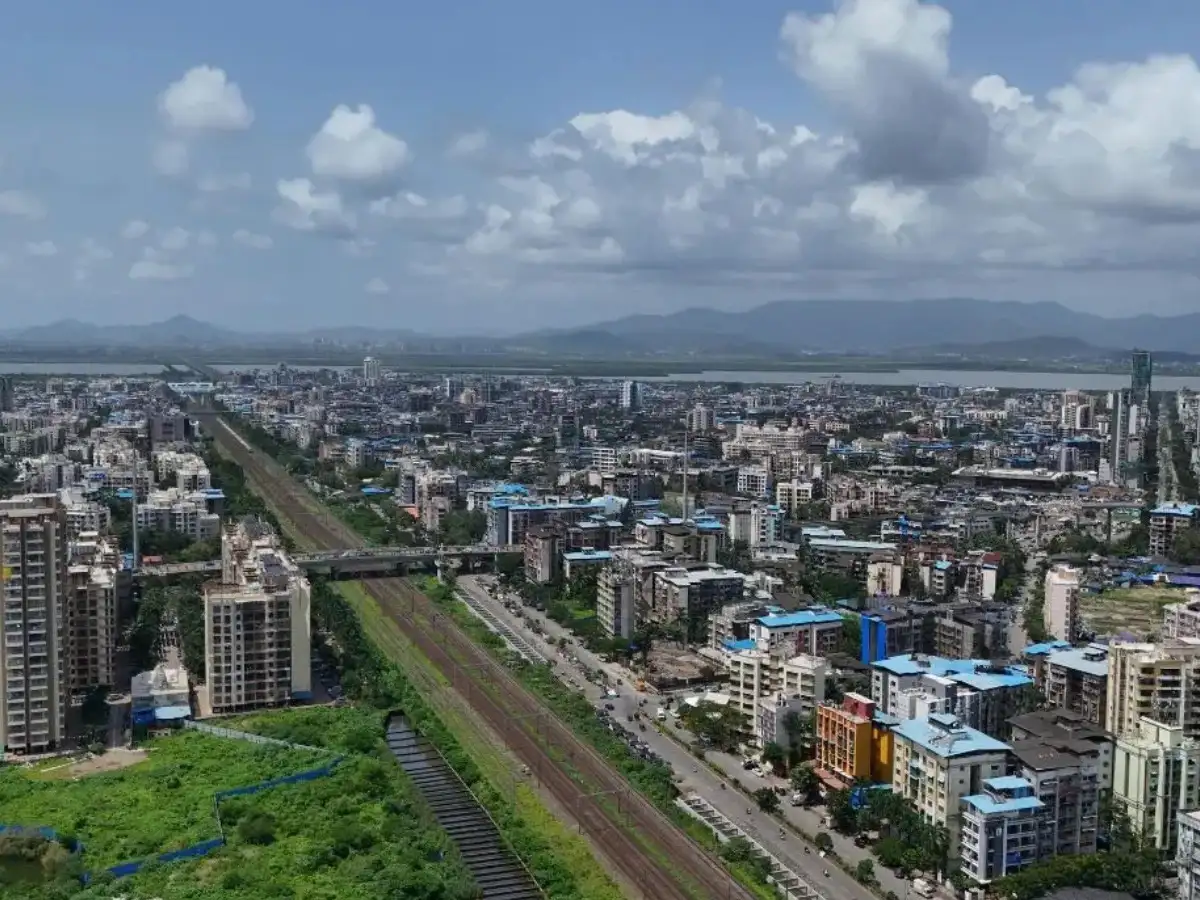
MSME lending in India is increasingly expanding beyond major metros as banks, NBFCs, fintech lenders and digital financing platforms target businesses in Tier-2, Tier-3 and smaller cities. Better digital infrastructure, formalisation and demand for working capital are making these markets more attractive.
MSME lending is expanding beyond major cities
MSME lending is undergoing a noticeable geographical shift in India, with financial institutions increasingly looking beyond Mumbai, Delhi, Bengaluru, Chennai and other major metropolitan markets. Smaller cities are becoming important markets for business loans as more local enterprises enter the formal financial system.
Recent data points to the scale of this change. Business Standard reported in August that active MSME borrowers had more than doubled over five years to around 1.9 crore in 2026. The expansion of credit bureau coverage has also made it easier for lenders to assess borrowers who previously had limited formal credit histories.
The change is not simply about lenders opening more branches. Digital applications, alternative credit assessment and transaction-based underwriting are allowing financial companies to reach businesses in locations where traditional banking infrastructure may be limited.
This is particularly relevant for manufacturers, traders, wholesalers, retailers, service providers and other small businesses that need working capital but may not have the documentation or operating history required by conventional lending models.
Tier-2 and Tier-3 cities are becoming important credit markets
The growing importance of smaller cities is visible in digital receivables financing as well. A June 2026 report by The Economic Times, citing M1xchange data, found that 71% of MSMEs registered on its TReDS platform came from Tier-II and smaller cities. These businesses contributed 67% of the platform’s total throughput.
The platform also added nearly 2,000 new pin codes during FY26, taking its reach to more than 9,000 pin codes across over 2,500 cities. Locations including Kollam, Malappuram, Kannur, Thrissur, Jammu, Daman, Aizawl, Kargil and Baramulla were among the smaller markets entering the formal receivables-financing ecosystem.
For lenders, these numbers indicate that demand for formal working capital is not confined to India’s biggest commercial centres.
Smaller manufacturers and traders often operate within regional supply chains, selling to larger companies or government-linked buyers. Digital invoice financing can help them unlock cash tied up in unpaid invoices rather than waiting for customers to complete lengthy payment cycles.
Why financial players are entering smaller cities
The opportunity in smaller cities comes from a combination of unmet demand and improving data availability. Many MSMEs outside large urban centres have viable businesses but historically faced difficulties obtaining timely formal credit.
Financial technology has changed part of that equation. Digital records, bank transactions, GST-related information, invoice data and other financial signals can help lenders understand a business’s cash flow without depending entirely on traditional collateral-based assessment.
The trend is also visible among NBFCs. In March, Optimo Capital said it was operating more than 51 branches across Karnataka, Tamil Nadu, Telangana, Andhra Pradesh and Madhya Pradesh, serving MSME borrowers in rural and semi-urban markets. The company had also entered a co-lending arrangement with Godrej Finance targeting ₹200 crore of disbursements over 12 months.
Such partnerships allow lenders to combine capital, technology and distribution networks. For borrowers in smaller cities, the result can be greater availability of products suited to local business needs.
Digital lending is reducing the dependence on branches
One of the biggest reasons smaller cities are becoming commercially viable for lenders is the reduced cost of reaching customers.
A lender no longer needs a large physical network in every district to acquire and assess borrowers. Loan applications, document collection, verification and parts of underwriting can increasingly be handled digitally.
This does not mean physical branches have become irrelevant. Local relationships remain important for many MSMEs, especially businesses that have limited digital literacy or operate in sectors where financial records are less standardised.
The emerging model is therefore increasingly hybrid. Digital technology can handle much of the data and processing, while branches, local agents, channel partners and co-lending arrangements provide distribution and customer support.
For Tier-2 and Tier-3 markets, this model can be particularly useful because it combines the reach of technology with the trust associated with local financial relationships.
Co-lending is creating another route for MSME credit
Co-lending is becoming an important mechanism for expanding access to business loans. Under these arrangements, banks and NBFCs can work together, allowing each institution to contribute different strengths to the lending process.
The trend is visible in the MSME segment. In March 2026, Optimo Capital announced a ₹100 crore financing arrangement with Punjab National Bank and a co-lending partnership with Godrej Finance. The company said the partnership would target ₹200 crore of disbursements over the following 12 months.
Such models can help established financial institutions reach borrower segments through specialised NBFCs and technology platforms that already have regional distribution.
This is particularly relevant in smaller cities, where a local lender or specialised NBFC may understand business clusters better than a large institution operating primarily through standardised national products.
The expansion also gives banks an additional route to MSME borrowers without having to build every part of the customer-acquisition and underwriting infrastructure themselves.
Smaller-city MSMEs are creating a larger lending opportunity
The attractiveness of these markets is also linked to the scale of India’s MSME economy. Smaller businesses are present across manufacturing, food processing, textiles, transport, construction, retail, wholesale trade and professional services.
Many of these enterprises require relatively modest amounts of capital at different points in their business cycle. A trader may need funds to purchase inventory, while a manufacturer may require money to pay suppliers before receiving payment from a large customer.
Receivables financing is one response to this problem. Traditional term loans and loans against property remain important, but lenders are increasingly developing products around actual business cash flows.
The recent growth of TReDS participation outside metros demonstrates that smaller businesses are increasingly willing and able to use formal digital financing channels.
This creates a broader opportunity for financial institutions that can price risk accurately while keeping the borrowing process understandable and affordable.
The RBI’s latest proposal adds a new challenge
The expansion of MSME lending is taking place alongside regulatory changes that lenders and borrowers are closely watching.
On August 25, Business Standard reported that the Federation of Indian Micro and Small and Medium Enterprises had raised concerns about an RBI proposal that would prevent NBFCs from offering revolving credit products. The draft RBI directions propose that NBFC credit products should be in the nature of term loans rather than revolving credit facilities.
Industry representatives have argued that revolving facilities can be important for MSMEs managing working capital and irregular cash flows.
The proposal is still part of the regulatory process, so it should not be treated as a final change in lending rules. However, the debate highlights an important issue for smaller businesses: expanding credit access is not only about increasing loan availability, but also about ensuring that products match the way businesses actually receive and spend money.
Risk management will decide how far the trend goes
The expansion of MSME lending outside metros also comes with risks. Smaller businesses can have volatile revenues, limited financial buffers and greater exposure to local economic conditions.
Lenders therefore need accurate borrower assessment and effective collection systems. Fast digital approvals can increase access, but speed cannot replace underwriting discipline.
Recent developments show that lenders are already trying to diversify their portfolios and reach larger small-business borrowers. Fusion Finance, for example, said in August that it planned to reduce the share of microfinance loans in its assets and increase its focus on larger individual loans and small-business lending.
The shift suggests that lenders are looking for broader customer segments rather than relying entirely on traditional microfinance.
For smaller cities, this could mean more choices in formal credit. For financial institutions, it will mean balancing growth with asset quality.
What this means for India’s smaller cities
The expansion of MSME lending can have effects beyond individual businesses. Easier access to working capital can help local manufacturers purchase inventory, meet payroll, accept larger orders and invest in equipment.
That can support wider local economic activity. A growing manufacturing unit may hire more workers, a distributor may expand its delivery network and a retailer may increase inventory.
However, access to credit alone does not guarantee business growth. Borrowers still need sustainable demand, manageable costs and the ability to repay.
The bigger development is that financial institutions increasingly see smaller cities as commercially viable lending markets rather than peripheral territories.
With active MSME borrowers now numbering around 1.9 crore and digital financing platforms expanding their geographical reach, the next phase of India’s credit growth could increasingly come from businesses outside the largest metropolitan centres.
Key Takeaways
- Tier-2, Tier-3 and smaller cities are becoming important markets for formal MSME credit.
- M1xchange reported that 71% of MSMEs on its TReDS platform came from Tier-II and smaller cities.
- Banks, NBFCs, fintech companies and co-lending partnerships are expanding their reach beyond major metros.
- Digital underwriting can improve access, but responsible lending and asset-quality management remain essential.
FAQs
Why are lenders expanding MSME lending beyond metros?
Smaller cities have a large base of businesses with demand for working capital and other forms of credit. Better digital data, formalisation and technology-based underwriting are making it easier for lenders to assess and serve these borrowers.
Which businesses in smaller cities need MSME loans?
Manufacturers, traders, wholesalers, retailers, transport operators, service businesses and other small enterprises commonly require financing for inventory, equipment, supplier payments and working capital.
How is technology changing MSME lending?
Digital applications, transaction data, invoice records and alternative credit assessment can help lenders evaluate businesses more efficiently. Technology can also reduce the need for borrowers to visit branches repeatedly.
What are the risks of expanding MSME lending?
Rapid credit growth can increase the risk of poor underwriting and repayment stress. Lenders need to assess cash flows, borrower capacity and local economic conditions carefully while ensuring that credit products match genuine business requirements.
(Internal keyword suggestions: MSME lending India, MSME loans Tier 2 cities, MSME lending Tier 3 cities, small business loans India, MSME credit growth 2026, NBFC MSME lending, digital lending for MSMEs, MSME working capital loans, Tier 2 Tier 3 cities business, MSME finance India)











Leave a comment