

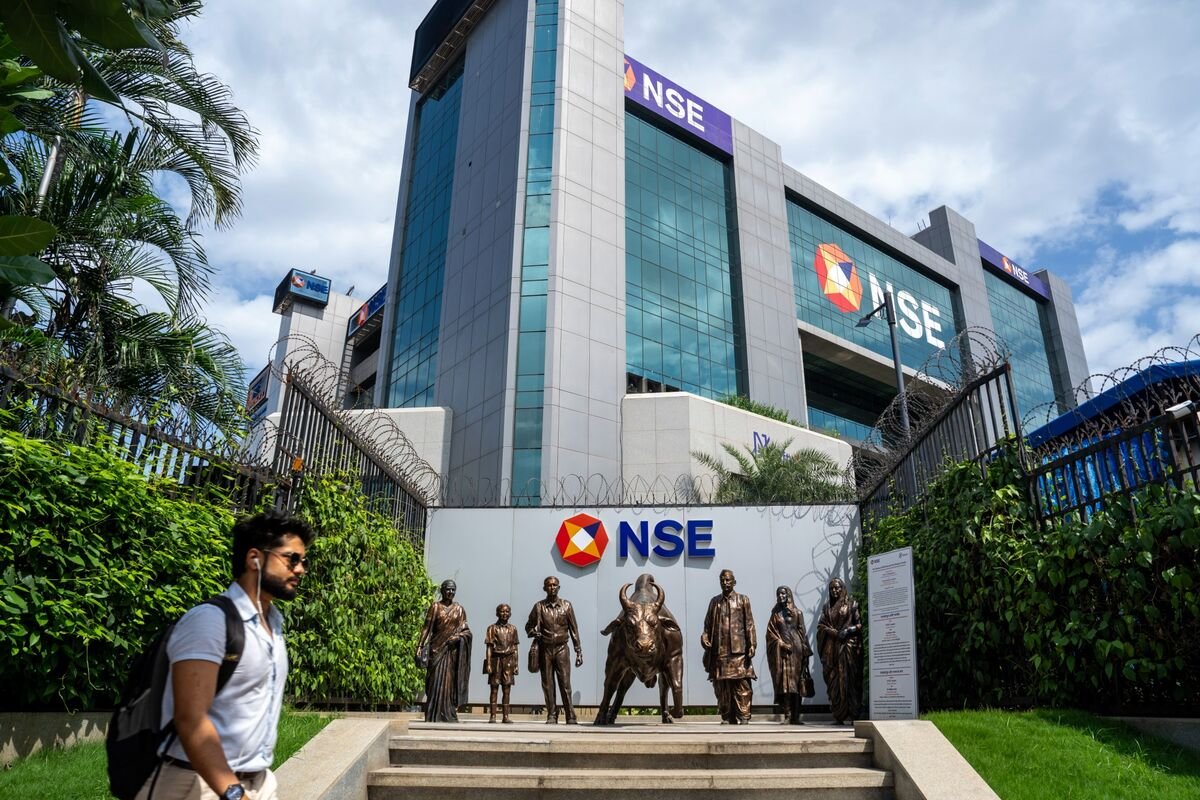
The NSE listing on September 24 marks a major development for India’s capital markets, taking the country’s largest stock exchange from an important market institution to a publicly traded company. Its ₹22,569-crore IPO attracted strong institutional demand and gave investors direct exposure to the business operating one of India’s most important financial market platforms.
NSE Makes Market Debut After Decade-Long Listing Journey
The National Stock Exchange of India made its long-awaited stock market debut on September 24, ending a decade-long journey toward becoming a listed company. NSE shares were listed on the BSE at ₹1,800 per share, compared with the IPO issue price of ₹1,785. The listing represented a premium of about 0.84% over the issue price.
The IPO had an issue size of about ₹22,569 crore, making it India’s second-largest public issue after Hyundai Motor India’s ₹27,870-crore IPO in 2024. The issue received bids for 50.58 crore shares against 8.86 crore shares on offer, resulting in an overall subscription of 5.71 times.
The listing also gives public-market investors a new way to participate in the business of operating a major financial exchange. Until now, investors could gain exposure to the growth of Indian capital markets mainly through listed brokers, banks, asset managers and other financial companies.
NSE Enters Public Markets With Significant Scale
NSE’s listing is notable because the exchange already occupies a central position in India’s financial ecosystem. According to figures cited in the IPO disclosures, NSE accounted for about 92.99% of India’s cash-market turnover and 99.79% of equity futures turnover in FY26. Its share of equity options based on premium turnover stood at 74.71%.
The exchange has also expanded its investor reach significantly. Its unique registered investor base increased from 30.87 million in March 2020 to 132.37 million in June 2026, representing a compound annual growth rate of 26.23%. The exchange said its investors now span more than 99% of India’s postal codes.
This wider geographic reach is particularly relevant beyond India’s major metros. Investors from Tier-2 and Tier-3 cities have become a larger part of the country’s formal capital-market ecosystem, supported by online broking, digital KYC and greater access to financial information.
The Listing Comes Amid a Changing Trading Landscape
NSE’s public debut comes at a time when India’s equity derivatives market is undergoing regulatory and business changes. Changes to the derivatives framework and a higher securities transaction tax have affected trading activity and the earnings environment for exchanges.
At the same time, NSE reported stronger financial performance in the June 2026 quarter. Revenue from operations rose 13.1% year-on-year to ₹4,560 crore, while net profit increased to ₹3,121 crore from ₹2,811 crore in the corresponding period a year earlier.
These figures underline an important feature of the exchange business. Revenue is closely connected to trading activity, market participation and the products being traded. Regulatory changes can therefore have a direct impact on exchange earnings even when the broader investor base continues to expand.
NSE Listing Could Change Exchange-Sector Visibility
The listing also brings greater public-market visibility to India’s exchange sector. NSE now has a directly traded market valuation, allowing investors and analysts to compare the company more closely with other listed financial-market infrastructure businesses.
BSE is already publicly listed, creating a clearer listed-market comparison between India’s two major stock exchanges. The NSE debut therefore puts greater attention on exchange revenues, trading volumes, technology investments, clearing infrastructure, data services and the changing mix of cash and derivatives activity.
On its debut day, NSE’s market capitalisation moved into India’s top 10 listed companies after its shares rose during trading. Business Standard reported that the company’s market capitalisation reached about ₹4.62 trillion after a rise of around 5% during Thursday’s trading session.
However, the market capitalisation can change with the share price, so the first day’s ranking should not be treated as a permanent position among India’s largest companies.
What NSE Listing Means for Smaller-City Investors
For investors in Tier-2 and Tier-3 cities, the NSE listing is significant in another way. The exchange’s own data shows that its investor base has spread across more than 99% of India’s postal codes. This reflects the broader shift from metro-focused investing toward wider participation through digital investment platforms.
The growing presence of investors outside major cities has also increased demand for accessible financial education. First-time investors increasingly encounter concepts such as IPOs, derivatives, demat accounts, mutual funds and exchange-traded products through mobile applications and online platforms.
The NSE listing adds another layer to this financialisation trend. Instead of only using the exchange as a platform for buying and selling securities, public-market investors can now follow the financial performance of the institution itself.
The Longer-Term Question Is Beyond Listing Day
The immediate market reaction to NSE’s listing is only one part of the story. The longer-term significance will depend on how the exchange responds to changes in trading behaviour, regulation, technology and India’s expanding investor base.
NSE’s decade-long journey to the public markets also highlights how closely financial-market infrastructure is connected with regulation and governance. Its IPO was an offer for sale by existing shareholders, meaning the issue did not involve the company raising fresh capital for its own operations.
The public listing nevertheless changes the company’s relationship with investors by introducing a publicly traded share price and greater market scrutiny.
For India’s financial sector, the NSE debut is therefore more than another large IPO. It brings one of the country’s most important market institutions directly into the listed-company universe at a time when retail participation, digital investing and financial-market activity are expanding beyond India’s biggest cities.
Key Takeaways
- NSE shares debuted on the BSE at ₹1,800 against an IPO issue price of ₹1,785.
- The ₹22,569-crore IPO was subscribed 5.71 times, with particularly strong institutional demand.
- NSE reported 132.37 million unique registered investors as of June 2026, with its investor reach extending across more than 99% of India’s postal codes.
- The listing increases public-market visibility for India’s exchange sector as trading patterns and regulations continue to evolve.
FAQ
What was the NSE IPO size?
The NSE IPO was valued at approximately ₹22,569 crore, making it India’s second-largest public issue after Hyundai Motor India’s 2024 IPO.
At what price did NSE shares list?
NSE shares listed on the BSE at ₹1,800 per share against an issue price of ₹1,785, representing a premium of about 0.84%.
Why is the NSE listing significant for India’s financial markets?
The listing makes the operator of one of India’s most important financial-market platforms a publicly traded company. It also brings greater investor and analyst attention to exchange revenues, trading volumes, technology, clearing infrastructure and regulatory changes.
How many investors are registered with NSE?
NSE reported 132.37 million unique registered investors as of June 2026. Its investor base has expanded substantially since March 2020 and now covers more than 99% of India’s postal codes.












Leave a comment