

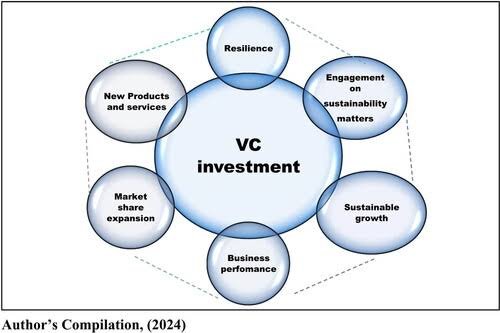
India’s venture capital market is entering a more selective phase in 2026, with investors placing greater emphasis on sustainable growth, monetisation and capital efficiency. Funding remains available, but startups increasingly need stronger business fundamentals and clearer routes to profitability and exits.
India’s VC Market Enters a More Selective Phase
Indian venture capital investors are increasingly looking beyond headline growth numbers as the startup ecosystem moves into a more disciplined funding environment.
According to Bain & Company’s India Venture Capital Report 2026, India’s venture capital and growth ecosystem is moving toward a monetisation-led phase. Investors are placing greater importance on capital efficiency, sustainable profitability and clear exit pathways instead of relying primarily on rapid expansion.
The shift does not mean venture capital has stopped backing high-growth companies. Capital continues to move into sectors such as artificial intelligence, enterprise technology, fintech, deep tech and digital infrastructure.
What has changed is the way investors evaluate that growth.
A startup showing rapidly increasing users or gross merchandise value may still attract capital, but investors are increasingly examining whether that growth can eventually translate into healthy margins, recurring revenue and sustainable cash generation.
Funding Rises While Deal Numbers Fall
The latest funding data provides a clear picture of this changing environment.
Indian technology startups raised $10.3 billion in equity funding during the first nine months of 2026, according to Tracxn data reported by Business Standard. That was 7% higher than the $9.7 billion raised during the same period in 2025.
However, the number of funding rounds dropped sharply. India recorded 1,134 funding rounds during the first nine months of 2026, compared with 1,838 rounds in the same period a year earlier, representing a decline of 38%.
This means the increase in total funding has not been evenly distributed across the startup ecosystem.
A smaller number of companies are receiving larger amounts of capital. Business Standard reported that enterprise applications, fintech and enterprise infrastructure were among the stronger-performing sectors during the period.
For founders, this creates a more competitive fundraising environment. Having a promising idea or strong user growth may no longer be enough to secure a large institutional round.
Unit Economics Become More Important
One of the biggest changes in investor conversations is the growing importance of unit economics.
Unit economics examines how much money a company makes or loses from an individual customer, transaction or product after accounting for relevant variable costs. Metrics such as customer acquisition cost, contribution margin, customer lifetime value and payback period can help investors understand whether growth is economically sustainable.
The focus becomes particularly important for startups operating in competitive markets where acquiring customers requires substantial spending.
For example, a company may increase its customer base rapidly by offering large discounts or spending heavily on advertising. But if each additional customer generates losses that cannot eventually be recovered, the business may struggle to become profitable even at a larger scale.
Bain’s 2026 assessment of India’s VC ecosystem points toward capital efficiency and sustainable profitability becoming increasingly important to investors.
This does not mean every early-stage startup must already be profitable. Investors can still fund businesses that are building products, entering new markets or developing technology. The emphasis is increasingly on whether management can demonstrate a credible path toward better economics as the company scales.
Public Markets Are Raising the Bar
India’s expanding startup IPO pipeline is also influencing how private investors assess companies.
Business Standard reported in May that India’s startup ecosystem was seeing a fresh wave of public listings, while investors were demanding greater attention to profitability, governance and sustainable growth compared with the funding environment during the 2021 boom.
Once a company approaches the public markets, investors have access to detailed financial statements, business metrics and regulatory disclosures. The market therefore places greater scrutiny on revenue quality, margins, cash flows and governance.
This affects venture investors earlier in the company’s lifecycle.
A VC fund ultimately needs an exit. That exit could come through an IPO, strategic acquisition or secondary transaction. If public-market conditions become more demanding, private investors need to consider whether a portfolio company can eventually meet those standards.
As a result, the path from venture funding to exit is becoming an increasingly important part of investment decisions.
Deep Tech Attracts Capital, But With Different Expectations
The shift toward sustainable business models does not apply only to consumer internet startups.
India’s deep-tech ecosystem is attracting larger amounts of capital, although these businesses often require longer development cycles and face different commercial risks.
Livemint reported in September that Indian deep-tech startups had raised $2.3 billion across nearly 200 deals during 2026, compared with $1.62 billion across 453 deals during all of 2025. The report noted that larger rounds were attracting mainstream investors, while growth investors remained cautious because of the technical and underwriting challenges involved.
Deep-tech companies may not generate significant revenue immediately because they can spend years developing intellectual property, hardware or complex technology.
Investors therefore need to evaluate them differently from a consumer app or SaaS company. Technology defensibility, commercial validation, customer contracts, intellectual property and the size of the eventual market can be important alongside traditional financial metrics.
The underlying principle remains similar: investors want evidence that additional capital can eventually create durable enterprise value.
Larger Deals Are Becoming More Concentrated
The current funding environment also shows increasing concentration around companies that have already demonstrated traction.
Tracxn data reported on September 24 shows that India’s technology ecosystem raised more capital despite a substantial fall in funding rounds. This indicates that investors are allocating larger amounts to a narrower set of businesses.
For established startups, this can create an advantage. Companies with proven revenue, strong customer retention and credible economics may be able to raise larger rounds even in a selective market.
For younger startups, the fundraising process may become more difficult.
Founders may need to show more evidence before approaching institutional investors, including early customer adoption, repeat usage, gross margins, cash runway and a clear explanation of how new funding will contribute to measurable milestones.
This can also affect startup valuations. When investors become more selective, companies without strong fundamentals may have to accept lower valuations, smaller rounds or more structured financing terms.
What This Means for Tier-2 and Tier-3 Startups
The changing VC environment is particularly relevant for startups operating outside India’s largest technology hubs.
A more disciplined funding market can make it harder for regional startups to raise capital based purely on market potential. At the same time, businesses serving specific local problems can have an opportunity if they demonstrate strong customer retention and sustainable economics.
Startups in areas such as regional commerce, financial services, logistics, healthcare, manufacturing technology and agricultural technology may benefit from India’s expanding digital and physical infrastructure.
The important factor is increasingly the quality of the business rather than simply the location of its headquarters.
For founders in cities such as Jaipur, Indore, Ahmedabad, Coimbatore, Lucknow or Nagpur, this could mean building stronger evidence of local demand before pursuing national expansion.
Investors Still Back Growth, But Growth Needs Economics
The current VC environment should not be interpreted as a complete move away from growth.
Venture capital is fundamentally designed to finance businesses capable of expanding substantially. Investors still need companies to demonstrate large market opportunities and the ability to scale.
The difference is that growth is increasingly being evaluated alongside monetisation and capital efficiency.
The latest funding numbers illustrate this distinction. India’s tech startups raised $10.3 billion during the first nine months of 2026, up from the previous year, even though the number of funding rounds fell 38%.
That combination suggests that capital has not disappeared. Instead, it is becoming more concentrated.
For Indian startups, the message from the current funding environment is therefore less about abandoning ambition and more about demonstrating how ambition can become a durable business.
Revenue quality, customer retention, unit economics, governance, capital discipline and credible exit opportunities are becoming increasingly important parts of the VC conversation.
Key Takeaways
- Indian tech startups raised $10.3 billion in equity funding during the first nine months of 2026, up 7% year-on-year.
- Funding rounds declined 38%, showing that capital is becoming more concentrated among a smaller group of companies.
- Investors are placing greater emphasis on monetisation, capital efficiency, sustainable profitability and exit pathways.
- High-growth sectors such as AI and deep tech continue to attract capital, but investors are examining their commercial and financial fundamentals more closely.
FAQ
What is changing in India’s venture capital market?
Investors are increasingly assessing startups on capital efficiency, monetisation, unit economics, profitability potential and exit opportunities alongside revenue and user growth. Bain’s 2026 India VC report describes the ecosystem as moving toward a more monetisation-led phase.
Has venture capital funding declined in India in 2026?
The answer depends on the measure. Indian technology startups raised $10.3 billion during the first nine months of 2026, 7% more than the comparable period in 2025. However, the number of funding rounds fell 38% to 1,134.
Why are investors focusing more on unit economics?
Unit economics helps investors understand whether a company’s individual customers or transactions can generate sustainable value. It can reveal whether growth is supported by improving economics or requires continued high levels of external funding.
Does the shift affect deep-tech startups?
Deep-tech startups face different investment timelines because technology development can require significant capital and longer periods before commercialisation. Recent reporting indicates that larger deep-tech funding rounds are attracting mainstream investors, while growth investors continue to assess technical and commercial risks carefully.












Leave a comment