

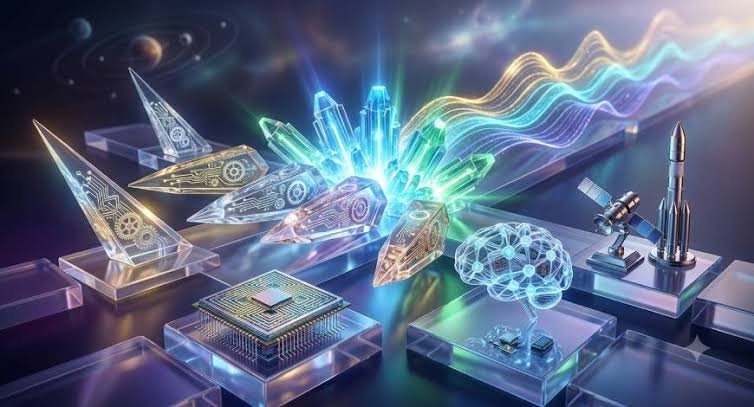
India’s venture capital market is increasingly moving toward artificial intelligence, SpaceTech and electric mobility. Recent funding rounds, new deep-tech funds and fresh capital commitments show investors are looking beyond conventional software startups toward businesses built around strategic technology, hardware and infrastructure.
India’s venture capital market enters a new phase
India’s venture capital pipeline is changing as investors put greater emphasis on artificial intelligence, SpaceTech, electric vehicles and other technology-intensive businesses. The shift comes alongside a broader recovery in startup funding, although capital is becoming more concentrated in larger and more established companies.
Indian tech startups raised $10.3 billion during the first nine months of 2026, up 7% from $9.7 billion during the corresponding period a year earlier, according to Tracxn data reported by Business Standard. At the same time, the number of funding rounds fell 38%, indicating that the increase in capital was driven by larger transactions rather than a broad expansion in the number of funded startups.
This distinction matters for founders. More money is entering the ecosystem, but investors are becoming more selective about where they deploy it.
AI is one of the clearest beneficiaries of this change, while SpaceTech and EV companies are attracting capital because of their links to strategic technology, manufacturing and India’s longer-term industrial ambitions.
AI startups attract larger venture capital bets
Artificial intelligence has emerged as one of the strongest themes in the current funding environment.
Recent deals illustrate how quickly the investment landscape is expanding beyond traditional software applications. On September 28, 2026, US-India AI company SiMa.ai raised $150 million in a Series C round, taking its total capital raised to $500 million and its valuation to approximately $1.45 billion. The company develops technology for physical AI applications involving robotics, drones and automobiles and has around 90 employees in India.
In India, Peak XV Partners’ latest Surge cohort also points to the growing importance of AI at the early stage. Nearly half of the 18 startups selected for the latest cohort are AI-native businesses, according to the Times of India. The cohort also includes companies working across robotics, space, consumer technology, healthcare and fintech.
The pattern suggests that investors are increasingly interested in AI as core infrastructure rather than simply as a feature added to an existing product.
AI infrastructure is becoming a major investment theme
The growing demand for AI is also creating opportunities outside consumer-facing applications.
Indian investors are increasingly looking at the broader AI stack, including chips, data infrastructure, enterprise software and specialised computing. Business Standard reported earlier this month that Gaja Capital was expanding its interest in India’s AI ecosystem, with investments spanning companies such as Fractal Analytics and Sarvam AI.
The trend is part of a wider global shift. AI systems require significant computing power, data infrastructure and specialised hardware, creating investment opportunities across multiple layers of the technology ecosystem.
For Indian startups, this could create a pathway for companies developing specialised technologies rather than competing directly with global consumer AI platforms.
It also changes the type of capital required. Hardware and infrastructure businesses generally need more funding and longer development timelines than conventional software startups.
SpaceTech moves from policy opportunity to investment market
India’s SpaceTech ecosystem is another area where venture capital is becoming more visible.
Private SpaceTech startups in India had raised about $871 million across 241 funding rounds involving 285 companies by July 2026, according to Tracxn data reported by Business Standard. The ecosystem had raised only $43 million across 12 rounds in 2021.
The growth has coincided with policy reforms opening greater opportunities for private companies in India’s space sector.
The government has also established the Antariksh Venture Capital Fund. According to the Press Information Bureau, the fund had an initial committed corpus of ₹1,005 crore and was expected to begin investments in FY2027 after completing the required institutional processes.
Government-backed capital can be particularly important for SpaceTech because many businesses require years of research, testing and infrastructure development before reaching commercial scale.
New deep-tech funds are expanding the funding pipeline
The funding ecosystem is also changing through the creation of dedicated deep-tech investment vehicles.
IIT Madras, IIT Madras Research Park and Unicorn India Ventures announced the first close of the ₹1,000 crore IITM Unicorn Frontier Fund I at ₹450 crore in September. The fund is targeting startups in areas including defence, space, semiconductors, AI infrastructure, manufacturing and health technology.
The fund has already invested approximately ₹55 crore across four early-stage startups working in rocket engines, quantum instrumentation, lithium-ion batteries and carbon capture.
This is significant because deep-tech startups often face a funding gap between research and commercialisation. Traditional venture capital models can be less suited to companies that require substantial capital before generating meaningful revenue.
Dedicated funds can provide longer-term capital aligned with technology development milestones.
EV startups attract capital for manufacturing and expansion
Electric mobility is another sector drawing substantial investment.
In August, Yamaha-backed Indian EV startup River Mobility raised $120 million in Series C funding. The company plans to use the capital to expand manufacturing and build a new facility capable of producing up to 80,000 electric scooters per month, compared with current capacity of about 10,000 units.
Another recent example is Ultraviolette Automotive. The electric motorcycle company raised $85 million in funding in September, with participation from Intel CEO Lip-Bu Tan, who also joined the company as an adviser. The funding is intended to support production expansion and product development.
These transactions show that EV investment is moving beyond the question of whether electric vehicles have demand. Investors are increasingly evaluating manufacturing capacity, battery technology, product positioning and the ability to scale.
Battery and critical-mineral startups enter the VC conversation
The EV investment story extends beyond vehicle manufacturers.
Battery materials and critical minerals are becoming increasingly important because India’s electric mobility ambitions depend on access to lithium, nickel, rare earths and other inputs.
Lohum, an Indian critical-minerals company, said it plans to raise ₹30 billion through equity and debt as it expands nickel production and develops lithium-related operations. The company currently produces nickel through recycling in Gujarat and is also pursuing overseas mineral assets.
Such businesses occupy an important position between traditional manufacturing and technology startups. They require capital for plants, processing facilities, research and supply-chain development.
For venture investors, this creates a different investment proposition from conventional software companies, with potentially longer timelines and higher upfront capital requirements.
Why investors are moving toward hard technology
The shift toward AI, SpaceTech and EVs reflects a broader change in how investors view India’s startup opportunity.
For much of the previous startup cycle, consumer internet, fintech, e-commerce and software businesses attracted significant venture capital. Those sectors remain important, but the current funding environment is increasingly focused on companies building physical technology and strategic infrastructure.
A recent analysis published by Express Computer highlighted semiconductors, advanced electronics and space systems as areas attracting greater attention from investors because of policy support, supply-chain changes and increasing commercial demand.
The economics are different. A software startup can potentially scale with relatively limited physical infrastructure. A rocket company, battery manufacturer or semiconductor startup cannot.
That makes capital availability, government support and strategic partnerships particularly important.
Tier-2 cities could benefit from the deep-tech shift
The concentration of venture capital remains heavily skewed toward India’s largest startup hubs. Bengaluru accounted for 43% of India’s technology funding during the first nine months of 2026, according to Tracxn data reported by Business Standard.
However, deep-tech businesses can emerge from a wider range of locations because they are often connected to universities, research institutions, industrial clusters and manufacturing centres.
Hyderabad, Chennai and other cities have already developed SpaceTech and engineering ecosystems. Government-supported research programmes and specialised funds could further expand this network.
For Tier-2 and Tier-3 cities, the opportunity may come through manufacturing, engineering services, battery supply chains, testing facilities and specialised technology rather than only through traditional consumer startups.
The funding boom still comes with greater selectivity
The increase in total funding should not be interpreted as easier access to venture capital for every startup.
The 38% decline in funding rounds during the first nine months of 2026 shows that capital is becoming more concentrated. At the same time, seed funding has faced pressure while larger transactions have accounted for a greater share of total capital.
This means founders in capital-intensive sectors may need to demonstrate more than a strong technology proposition.
Investors are likely to examine commercial demand, manufacturing plans, intellectual property, unit economics, regulatory requirements and the path to follow-on funding.
For AI, SpaceTech and EV startups, technology may open the door, but execution and market adoption remain important parts of the investment case.
What the new VC pipeline means for Indian startups
India’s venture capital market is entering a period where technology, infrastructure and strategic relevance are increasingly connected.
AI companies are attracting capital for applications as well as chips and infrastructure. SpaceTech startups are benefiting from policy reforms and dedicated funding mechanisms. EV companies are raising money to expand production, while battery and critical-mineral businesses are attracting capital around the wider electric mobility ecosystem.
The common thread is that these businesses require longer-term thinking.
The funding numbers from 2026 show that venture capital has not disappeared from India’s startup ecosystem. Instead, the composition of capital is changing. Investors are placing larger bets on fewer companies, with increasing attention on technologies that can support India’s manufacturing, infrastructure and strategic capabilities.
For founders, that means the next phase of India’s startup market may depend less on rapid user growth alone and more on technology depth, defensible intellectual property, commercial demand and the ability to build businesses that can scale beyond India’s largest cities.
Key Takeaways
- Indian tech startups raised $10.3 billion in the first nine months of 2026, even as the number of funding rounds declined sharply.
- AI is attracting capital across applications, enterprise software, physical AI, chips and computing infrastructure.
- India’s SpaceTech ecosystem had raised about $871 million across 241 funding rounds by July 2026, according to Tracxn data.
- EV and battery-related startups are attracting funding for manufacturing expansion, product development and critical-mineral supply chains.
FAQ
Why are AI startups attracting more venture capital in India?
AI is attracting investment across multiple parts of the technology stack, including enterprise applications, AI infrastructure, specialised chips, robotics and physical AI. Recent funding activity suggests investors are increasingly treating AI as core technology rather than only an application layer.
How much funding has India’s SpaceTech sector received?
According to Tracxn data reported by Business Standard, India’s SpaceTech startups had raised approximately $871 million across 241 funding rounds by July 2026. The sector included 285 companies at that point.
Why are EV startups attracting venture capital?
EV startups require capital for manufacturing facilities, product development, batteries, supply chains and market expansion. Recent funding rounds involving River Mobility and Ultraviolette show investors are continuing to finance companies seeking to increase production and expand their product portfolios.
Are Tier-2 and Tier-3 cities benefiting from India’s deep-tech funding trend?
The majority of venture capital remains concentrated in major startup hubs, particularly Bengaluru. However, SpaceTech, manufacturing, engineering, battery and industrial technology can create opportunities in cities with research institutions and established industrial ecosystems.










Leave a comment