

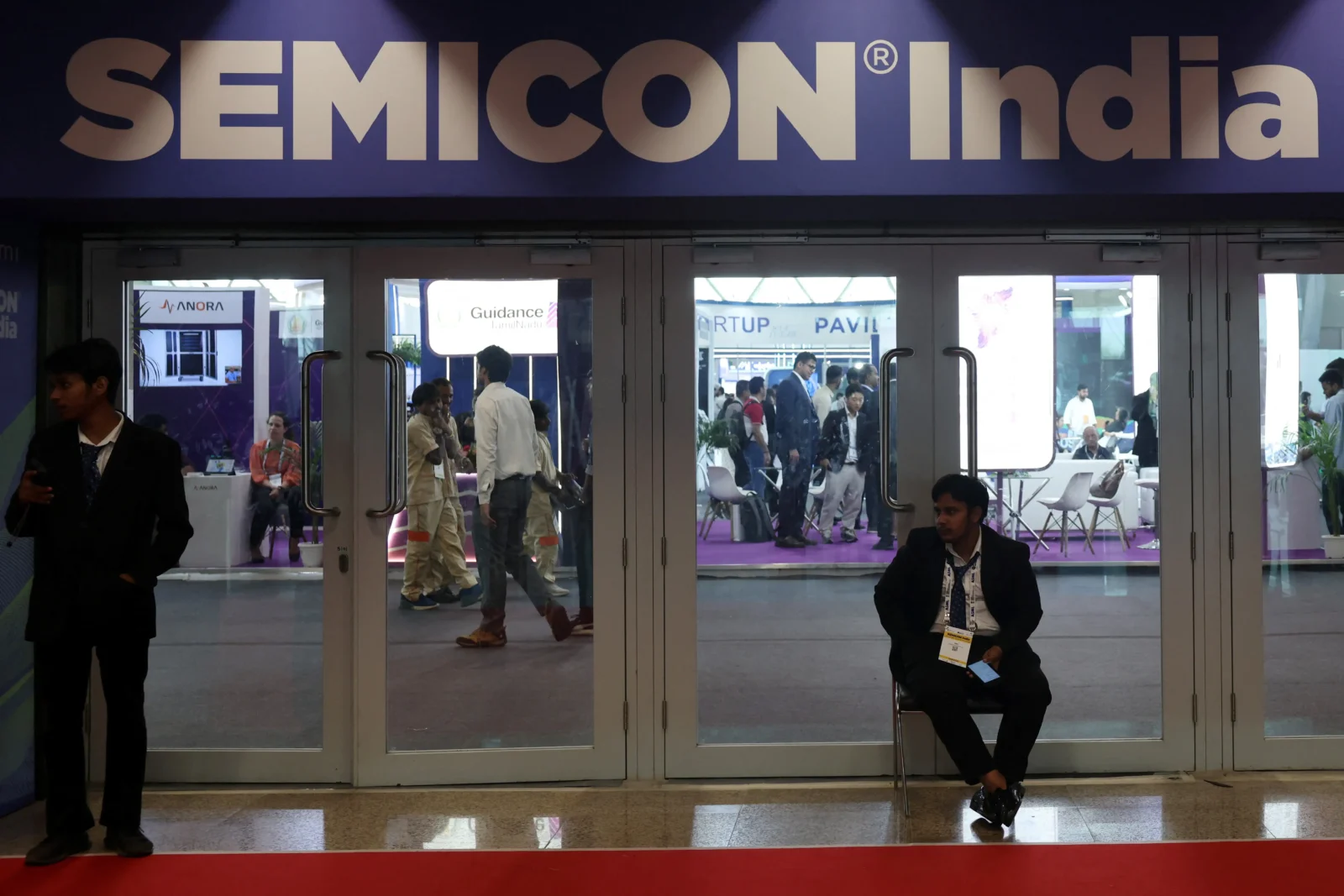
India’s semiconductor and robotics startups are attracting greater corporate venture capital interest as companies look for strategic technologies, specialised engineering capabilities and new growth opportunities. Recent investment moves by technology-focused investors reflect growing interest in hardware-led innovation, industrial automation and India’s expanding deep-tech ecosystem.
Corporate Venture Capital Looks Beyond Traditional Software Startups
Corporate venture capital (CVC) is emerging as an important source of funding for India’s semiconductor and robotics startups. Unlike conventional venture capital firms, which generally invest to generate financial returns, corporate venture capital arms also look for technologies that could strengthen their parent companies’ products, supply chains and long-term business strategies.
Recent developments illustrate this shift. On October 20, 2026, Financial Express reported that TDK Ventures, the investment arm of Japanese electronics company TDK, plans to deepen its investments in India’s hardware-focused deep-tech sector. Its areas of interest include robotics, semiconductor packaging, photonics and electric vehicle fast-charging technologies. The firm has made six investments in India and considers the country its second-largest investment geography after the United States.
For corporate investors, these technologies offer opportunities beyond conventional software products. Semiconductor startups can develop specialised chips and power-management systems, while robotics companies can build machines and automation technologies for industrial applications.
These businesses may also create strategic advantages for established manufacturers, electronics companies and technology providers. However, investment decisions depend on commercial viability, technical performance, market demand and the time required to bring products to scale.
India’s Semiconductor Ecosystem Creates New Investment Opportunities
India’s semiconductor ambitions are expanding beyond chip design into manufacturing, packaging, testing, equipment and materials. This broader ecosystem creates opportunities for startups developing technologies that support the semiconductor supply chain.
The government’s Semicon 2.0 programme reflects this direction. According to a September 17, 2026, announcement by the Ministry of Electronics and Information Technology, the programme is intended to strengthen semiconductor design, precision manufacturing, research and development, advanced packaging and talent development. The government reported investment commitments of around ₹1 lakh crore under the programme at that time, with the investments expected to materialise over the following two to three years, subject to the required approvals.
For corporate venture capital investors, this ecosystem creates several possible entry points.
Startups developing semiconductor intellectual property, electronic design automation tools, chip-testing technologies, sensors and power electronics may address specific industry requirements. Others may develop components that help manufacturers improve energy efficiency, reliability or production performance.
India’s semiconductor startup activity is also attracting acquisition interest. A Business Standard report published on October 11, 2026, noted that 620 semiconductor startups had been founded over the preceding five years and had raised more than $1 billion cumulatively. The report also highlighted seven acquisitions announced in 2026.
These figures indicate that investors are looking at more than the establishment of chip fabrication facilities. Technology ownership, specialised engineering and the ability to build products for commercial markets are becoming important parts of the opportunity.
Why Robotics Startups Are Drawing Corporate Attention
Robotics offers another area where corporate investors can connect startup innovation with established industrial operations.
Manufacturers, logistics companies, warehouses, automotive suppliers and electronics producers use automation to improve consistency, manage repetitive tasks and increase production efficiency. However, deploying robotics in real-world environments requires more than building a machine that works in a laboratory.
Startups must demonstrate that their systems can operate reliably, integrate with existing equipment and deliver measurable benefits. They also need to address maintenance, safety, installation costs and the availability of technical support.
This is where corporate venture capital can provide value beyond funding. An established industrial company may offer a startup access to testing facilities, engineering teams, distribution channels and potential customers. These relationships can help young companies validate their products under actual operating conditions.
Interest is also expanding towards physical AI, which combines artificial intelligence with machines that interact with the physical world. Applications can include robotic manipulation, industrial inspection and autonomous systems.
TDK Ventures has identified physical AI and industrial robotics as areas of interest, alongside hardware technologies linked to AI infrastructure.
For Indian startups, the opportunity is to build solutions that solve clearly defined operational problems. Broad claims about automation are unlikely to be sufficient for corporate buyers. Investors will want evidence that a product works consistently and can be deployed at a commercially viable cost.
Qualcomm and TDK Ventures Reflect the Strategic Investment Model
The growing interest in hardware-led innovation is not limited to one investor.
In February 2026, Qualcomm announced plans to invest up to $150 million through Qualcomm Ventures in India’s technology and AI startup ecosystem. The proposed investment programme includes companies working on AI for automotive applications, the Internet of Things, robotics and mobile technologies
The announcement illustrates how a technology company’s investment arm can support startups developing capabilities relevant to its wider business ecosystem.
TDK Ventures provides another example. Its investment focus includes materials science, semiconductor packaging, robotics and other hardware-intensive technologies. Its approach reflects the view that advances in materials, power management and physical systems can create opportunities that are different from those found in crowded software markets.
These examples should not be interpreted as evidence that every semiconductor or robotics startup will attract corporate funding. Rather, they show how established technology companies are identifying areas where external innovation could support future products and markets.
For founders, understanding the strategic priorities of potential investors can be as important as preparing financial projections.
Why Deep-Tech Startups Need More Than Capital
Semiconductor and robotics businesses often face development challenges that differ from those of software startups.
A software company may be able to release an initial product relatively quickly and improve it through updates. A semiconductor startup, by comparison, may need to develop chip architecture, verify designs, arrange fabrication, test prototypes and demonstrate performance before generating substantial revenue.
Robotics companies face their own challenges. Hardware production, component procurement, field testing, safety validation and after-sales support can require significant resources.
This can create a funding gap between early research and commercial adoption. Investors must be prepared to evaluate technical milestones alongside conventional indicators such as revenue growth and customer acquisition.
Corporate investors may help bridge part of this gap by providing access to industry expertise and potential customers. Some may also support pilot projects or help startups understand product requirements.
However, corporate backing is not a substitute for a viable business model. Startups still need to demonstrate demand, manage cash flow and develop a credible route to commercial scale.
Investors must also account for risks such as delayed product launches, dependence on a limited number of customers and the possibility that a technology may become outdated before it reaches the market.
Government Support Could Strengthen the Investment Pipeline
Public policy is another factor shaping corporate interest in India’s deep-tech ecosystem.
The Research, Development and Innovation (RDI) Scheme, approved in July 2025, has a total outlay of ₹1 lakh crore over six years. It is designed to encourage private-sector investment in research-led innovation, including strategic and emerging technologies such as robotics and AI applications. The scheme’s funding structure is intended to support high-technology projects and the development of deep-tech investment vehicles.

RDI
+1
The government has also approved Startup India Fund of Funds 2.0, with a corpus of ₹10,000 crore aimed at mobilising venture capital for deep-tech, technology-driven manufacturing and early-growth startups. The fund operates through investment channels designed to support the broader startup financing ecosystem rather than directly guaranteeing funding to individual companies.
These initiatives could help strengthen the environment in which corporate venture capital operates. Public support may improve access to financing and encourage investment in technologies that require longer development periods.
Still, government programmes do not remove the underlying commercial risks. Their impact will depend on implementation, the availability of qualified investment managers, the quality of startup proposals and the ability of businesses to develop market-ready products.
What This Means for Startups Outside India’s Major Technology Hubs
The opportunity is relevant to founders beyond Bengaluru, Hyderabad, Chennai and other established technology centres.
Manufacturing clusters in cities such as Pune, Ahmedabad, Coimbatore and Nagpur can offer access to industrial customers, engineering talent and specialised supply chains. The potential for robotics and semiconductor-related businesses depends on the local ecosystem, available infrastructure and proximity to customers.
For example, a robotics startup working on automated inspection for manufacturing plants may benefit from being close to industrial facilities where its technology can be tested. A company developing specialised electronics may need access to engineering partners, component suppliers and semiconductor design tools.
However, the presence of manufacturing activity alone does not guarantee that a city can support a deep-tech startup. Companies also need experienced technical teams, reliable infrastructure, access to capital and customers willing to test emerging products.
Founders seeking corporate venture capital should identify the specific business problem their technology solves and explain how it fits the potential investor’s strategic priorities. Evidence from pilot projects, prototype performance and early customer feedback can help establish credibility.
What Corporate Investors Will Look for Next
As investment interest develops, corporate venture capital firms are likely to assess startups on several connected factors: the strength of their intellectual property, technical differentiation, market demand, production readiness and ability to work with established businesses.
In semiconductors, the ability to move from design services towards proprietary products may help startups build defensible technology businesses. In robotics, reliability, deployment economics and customer adoption will be important indicators of commercial potential.
Investors will also need to distinguish between companies developing genuinely differentiated technology and those relying primarily on broader industry enthusiasm.
The central question is whether a startup can turn its technical advantage into a product that customers are willing to buy repeatedly. For corporate investors, that product must also fit a wider strategic objective or create a credible financial return.
India’s semiconductor and robotics ecosystem is still developing, but recent investment announcements and policy initiatives suggest that hardware-led deep technology is becoming a more visible part of the country’s startup landscape.
Corporate venture capital could play an important role in that development by connecting funding with industry knowledge, technical resources and commercial opportunities. The scale of its eventual impact will depend on how successfully startups translate engineering capabilities into sustainable businesses.
Key Takeaways
- Corporate venture capital investors are showing interest in India’s semiconductor, robotics, photonics and AI hardware sectors because of their strategic and commercial potential.
- TDK Ventures and Qualcomm Ventures illustrate how established technology companies are backing startups working on hardware-led innovation.
- Government initiatives, including the RDI Scheme and Startup India Fund of Funds 2.0, aim to strengthen financing for deep-tech and technology-driven manufacturing businesses.
- Access to corporate investors does not guarantee funding or market success. Startups must demonstrate technical differentiation, customer demand and a credible path to commercial scale.
Frequently Asked Questions
1. What is corporate venture capital?
Corporate venture capital is investment made by an established company, usually through a dedicated investment arm, in external startups. It can provide financial returns as well as strategic benefits, including access to emerging technologies and potential business partnerships.
2. Why are corporate investors interested in Indian semiconductor startups?
India is expanding its semiconductor design, manufacturing and packaging ecosystem. Startups developing specialised chips, semiconductor intellectual property, power-management technologies and related products may offer opportunities for corporate investors seeking new technologies and supply-chain capabilities.
3. How can robotics startups benefit from corporate venture capital?
Corporate investors may provide funding, industry expertise, access to potential customers and opportunities to test products in real operating environments. These advantages can help robotics startups validate their technology and prepare for commercial deployment, although support varies by investor.
4. Can early-stage semiconductor and robotics startups receive corporate funding?
Yes, depending on the investor’s strategy, the startup’s development stage and its technical and commercial prospects. Some investors support early-stage companies, while others prefer businesses with working prototypes, validated technology or established customer relationships.









Leave a comment