

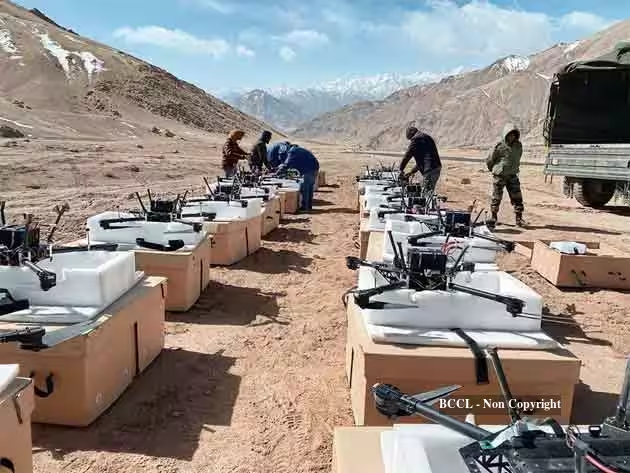
Indian defence startups are entering a crucial phase as government procurement, indigenous manufacturing and defence technology development create new opportunities. However, converting development contracts and procurement orders into delivered products, recognised revenue and sustainable profits remains a major challenge for emerging companies.
India’s Defence Industry Is Growing, but Execution Matters
India’s defence industry has expanded significantly, supported by government procurement, domestic manufacturing initiatives and growing export opportunities. According to the Department of Defence Production, India’s defence production reached a record ₹1.78 lakh crore in the financial year 2025-26, while defence exports rose to ₹38,424 crore. These figures indicate the growing scale of the domestic defence ecosystem, although they do not represent the financial performance of startups alone.
For emerging defence technology companies, the next challenge is translating this broader industry growth into commercial success. Developing a promising technology or securing an initial contract can help establish credibility, but neither automatically guarantees recurring revenue.
Defence startups often work on specialised products such as unmanned aerial systems, surveillance equipment, communication technologies, robotics, cybersecurity solutions and advanced electronics. Their products may address important military requirements, but bringing them into regular service involves technical validation, procurement approvals, manufacturing readiness and long-term support capabilities.
The commercial opportunity is substantial. Yet, companies must demonstrate that they can deliver reliable products at the required scale, within agreed timelines and at commercially sustainable costs.
Why Defence Startup Orders Do Not Immediately Become Revenue
One of the most important distinctions in defence procurement is the difference between a development contract and a production order.
Under development programmes, a startup may receive financial support to design a solution, build a prototype or demonstrate that its technology meets a specified requirement. This provides an opportunity to test the product and establish its technical value.
However, a successful prototype does not automatically lead to a large-scale purchase. The technology may need additional trials, modifications or evaluations before the customer decides whether to procure it.
The Ministry of Defence’s Innovations for Defence Excellence (iDEX) initiative is designed to support startups, MSMEs and individual innovators working on defence-related technologies. Its framework includes financial assistance, technical guidance, access to testing facilities and support for product development and commercialisation.
By March 2026, iDEX had engaged 676 startups, MSMEs and innovators, with 551 design and development contracts signed. These figures demonstrate the breadth of India’s defence innovation ecosystem, but participation and development contracts should not be confused with completed commercial sales.
For startups, the transition from experimentation to procurement is therefore a critical business milestone. Companies must plan for the possibility that technical development will take longer than expected or that an initial project will not progress immediately to repeat orders.
Manufacturing Capacity Is the Next Major Test
A defence startup may successfully develop a product with a small engineering team, but manufacturing hundreds or thousands of units requires a different set of capabilities.
Production at scale involves sourcing components, maintaining quality standards, securing specialised equipment, hiring trained workers and coordinating with suppliers. Products intended for military use must also meet demanding performance and reliability requirements.
These challenges can be particularly difficult for startups that have limited capital and a small operational team.
A company manufacturing a surveillance device, for example, may be able to produce a few working units in its development facility. Fulfilling a larger order could require additional testing equipment, reliable component suppliers, assembly capacity and procedures for inspecting every unit before delivery.
If production capacity is not ready when an order arrives, the company risks missing delivery milestones. Delays can postpone payments, increase operating expenses and affect its ability to secure future contracts.
A June 2026 analysis by CRISIL Ratings noted that higher-value defence orders can involve more stringent testing and approval requirements, while expanding production capacity can stretch working-capital cycles. Although the analysis covered private defence companies rather than startups exclusively, the underlying challenge is relevant to smaller manufacturers as well.
Working Capital Can Put Pressure on Young Companies
Defence manufacturing requires money before a company necessarily receives payment for its finished product.
Startups may need to purchase raw materials, pay employees, invest in machinery and finance testing activities while waiting for contractual milestones to be completed. If customer payments are linked to delivery, inspection or acceptance, the period between spending money and receiving revenue can become lengthy.
This creates a working-capital problem.
A startup may have a substantial order book but still struggle to pay suppliers or finance its next production batch. An order book represents contracted business awaiting execution; it is not the same as cash available in the bank.
The situation can become more complicated when a company depends heavily on a single customer or one major contract. Any delay in approvals, testing or delivery can affect a significant share of its expected income.
To manage this risk, founders need realistic cash-flow forecasts, disciplined spending and clear visibility into procurement schedules. They also need to understand the payment terms attached to each contract rather than treating the headline order value as immediately available funds.
Government Procurement and iDEX Offer Opportunities, Not Guaranteed Sales
Government initiatives have helped create pathways for Indian startups to develop defence technologies and engage with potential military users.
Through iDEX and related programmes, innovators can work on defined operational challenges and receive support for prototype development. The broader objective is to encourage indigenous innovation and help suitable technologies progress towards practical defence applications.
However, selection for an innovation challenge is only one stage of the commercial journey. Product development, technical evaluation, user acceptance and procurement decisions remain important steps.
Startups must also understand the requirements of their intended customers. A product that works in a controlled demonstration may need further modifications to meet operational conditions, integration requirements or maintenance expectations.
The ability to commercialise a technology therefore depends on more than innovation. It requires coordination between engineers, procurement teams, manufacturers and end users.
For founders, an important priority is to establish a clear route from development funding to production, delivery and after-sales support. Without that plan, a startup may continue developing prototypes without building a dependable commercial business.
Why Partnerships Could Help Startups Scale Faster
Partnerships with established manufacturers, defence public sector undertakings and other industrial suppliers can help startups address some of their operational limitations.
Larger companies may already possess manufacturing facilities, quality-control systems, supplier relationships and experience in meeting defence procurement requirements. Working with these organisations can give smaller technology companies access to capabilities that would be expensive to build independently.
For example, a startup specialising in artificial intelligence or sensor technology could focus on developing its core product while collaborating with an established manufacturer for integration, production or testing.
Such arrangements can also help startups understand industry standards and improve the reliability of their products.
However, partnerships require careful planning. Companies need clear agreements on intellectual property, product responsibilities, payment schedules, production targets and customer relationships. A startup must ensure that its role remains commercially valuable rather than becoming dependent on a single partner.
Building relationships with multiple suppliers and exploring appropriate civilian or export markets may also help reduce dependence on a single source of demand. Defence products are subject to applicable export controls, licensing requirements and customer-specific restrictions, so expansion beyond India requires careful regulatory assessment.
What Investors Will Watch in India’s Defence Startup Sector
As defence technology companies mature, investors are likely to examine their ability to convert technical progress into measurable commercial performance.
An impressive prototype may attract early attention, but sustained business growth depends on execution. Investors need to understand how much capital a company requires before its products generate revenue, how long procurement cycles may take and whether customers are likely to place repeat orders.
Important indicators include the value of production orders, completed deliveries, recognised revenue, gross margins, cash-flow requirements and customer concentration. The distinction between development funding, announced contracts and completed commercial sales is especially important when evaluating a young defence company.
Startups that establish reliable production processes and demonstrate successful delivery may be better positioned to attract further investment. Those that rely on a single prospective contract without sufficient working capital could face greater financial pressure.
The wider industry outlook remains encouraging, supported by India’s push for domestic manufacturing and expanding defence exports. However, opportunities will not benefit every startup equally. Companies must demonstrate that their products meet customer requirements and that their business models can support long development cycles.
The Road Ahead for Indian Defence Startups
India’s defence startup ecosystem is moving from an early emphasis on innovation towards the more demanding task of commercial execution. Government support, procurement opportunities and domestic manufacturing initiatives can help companies enter the market, but sustainable growth depends on their ability to deliver products reliably.
The next phase will require stronger manufacturing capabilities, realistic financial planning, effective industry partnerships and a clearer path from development contracts to repeat business.
For startups, the goal should not simply be to win orders. It should be to fulfil them efficiently, collect payments on time, maintain product quality and build a customer base that supports future growth.
India’s defence industry has recorded significant gains in production and exports. Whether emerging technology companies can translate these gains into durable businesses will depend on how effectively they bridge the gap between innovation and execution.
Key Takeaways
- India’s defence production reached ₹1.78 lakh crore in FY 2025-26, reflecting the expansion of the wider domestic industry.
- Development contracts and prototype success do not automatically guarantee large-scale procurement or recurring revenue.
- Manufacturing capacity, testing requirements and working-capital constraints can delay deliveries and payments.
- Strong industry partnerships, financial planning and reliable execution can help startups build sustainable defence businesses.
Frequently Asked Questions
1. Why do Indian defence startups struggle to convert orders into revenue?
Defence startups may face lengthy testing and approval processes, manufacturing constraints, supplier delays and payment schedules linked to delivery milestones. These factors can delay revenue recognition even when a company has secured an order.
2. What is the role of iDEX in supporting defence startups?
Innovations for Defence Excellence supports startups, MSMEs and individual innovators through defence technology challenges, development funding, technical guidance and access to testing facilities. Its objective is to encourage indigenous innovation and help suitable technologies move towards commercialisation.
3. Does winning a government defence contract guarantee profitability?
No. A contract creates a potential source of revenue, but profitability depends on production costs, delivery schedules, payment terms, testing expenses and the company’s ability to fulfil its obligations efficiently.
4. What can help Indian defence startups scale their businesses?
Startups can improve their prospects through disciplined cash-flow management, manufacturing partnerships, dependable suppliers, strong quality-control systems and a clear plan for converting development projects into production orders and repeat sales.












Leave a comment