

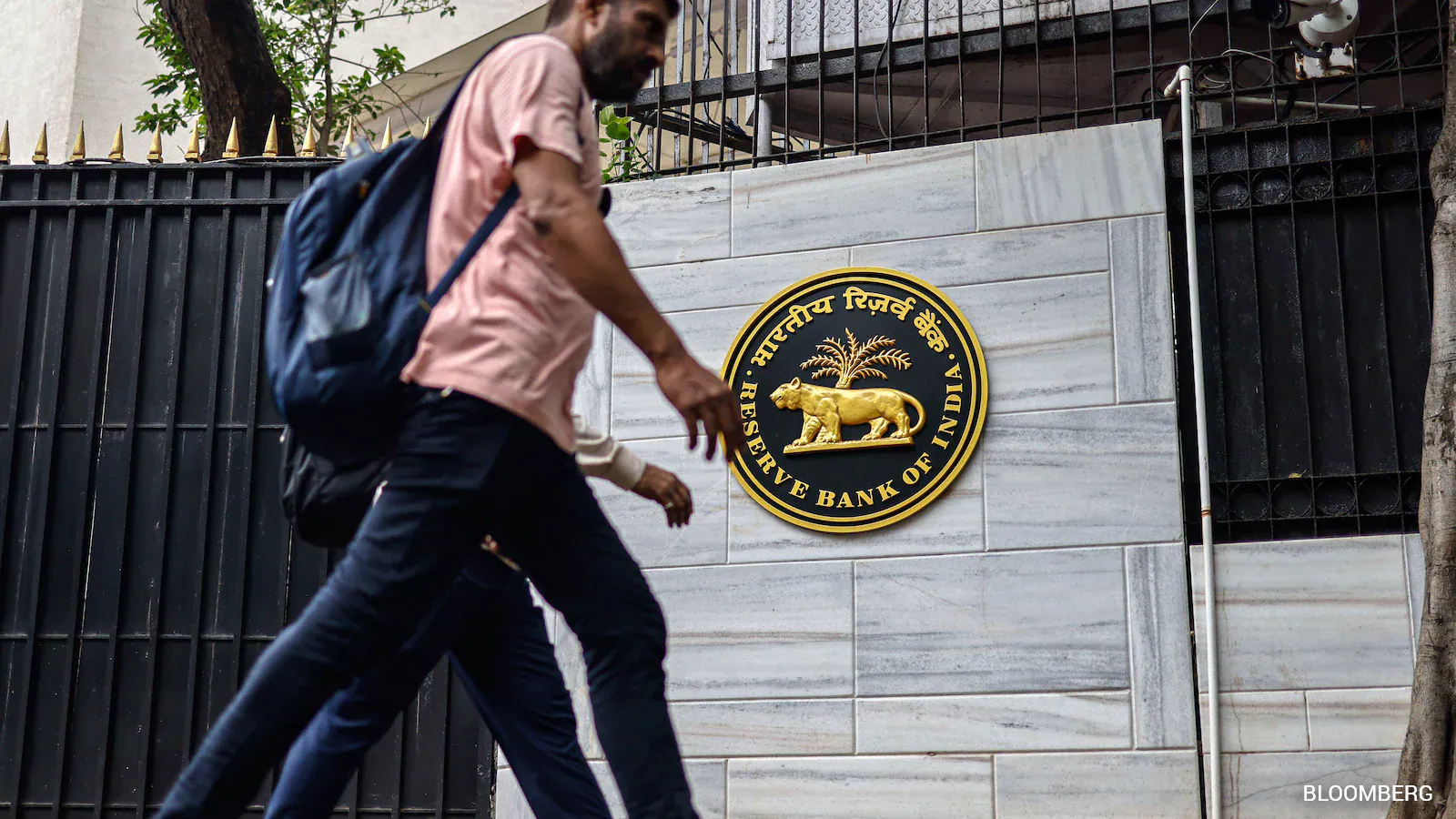
Goldman Sachs expects the Reserve Bank of India (RBI) to increase interest rates by another 75 basis points by mid-2027, citing rising inflation and higher food prices. The projected tightening could increase borrowing costs, influence business investments and affect India’s economic growth.
Goldman Sachs Forecasts Further RBI Interest Rate Hikes
India’s interest rate outlook is attracting attention after Goldman Sachs projected another round of monetary tightening by the Reserve Bank of India. According to its India 2027 Outlook report, the investment bank expects the RBI to increase the benchmark repo rate by 75 basis points by the second quarter of calendar year 2027.
The forecast includes a 25-basis-point increase in December 2026, followed by another 50 basis points during the first half of 2027. If these increases take place, the repo rate could reach 6.25% by April-June 2027, compared with the current 5.50%.
The projection comes after the RBI increased its repo rate by 25 basis points in October 2026, marking its first rate hike in nearly four years.
Goldman Sachs expects the possibility of further increases to depend on persistent inflationary pressures, particularly rising food prices and broader increases in the cost of goods and services.
It is important to note that these are Goldman Sachs’ expectations. The RBI’s Monetary Policy Committee will make its decisions based on incoming economic data and inflation trends.
Rising Inflation Creates Pressure on RBI Monetary Policy
Inflation is one of the main reasons behind the expected change in India’s interest rate outlook.
Goldman Sachs expects India’s headline consumer price inflation to average 5.7% in calendar year 2027, compared with an estimated 4.6% in 2026. The investment bank also expects core inflation to average 4.7% in 2027.
Food prices are expected to remain an important source of inflationary pressure. Goldman Sachs projects food inflation at 7.7% in 2027, compared with 5.6% in 2026.
Weather-related disruptions, including the potential impact of El Niño conditions, could affect agricultural production and the supply of essential commodities such as pulses, cereals and sugar.
Higher food prices can influence household spending because food accounts for a significant portion of consumption expenditure in India.
The concern for policymakers is that inflation may not remain limited to food products. When businesses face higher input costs, they may gradually pass those expenses to consumers through higher prices.
This can broaden inflationary pressure across different sectors of the economy.
The RBI’s monetary policy decisions will therefore depend on whether these price increases remain temporary or become more widespread.
How Higher Repo Rates Affect Business Borrowing Costs
The repo rate is the interest rate at which the RBI lends short-term funds to commercial banks against eligible securities. Changes in this rate influence borrowing costs and liquidity conditions across the financial system.
When the RBI increases the repo rate, banks may face higher funding costs. Depending on their deposit rates, liquidity position and lending strategy, they may increase interest rates on certain loans.
For businesses, this can make borrowing more expensive.
Companies that depend on bank financing for working capital, machinery purchases, infrastructure development and business expansion may have to allocate more money towards interest payments.
For example, a manufacturing company planning to purchase new equipment through a business loan could face higher financing expenses if its lending rate increases.
Similarly, companies using cash credit and overdraft facilities may experience additional interest costs.
Higher borrowing expenses can influence business decisions, particularly for companies operating with limited profit margins.
However, the impact will not be identical across all businesses. The extent of the increase will depend on loan agreements, interest rate benchmarks, lender policies and the timing of rate revisions.
Impact on MSMEs and Small Businesses in Tier-2 Cities
Small and medium enterprises could be among the businesses that need to monitor the interest rate outlook closely.
MSMEs often depend on bank loans to manage daily operations, purchase raw materials, maintain inventory and expand production capacity.
Unlike larger corporations, many smaller businesses have limited access to alternative sources of financing. They may also have less financial flexibility to absorb higher borrowing expenses.
In Tier-2 and Tier-3 cities, businesses in manufacturing, retail, logistics, food processing and local services frequently depend on working capital loans to maintain operations.
Consider a small manufacturing unit that borrows money to purchase raw materials. If its borrowing costs increase, the business may have to spend more on interest payments without necessarily being able to increase product prices immediately.
This can reduce profit margins and affect cash flow.
Businesses planning expansion may also reconsider the timing of investments if financing becomes more expensive.
However, higher interest rates do not necessarily stop lending activity. Businesses with strong cash flows, reliable repayment records and viable expansion plans may continue to receive financing.
For smaller enterprises, maintaining financial discipline and monitoring loan repayment obligations will become increasingly important if borrowing costs rise.
Higher Interest Rates Could Influence Corporate Investment
Corporate investment decisions are closely connected to the cost of financing.
When interest rates increase, companies generally reassess the expected returns from new projects. An investment that appeared financially attractive under lower borrowing costs may become less profitable when interest expenses rise.
This could influence decisions involving factory expansion, equipment purchases, commercial property development and new infrastructure projects.
Businesses with significant debt exposure may also prioritise reducing liabilities rather than taking on additional loans.
Goldman Sachs expects India’s real GDP growth to moderate to 7.2% in calendar year 2027, compared with an estimated 7.9% in 2026.
The investment bank expects tighter monetary conditions to contribute to this moderation. It also points to the fading impact of earlier tax cuts, fiscal support and monetary easing.
However, India’s economic activity is expected to receive support from domestic demand and an emerging investment cycle.
This suggests that higher interest rates may moderate the pace of investment without necessarily bringing business activity to a standstill.
The actual impact will depend on how inflation, consumption, corporate earnings and investment demand develop over the coming quarters.
Banking Sector May See Changes in Lending and Deposit Rates
A higher repo rate can also influence the banking industry.
Banks depend on deposits to finance lending operations. When interest rates rise, they may increase deposit rates to attract and retain customers, particularly if competition for funds becomes stronger.
At the same time, banks may revise lending rates depending on their funding costs and the structure of their loan portfolios.
Borrowers with floating-rate loans linked to external benchmarks may experience changes in their interest payments when the applicable lending rate is revised.
Existing borrowers with fixed-rate loans may not see an immediate change, depending on their loan agreements.
For banks, the impact of higher rates can be mixed.
Higher lending rates may improve interest income on certain loans, but increased deposit costs can put pressure on margins. Loan demand may also moderate if customers become more cautious about borrowing.
Banks will therefore need to balance deposit mobilisation, credit growth and asset quality.
What Higher Interest Rates Mean for Consumers and Demand
Businesses do not operate independently of household spending. Changes in interest rates can influence consumer purchasing decisions and, consequently, business revenues.
When borrowing becomes expensive, households may reconsider purchases financed through loans.
Home loans, vehicle loans and personal loans could become more expensive if banks pass on higher funding costs to borrowers.
For example, a family planning to purchase a house through a long-term home loan may face higher monthly instalments if its floating interest rate increases.
This could affect demand in interest-sensitive sectors such as housing, automobiles, consumer durables and real estate.
Retailers and manufacturers may also experience changes in purchasing patterns if households reduce discretionary spending.
However, the effect will depend on income growth, employment conditions, consumer confidence and the extent of any interest rate increases.
Strong domestic demand could continue supporting consumption even if financing conditions become tighter.
Why RBI Must Balance Inflation and Economic Growth
The RBI faces an important policy challenge: controlling inflation without unnecessarily slowing economic activity.
Higher interest rates can help moderate inflation by making borrowing more expensive and reducing excessive credit-driven demand. They can also influence spending and investment decisions across the economy.
However, monetary tightening has limitations, particularly when inflation is driven by supply-side factors such as food shortages, weather disruptions or higher global commodity prices.
In such situations, increasing interest rates cannot directly improve agricultural production or reduce the cost of imported raw materials.
The RBI must therefore assess whether inflation is becoming broad-based and whether higher prices are influencing wages, services and overall consumer expectations.
Its October 2026 monetary policy decision reflected a calibrated tightening approach, with the repo rate increased to 5.50%.
The central bank’s next policy review, scheduled for December 2-4, will be closely watched by businesses, borrowers, investors and financial institutions.
The RBI’s decision will depend on its assessment of economic conditions rather than any single investment bank’s forecast.
What Businesses Should Watch in 2027
For Indian businesses, the interest rate outlook makes financial planning particularly important.
Companies with significant borrowing requirements may need to review their debt obligations and assess how potential rate increases could affect cash flows.
MSMEs should pay attention to working capital requirements, loan repayment schedules and inventory management.
Businesses planning large capital investments may also need to evaluate financing costs under different interest rate scenarios.
At the same time, companies should monitor food inflation, commodity prices, consumer demand and changes in banking credit conditions.
The broader economic outlook remains important. Goldman Sachs expects India’s GDP growth to moderate to 7.2% in 2027, but domestic demand and investment activity are expected to provide support.
The coming months will show whether inflation develops in line with these projections and how the RBI responds.
For now, the possibility of higher interest rates is a factor businesses should include in their financial planning, rather than treating the projected increases as confirmed policy decisions.
Key Takeaways
- Goldman Sachs expects the RBI to increase the repo rate by 75 basis points to 6.25% by the second quarter of 2027.
- Rising food prices and broader inflationary pressures are among the main reasons behind the forecast.
- Higher borrowing costs could affect MSMEs, manufacturing companies, real estate businesses and other credit-dependent sectors.
- Goldman Sachs projects India’s GDP growth at 7.2% in CY27, compared with an estimated 7.9% in CY26.
Frequently Asked Questions (FAQs)
1. Why does Goldman Sachs expect the RBI to increase interest rates?
Goldman Sachs expects further rate increases because of persistent inflationary pressures, higher food prices and rising costs across goods and services. It expects headline inflation to average 5.7% in 2027.
2. What is the current RBI repo rate in November 2026?
The RBI’s policy repo rate stands at 5.50% following the 25-basis-point increase announced in October 2026.
3. How will higher RBI interest rates affect small businesses?
Higher interest rates could increase borrowing expenses for businesses using working capital loans, cash credit facilities and machinery financing. This may affect cash flows, profit margins and expansion plans.
4. Will RBI interest rate hikes affect home and business loans?
They can. Borrowers with floating-rate loans may experience higher interest payments when their applicable lending rates are revised. The impact depends on the loan’s interest rate structure and lending benchmark.
(Internal keywords: Goldman Sachs RBI rate forecast, RBI interest rate hike 2026, India repo rate 2027, RBI monetary policy, business loan interest rates, impact of repo rate hike, MSME borrowing costs India, Indian economy growth forecast 2027, inflation in India, RBI December monetary policy)










Leave a comment