

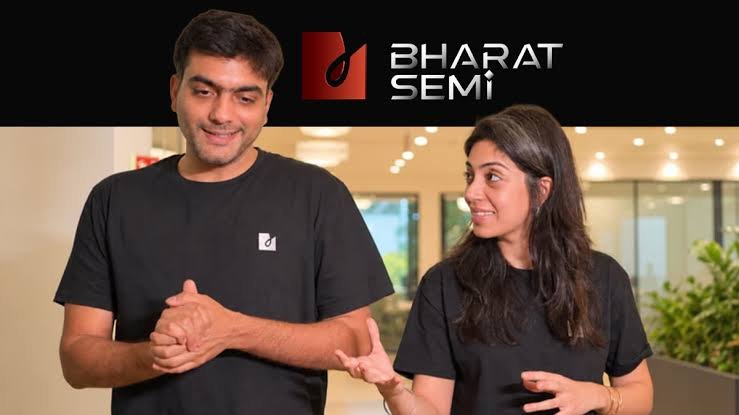
Bharat Semi has raised $24 million in seed funding to develop programmable semiconductor sensors powered by artificial intelligence. The investment highlights growing interest in India’s deeptech ecosystem and raises an important question about the country’s ability to build globally competitive semiconductor technology.
Bharat Semi Raises $24 Million in Seed Funding
Indian semiconductor startup Bharat Semi has raised $24 million in an all-equity seed funding round led by Info Edge Group, South Park Commons and Indus Bridge Ventures. The round also included participation from Micromax, Valour Capital, New York-based Gaingels and angel investors Mukul Agarwal and Karthik Sundar Iyer.
The funding announcement, reported on November 16, 2026, comes as India attempts to strengthen its semiconductor design capabilities and reduce dependence on international technology supply chains.
Founded in 2021 by Vinayak Dalmia and Vrinda Kapoor, Bharat Semi is developing programmable image sensors that combine sensing, processing and artificial intelligence capabilities on a single chip.
The company plans to use the fresh capital to accelerate product development, expand its engineering teams in India and the United States, and work towards commercial deployments with global customers.
The funding also reflects increasing investor interest in deeptech businesses that require substantial research, engineering expertise and longer development cycles.
What Is Bharat Semi Developing?
Bharat Semi is working on intelligent sensors designed for applications where machines need to understand and respond to their physical surroundings.
Traditional image sensors primarily capture visual information and transfer it to other components for processing. This process can require multiple chips, increasing system complexity, power consumption and costs.
Bharat Semi aims to combine image capture and AI-based processing within a programmable sensor architecture. This could allow devices to interpret information closer to where it is captured rather than sending large amounts of raw data to separate processors.
The technology is being developed for applications across consumer electronics, surveillance, automotive systems, drones and robotics.
For example, a conventional surveillance camera may capture video and transfer it to another processing unit for analysis. An intelligent sensor could perform certain recognition and interpretation tasks directly within the sensor system.
Similarly, drones could potentially process visual information locally, helping them respond to their surroundings without depending entirely on remote computing infrastructure.
The company is targeting the growing Physical AI market, where artificial intelligence moves beyond software applications and becomes part of machines, devices and automated systems.
Why Physical AI Is Creating Demand for Advanced Semiconductor Sensors
Artificial intelligence has traditionally been associated with software platforms, cloud computing and data centres. However, its applications are increasingly extending into the physical world.
Robots need to recognise objects, autonomous systems must interpret their surroundings, and industrial machines require real-time information to perform specific tasks.
These applications depend on hardware that can collect and process information efficiently.
This is where intelligent semiconductor sensors could become important.
Conventional systems often transfer large volumes of information between sensors, processors and computing units. Such arrangements can increase latency, energy consumption and system costs.
Processing information closer to the source can help reduce unnecessary data movement and support faster responses.
Bharat Semi claims its technology can reduce data movement between components by up to 99% and lower system costs by up to 10 times compared with conventional multi-chip modules.
These are company-reported performance claims and will need to be assessed against independently tested commercial products.
The wider opportunity extends beyond robotics. Smart home devices, industrial automation, surveillance equipment and automotive systems could also require more advanced sensing capabilities as AI adoption increases.
Can India’s Semiconductor Startups Build Homegrown Technology?
India has established itself as an important market for electronics consumption, software development and technology services. However, building a competitive semiconductor industry involves a different set of challenges.
Semiconductor development requires specialised engineering skills, advanced research facilities, substantial capital and access to complex manufacturing infrastructure.
The industry also operates through a highly interconnected global supply chain. Chip design, wafer fabrication, packaging, testing and equipment manufacturing often involve companies operating across multiple countries.
For Indian startups, developing semiconductor technology domestically does not necessarily mean manufacturing every chip within India.
A company can design its own chips, develop proprietary intellectual property and software, while outsourcing manufacturing to an established semiconductor foundry. This is known as the fabless business model.
Bharat Semi plans to follow this approach for its image-sensor business.
This distinction is important because semiconductor design and semiconductor fabrication involve different investments, capabilities and infrastructure requirements.
India’s opportunity therefore extends beyond building large chip manufacturing facilities. Developing specialised chip designs, sensor technologies and semiconductor intellectual property can also help the country participate in the global industry.
India’s Semiconductor Mission and the Push for Domestic Capabilities
The Indian government has introduced several initiatives to strengthen domestic semiconductor manufacturing and related industries.
The India Semiconductor Mission, launched under the Ministry of Electronics and Information Technology, was established to support semiconductor and display manufacturing projects in the country.
The Semicon India Programme has an approved financial outlay of ₹76,000 crore to encourage investments across semiconductor fabrication, display manufacturing, compound semiconductors, semiconductor packaging and related activities.
These initiatives are intended to strengthen India’s position in the global electronics and semiconductor supply chain.
Government support is particularly relevant because semiconductor manufacturing involves high capital expenditure, specialised infrastructure and long project development periods.
However, building a sustainable semiconductor ecosystem requires more than financial incentives. Companies also need reliable electricity, water, specialised equipment, skilled engineers, research institutions and strong supplier networks.
Startups such as Bharat Semi represent another part of this ecosystem by focusing on semiconductor design and specialised hardware innovation.
Their progress could help develop Indian intellectual property and create opportunities for collaboration with international technology companies.
Investors Are Increasingly Interested in India’s Deeptech Startups
Bharat Semi’s $24 million funding round also highlights the growing willingness of investors to support technology companies working on complex engineering problems.
Unlike consumer internet businesses, deeptech startups often require significant investment before their products become commercially available.
Semiconductor companies must spend time developing prototypes, testing hardware, improving performance and establishing manufacturing partnerships.
This creates a different funding requirement compared with businesses that can launch software products relatively quickly.
Bharat Semi’s funding round attracted investors from different backgrounds, including technology investment firms, venture capital participants and strategic industry players.
Micromax’s participation is also notable because of its association with India’s electronics industry.
For investors, semiconductor startups offer exposure to areas such as artificial intelligence, robotics, automotive technology and industrial automation.
However, these investments also involve significant risks. Product development delays, manufacturing constraints, customer adoption and competition from established semiconductor companies can affect commercial outcomes.
The success of a funding round should therefore not be confused with the successful commercial development of a semiconductor product.
Bharat Semi’s Commercial Roadmap and Global Ambitions
Despite securing substantial seed funding, Bharat Semi is still in the product development stage.
According to reporting by TechCrunch, the company has secured design wins with US defence technology company General Atomics and India’s Kaynes Semicon. Its first-generation image sensors are undergoing development, with initial commercial production targeted for 2027.
The company is also developing a second generation of sensors with more advanced AI capabilities.
Bharat Semi operates across New Delhi, Bengaluru and San Francisco. It intends to expand its engineering capabilities and strengthen its presence in international markets.
Its long-term ambition is to develop a sensor architecture that can serve different applications across consumer electronics, industrial automation, robotics and aerospace.
The company is also pursuing a separate semiconductor fabrication initiative announced in 2024 involving a technology partnership with the US Space Force. That project remains under development and is separate from its current image-sensor business.
The latest $24 million funding round is not intended to finance that fabrication project.
This distinction matters when evaluating the company’s immediate business strategy. Its current priority is developing semiconductor products and establishing commercial relationships rather than operating a chip fabrication facility.
Challenges Facing India’s Semiconductor Startup Ecosystem
India’s semiconductor ambitions face several structural challenges that startups cannot overcome through funding alone.
1. High research and development costs
Developing semiconductor products requires specialised engineers, advanced design tools, testing facilities and repeated product validation. These requirements can make early-stage development expensive.
2. Dependence on global manufacturing
Fabless startups depend on external foundries to manufacture their chip designs. Access to suitable fabrication capacity, production schedules and international supply chains can influence product timelines.
3. Limited commercial experience
A technically successful prototype does not automatically become a commercially successful product. Startups must demonstrate reliability, performance and cost competitiveness to attract customers.
4. Competition from established companies
Global semiconductor companies have decades of experience, established intellectual property portfolios and significant research budgets. Indian startups must identify specialised markets where they can offer differentiated technology.
5. Availability of skilled talent
Semiconductor engineering requires expertise in chip architecture, hardware design, verification, embedded systems and manufacturing processes. Developing and retaining this talent will remain important for India’s long-term ambitions.
These challenges indicate why the semiconductor ecosystem requires sustained investment, research partnerships and industry collaboration.
What Bharat Semi’s Funding Means for India’s Technology Future
Bharat Semi’s $24 million seed funding is an important development for India’s deeptech sector, particularly because it focuses on specialised semiconductor technology rather than conventional software products.
Its programmable sensor approach targets an emerging requirement in artificial intelligence: enabling machines to interpret information and respond to their surroundings.
However, the larger significance of the development will depend on product performance, commercial adoption and the company’s ability to compete in international markets.
India’s semiconductor journey will not be measured only by the number of fabrication plants announced or the amount of investment raised by startups. It will also depend on whether domestic companies can develop proprietary technology, build reliable products and establish lasting relationships with global customers.
Bharat Semi’s progress will provide one example of how an Indian-founded deeptech company approaches this challenge through semiconductor design and software innovation.
For India, building a homegrown semiconductor ecosystem will require continued support for research, engineering talent, manufacturing infrastructure and commercially viable technology businesses.
Key Takeaways
- Bharat Semi raised $24 million in a seed funding round led by Info Edge Group, South Park Commons and Indus Bridge Ventures.
- The startup is developing programmable image sensors that combine sensing, processing and AI capabilities.
- Its current semiconductor business follows a fabless model, with chip manufacturing outsourced to external facilities.
- The company’s commercial progress and product deployments will be important indicators of India’s growing semiconductor design capabilities.
Frequently Asked Questions (FAQs)
1. What is Bharat Semi and what does the company do?
Bharat Semi is an India- and US-based semiconductor startup founded in 2021. It develops programmable intelligent sensors designed to combine image capture, processing and artificial intelligence for applications such as surveillance, robotics, drones and consumer electronics.
2. Who invested in Bharat Semi’s $24 million funding round?
The seed funding round was led by Info Edge Group, South Park Commons and Indus Bridge Ventures. Other participants included Micromax, Valour Capital, Gaingels and angel investors Mukul Agarwal and Karthik Sundar Iyer.
3. What is a fabless semiconductor company?
A fabless semiconductor company designs chips and develops the associated technology but outsources their physical manufacturing to external semiconductor foundries. This allows companies to concentrate on research, chip architecture and software without operating their own fabrication plants.
4. How can Bharat Semi contribute to India’s semiconductor industry?
Bharat Semi is developing specialised semiconductor sensors with integrated AI capabilities. Its work could contribute to India’s chip design ecosystem, support domestic intellectual property development and create opportunities in applications such as robotics, surveillance and industrial automation.
(Internal Keywords: Bharat Semi funding, Bharat Semi raises $24 million, Indian semiconductor startups, semiconductor industry in India, India Semiconductor Mission, AI-powered image sensors, Physical AI technology, deeptech startup funding India, fabless semiconductor companies, semiconductor chip design India, homegrown semiconductor technology)










Leave a comment