

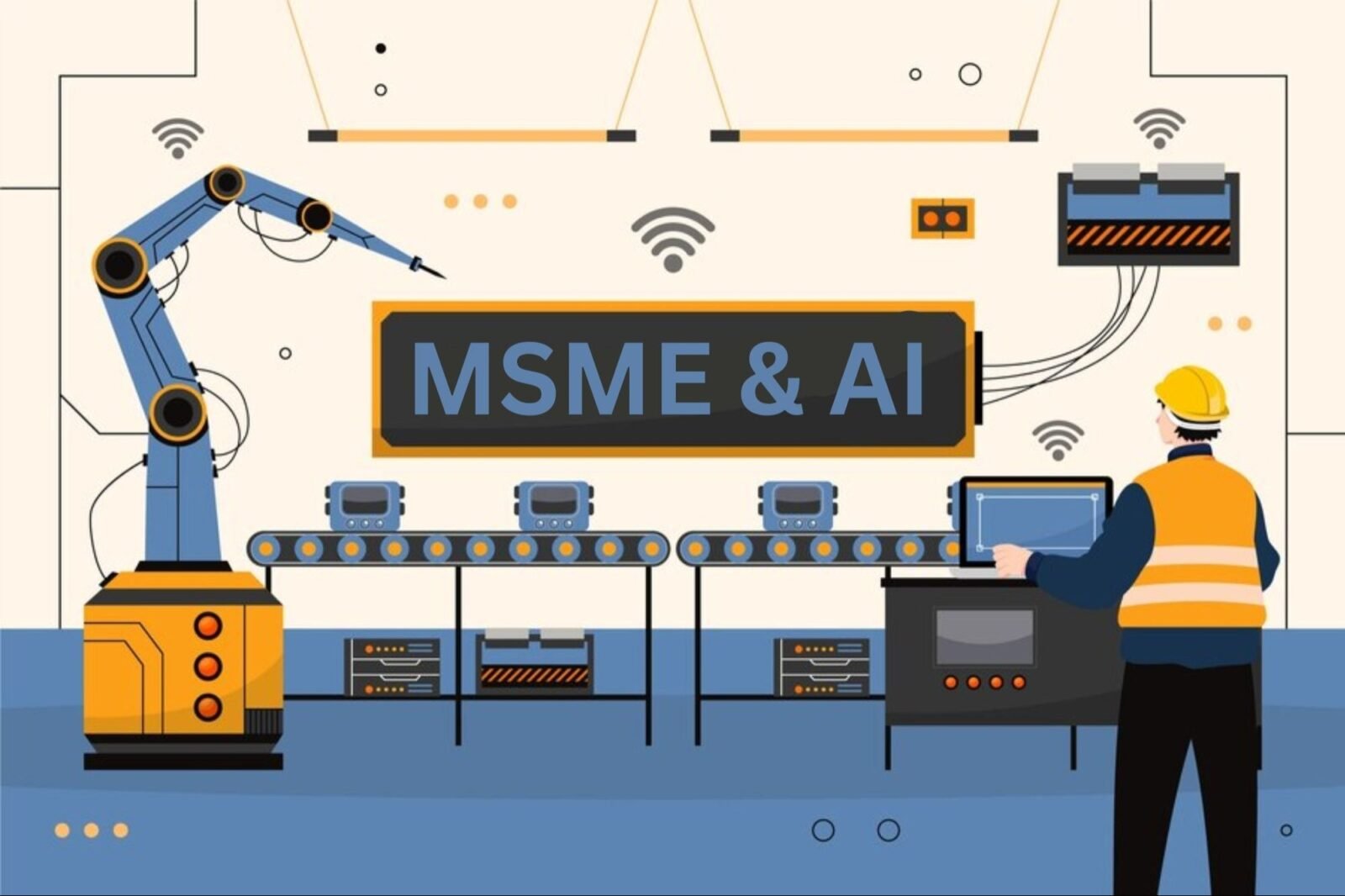
AI and automation took center stage at the Gujarat MSME conclave, where policymakers, industry leaders, and entrepreneurs positioned these technologies as practical tools for improving productivity, reducing costs, and scaling small businesses. The focus was on real use cases rather than abstract digital transformation narratives.
AI and automation at the Gujarat MSME conclave were presented as immediate, deployable solutions rather than distant future technologies. The event brought together government officials, technology providers, and small business owners to underline how artificial intelligence, data driven tools, and automated processes can help MSMEs compete in tighter markets. The messaging was clear: MSMEs that delay adoption risk falling behind in efficiency, compliance, and customer responsiveness.
Gujarat MSME conclave highlights focus on applied technology
The Gujarat MSME conclave emphasized application over theory. Speakers consistently pointed out that small businesses do not need complex AI labs or large IT teams to benefit from automation. Instead, they highlighted ready to use tools in areas like accounting automation, inventory forecasting, demand planning, and customer support.
Workshops demonstrated how AI driven software can help manufacturers reduce wastage, predict machine maintenance needs, and optimize energy consumption. For service based MSMEs, automation was framed as a way to speed up invoicing, manage leads, and improve customer retention. The conclave positioned technology as a business enabler that fits existing workflows, not something that disrupts operations.
Why AI adoption matters for MSMEs right now
AI adoption for MSMEs is no longer optional due to rising cost pressures and increasing competition. Small businesses face shrinking margins, delayed payments, and compliance complexity. Automation directly addresses these pain points by cutting manual work and improving decision making speed.
At the conclave, officials stressed that global buyers increasingly expect data transparency, predictable delivery timelines, and quality consistency. AI tools help MSMEs meet these expectations by improving production planning and quality checks. The discussion made it clear that technology adoption is now linked to export competitiveness and long term survival, especially for manufacturing clusters in Gujarat.
Government push and policy alignment for MSME digitisation
A key theme was policy support for MSME digitisation. Gujarat has been promoting technology adoption through state level incentives, incubation support, and skill development programs. At the conclave, representatives highlighted schemes that subsidize software adoption, provide access to digital infrastructure, and support training in AI related skills.
The government narrative positioned AI and automation as aligned with broader national goals such as improving ease of doing business and strengthening domestic manufacturing. By framing technology adoption as a policy backed initiative, the conclave aimed to reduce hesitation among traditional business owners who are cautious about digital investments.
Practical use cases shared by MSME founders
What resonated most with attendees were examples shared by MSME founders who had already implemented automation. Manufacturers spoke about using AI based demand forecasting to reduce excess inventory. Textile units explained how automated quality inspection reduced rejection rates. Small logistics operators discussed route optimization tools that lowered fuel costs and improved delivery timelines.
These examples reinforced the idea that AI does not require large capital expenditure. Many tools operate on subscription models, making them accessible to small enterprises. The conclave deliberately focused on relatable case studies to counter the perception that AI is only for large corporates or tech startups.
Challenges MSMEs still face in AI and automation adoption
Despite the optimistic tone, speakers acknowledged challenges. Lack of digital skills, resistance to change, and concerns about data security remain barriers. Many MSMEs also struggle to identify which tools are relevant to their specific operations, leading to fear of wasted investment.
The conclave addressed these issues by advocating phased adoption. Experts advised MSMEs to start with one function such as billing, inventory, or payroll before scaling automation across departments. Training and vendor accountability were highlighted as critical factors to ensure technology delivers measurable outcomes.
What this signals for small businesses beyond Gujarat
The Gujarat MSME conclave reflects a broader shift in how technology adoption is being communicated to small businesses across India. The emphasis is moving away from buzzwords toward cost savings, compliance ease, and revenue growth. For MSMEs in other states, the conclave serves as a template for how local ecosystems can drive practical digital transformation.
As competition intensifies and regulatory requirements grow, AI and automation are increasingly becoming baseline capabilities rather than differentiators. The messaging from Gujarat suggests that early adopters will gain operational resilience, while late movers may struggle to keep pace.
Takeaways
- AI and automation were positioned as practical tools for MSME efficiency
- Gujarat MSME conclave focused on real use cases and founder examples
- Government support is aligned with MSME digitisation and skill building
- Phased and targeted adoption was advised to reduce risk for small businesses
FAQs
What was the main focus of the Gujarat MSME conclave?
The conclave focused on promoting AI and automation as accessible tools for improving MSME productivity and competitiveness.
How can small businesses benefit from AI and automation?
MSMEs can reduce manual work, improve forecasting, cut costs, and meet compliance requirements more efficiently.
Is AI adoption expensive for MSMEs?
Many AI tools are available on affordable subscription models, making them viable even for small enterprises.
What challenges do MSMEs face in adopting automation?
Key challenges include lack of digital skills, resistance to change, and uncertainty about choosing the right tools.












Leave a comment