

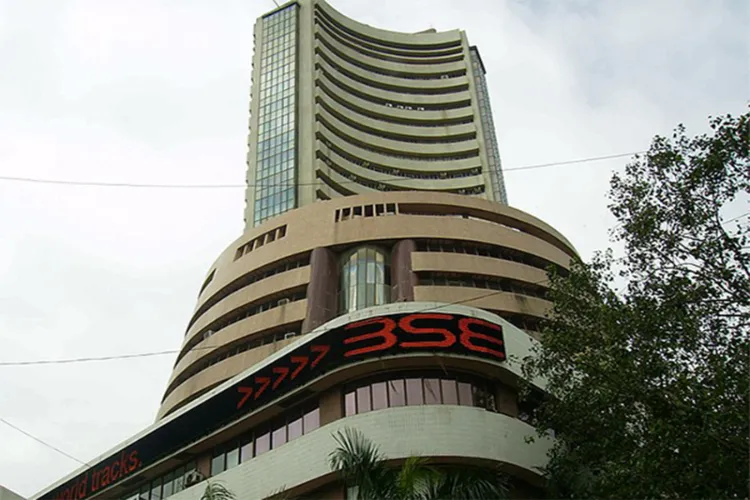
Dalal Street opened strong today with Nifty and Sensex gaining early momentum as optimism around the India US trade framework improved investor sentiment. The positive opening reflects expectations of stable trade flows, stronger exports, and reduced external uncertainty for Indian businesses.
Markets react to India US trade framework signals
Dalal Street’s strong opening is a time sensitive market development and the tone here is straight news reporting. Early gains in Nifty and Sensex were closely linked to signals emerging from the evolving India US trade framework. Investors are reading this framework as a sign of continuity rather than disruption in bilateral trade relations.
For equity markets, predictability matters more than announcements. The India US trade framework suggests fewer policy shocks, especially in areas like technology services, manufacturing exports, and strategic supply chains. This reduces risk premiums and supports buying interest in large-cap stocks during early trade.
Why Nifty and Sensex moved higher today
The Nifty and Sensex gained traction primarily due to buying in banking, IT, and export-linked stocks. These sectors are most sensitive to global trade signals and currency stability. The India US trade framework is being viewed as supportive of services exports, particularly IT and business outsourcing, which form a heavy weight in benchmark indices.
Another factor is foreign institutional investor positioning. When global investors see alignment between two major economies, it improves India’s relative attractiveness among emerging markets. This often leads to selective inflows into index heavyweights, lifting benchmarks even if broader market participation remains cautious.
Banking and IT stocks lead early trade
Banking stocks contributed significantly to the strong opening on Dalal Street. A stable external environment improves credit visibility and lowers pressure on funding costs. Large banks tend to benefit when macro uncertainty declines, as loan growth assumptions become easier to model.
IT stocks also saw early interest. The India US trade framework directly affects technology services exports, visa regimes, and cross-border digital services. Even without immediate policy changes, the absence of hostile trade signals is enough to support valuations in the short term.
This explains why benchmark indices moved up even though mid-cap and small-cap stocks showed mixed trends in early trade.
What this means for retail investors
For retail investors, Dalal Street opening strong on global cues should be seen in context. A positive open driven by trade optimism does not automatically translate into sustained intraday or weekly rallies. These moves often set sentiment rather than direction.
Retail participation has increased significantly in recent years, especially from Tier-2 and Tier-3 cities. Many new investors tend to react strongly to headline-driven market moves. It is important to separate sentiment-driven openings from trend-confirming data such as earnings growth, inflation numbers, and domestic liquidity.
Short-term traders may find momentum opportunities during such openings, but long-term investors should focus on whether trade optimism feeds into actual revenue growth for companies.
Broader implications for the Indian market
The India US trade framework narrative supports a larger theme of India positioning itself as a stable global economic partner. Markets tend to reward this positioning through lower volatility and improved valuation comfort.
However, sustained upside in Nifty and Sensex will still depend on domestic factors. Corporate earnings consistency, government spending, and inflation trends remain decisive. Global cues can amplify moves, but they rarely replace domestic fundamentals.
Today’s strong opening on Dalal Street signals confidence, not complacency. Markets are acknowledging reduced risk, not pricing in aggressive growth assumptions.
What to watch after the opening bell
After a strong opening, market participants usually watch breadth and volume closely. If gains are supported by wider participation beyond index stocks, the move gains credibility. If not, indices may consolidate or give up early gains.
Investors will also track currency movement, bond yields, and any official commentary linked to trade discussions. These factors influence whether early optimism sustains through the trading session.
Takeaways
- Dalal Street opened strong due to optimism around the India US trade framework
- Nifty and Sensex gains were led by banking and IT stocks
- The move reflects sentiment support rather than a confirmed trend shift
- Retail investors should avoid overreacting to headline-driven openings
FAQs
Why did Dalal Street open strong today?
Markets reacted positively to signals suggesting stability and continuity in the India US trade framework, reducing external uncertainty.
Which sectors benefited the most from the opening gains?
Banking and IT stocks led early trade due to their sensitivity to global trade and capital flow signals.
Does this mean the market will continue to rise?
Not necessarily. A strong opening reflects sentiment, while sustained movement depends on earnings, liquidity, and domestic data.
How should retail investors respond to such market openings?
Retail investors should stay disciplined, focus on fundamentals, and avoid making decisions based only on early market moves.










Leave a comment