


Deeptech funding in India rose 37% to reach $2.3 billion in 2025, with artificial intelligence emerging as the dominant investment theme. The sharp uptick signals renewed investor confidence in science driven startups building defensible, high technology solutions for global markets.
Deeptech funding in India saw a significant rebound in 2025, climbing 37% year on year to $2.3 billion, according to industry data. The surge marks a shift from consumer internet bets toward capital intensive, research led innovation. Artificial intelligence led the funding wave, attracting the largest share of investments across early and growth stages.
Investors are increasingly backing startups building proprietary technology in AI, semiconductor design, spacetech, robotics, climate tech and advanced materials. This signals a structural shift in India’s startup ecosystem from aggregation models to intellectual property driven ventures.
AI Becomes Core Investment Thesis
Artificial intelligence funding dominated India’s deeptech landscape in 2025. Startups working on generative AI models, enterprise AI platforms, AI infrastructure, and applied AI in sectors such as healthcare, fintech and manufacturing secured the bulk of capital deployed.
Global demand for AI capabilities has accelerated since the commercialization of large language models and enterprise automation tools. Indian founders are leveraging strong engineering talent and lower operating costs to build globally competitive AI products. Venture capital firms have responded by launching AI focused funds and doubling down on existing portfolio companies.
Unlike earlier funding cycles centered on rapid user acquisition, AI startups are being evaluated on research depth, data assets, and monetization potential through enterprise contracts. This reflects a maturing investment lens.
Shift Toward Research Led Innovation
The deeptech funding surge also highlights growing interest in long gestation sectors such as spacetech, defense tech and semiconductor design. Policy reforms and production linked incentive schemes have created tailwinds for advanced manufacturing and chip design startups.
India’s push for semiconductor ecosystem development has encouraged venture funds to explore fabless chip startups and embedded systems innovation. At the same time, private participation in space technology has expanded after regulatory liberalization, enabling startups to raise capital for satellite services and launch solutions.
Climate tech and clean energy innovation also gained traction, driven by net zero commitments and energy security concerns. Investors are increasingly comfortable funding businesses with longer time horizons, provided they demonstrate strong technological moats.
Capital Concentration in Growth Stage Deals
A notable trend in 2025 was capital concentration in fewer but larger deals. Growth stage deeptech companies with validated technology and paying customers attracted significant rounds, while seed funding remained selective.
Institutional investors including global venture capital firms, sovereign funds and strategic corporate investors participated in late stage AI and deeptech rounds. This reflects a risk calibrated environment where investors prefer proven teams and scalable platforms.
However, early stage deeptech founders are also benefiting from government backed incubators, research grants and university spin off programs. Public support mechanisms are playing a critical role in de risking foundational research.
Tier 2 and Tier 3 Innovation Hubs Emerging
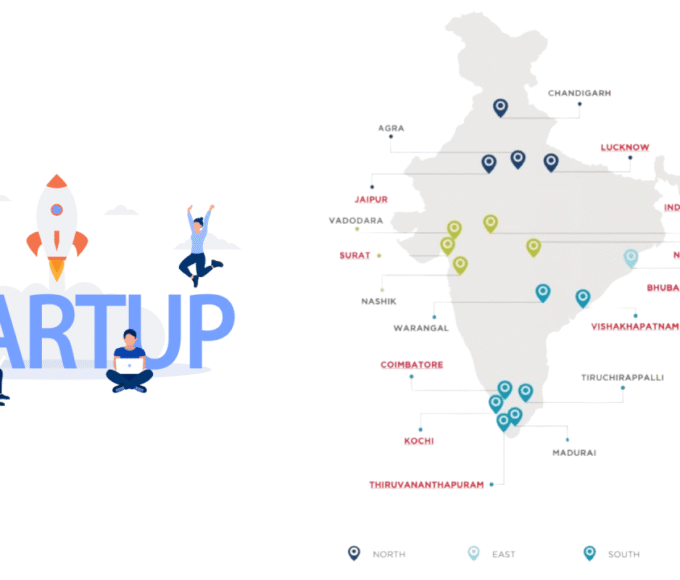
Deeptech funding is no longer confined to Bengaluru, Mumbai or Delhi NCR. Tier 2 cities such as Pune, Ahmedabad and Coimbatore are witnessing increased startup formation in robotics, industrial automation and defense manufacturing.
Engineering colleges and regional innovation clusters are contributing to this decentralization. Lower operational costs and access to specialized talent pools are making non metro hubs attractive for hardware and research driven startups.
For investors, this broadening geography reduces concentration risk and unlocks new founder pipelines. For regional economies, deeptech investments create high skill employment and supply chain opportunities.
Challenges Remain Despite Funding Growth
Despite the 37% jump, deeptech funding in India remains a small fraction of total venture capital deployed across sectors. Compared to global peers, India’s R and D spending as a percentage of GDP is still modest.
Deeptech startups face longer product development cycles, regulatory hurdles and high capital requirements. Talent retention in advanced research domains continues to be a constraint.
To sustain momentum, stronger industry academia collaboration, faster patent processing, and deeper domestic capital pools will be essential. Policy continuity and global market access will also influence long term outcomes.
Takeaways
• Deeptech funding in India rose 37% to $2.3 billion in 2025, signaling strong investor confidence
• Artificial intelligence emerged as the dominant investment theme across stages
• Growth stage AI and semiconductor startups attracted concentrated capital
• Tier 2 cities are becoming meaningful contributors to India’s deeptech ecosystem
FAQs
What is deeptech funding?
Deeptech funding refers to investments in startups building advanced technology based on scientific research, engineering innovation or proprietary intellectual property, such as AI, robotics or semiconductor design.
Why did AI dominate deeptech investments in 2025?
AI attracted capital due to global enterprise demand, rapid commercialization of generative AI tools, and India’s strong engineering talent base capable of building scalable AI platforms.
Is deeptech funding limited to metro cities?
No. While major metros lead in deal volume, Tier 2 cities are increasingly hosting robotics, defense and industrial technology startups.
How does deeptech differ from traditional tech startups?
Deeptech startups typically require longer development cycles, higher R and D spending, and stronger intellectual property protection compared to consumer internet or marketplace models.











Leave a comment