

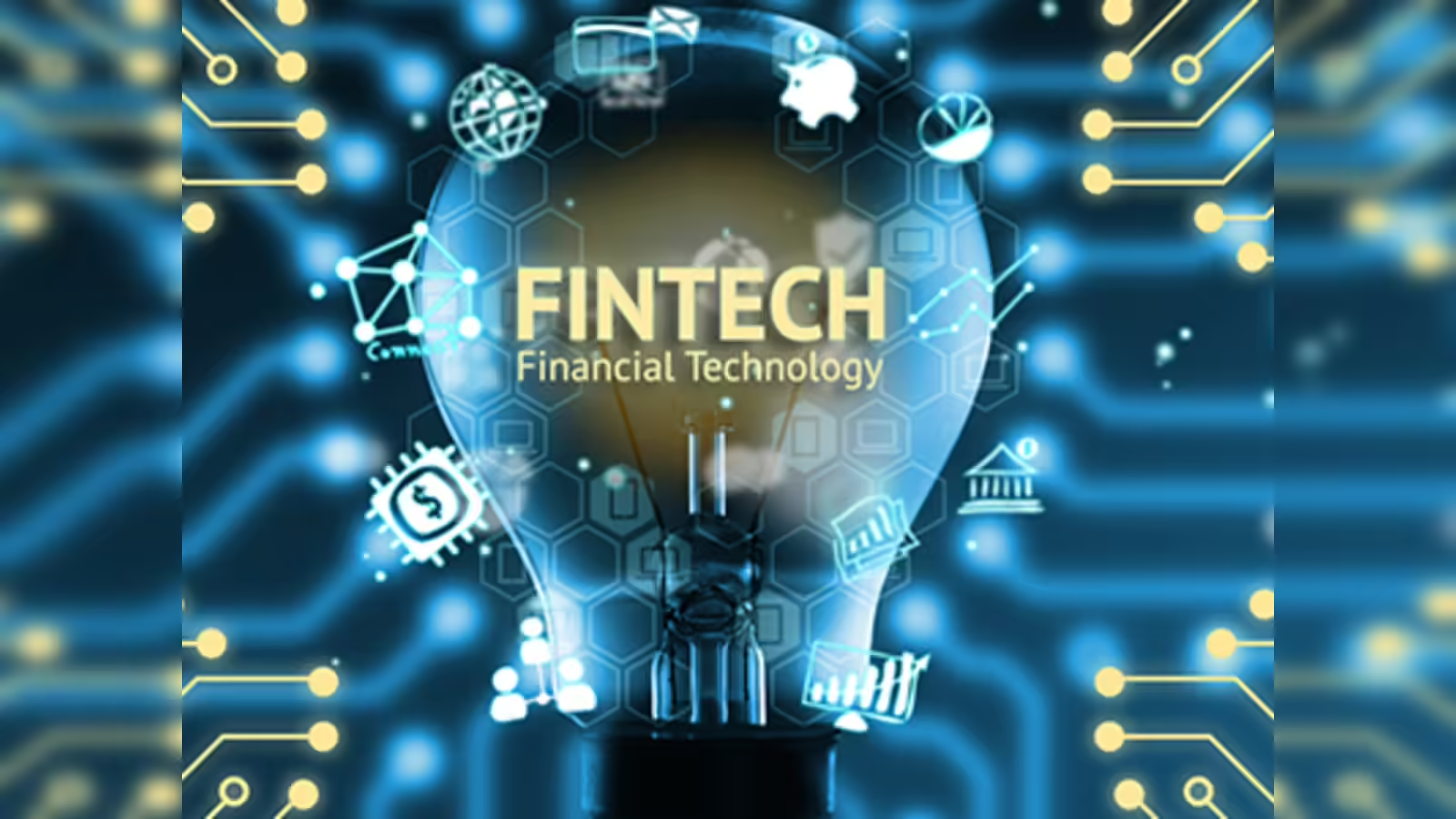
Fintech lending platforms in India are raising fresh capital as credit demand surges across Tier-2 cities. The trend highlights a structural shift in borrowing patterns, where digital lenders are stepping in to serve underserved individuals and MSMEs beyond metro markets.
Fintech lending platforms raising capital is a time-sensitive development in 2026, reflecting increased investor confidence in digital credit models. With traditional banks facing limitations in reaching smaller markets efficiently, fintech lenders are filling the gap through faster approvals and data-driven underwriting.
Rising Credit Demand in Tier-2 Cities Drives Growth
Credit demand in Tier-2 cities has grown steadily due to rising consumption, small business expansion, and increased financial awareness. Individuals and MSMEs are seeking loans for working capital, business scaling, and personal consumption.
Traditional banking systems often struggle to serve these segments due to documentation requirements and longer approval timelines. Fintech platforms, on the other hand, offer quicker access with minimal paperwork.
This demand is particularly strong in sectors such as retail trade, small manufacturing, and services. Many borrowers are first-time credit users, making Tier-2 cities a high-growth market for lenders.
The shift indicates a broader trend of financial inclusion supported by digital infrastructure.
Investor Interest in Digital Lending Platforms India
The surge in funding for fintech lending platforms reflects strong investor interest in scalable credit models. Venture capital firms and private equity investors are backing companies that demonstrate robust risk assessment and customer acquisition strategies.
Investors are focusing on platforms that leverage alternative data such as transaction history, GST filings, and digital payments to assess creditworthiness.
Profitability and asset quality have become key evaluation metrics after earlier concerns around high default rates in the digital lending space.
Recent funding rounds suggest that capital is flowing toward platforms with proven underwriting models and diversified loan portfolios.
Technology-Driven Lending Models Improve Accessibility
Fintech lenders rely heavily on technology to streamline the lending process. Digital onboarding, automated credit scoring, and instant disbursal systems are reducing turnaround time significantly.
Borrowers can apply for loans through mobile apps, upload documents digitally, and receive approvals within hours. This level of convenience is a major advantage in Tier-2 markets where access to physical bank branches may be limited.
Integration with digital public infrastructure such as Aadhaar and UPI has further simplified verification and payments.
These innovations are making formal credit more accessible to individuals and small businesses that were previously excluded.
MSME Lending and Working Capital Financing Trends
MSMEs in Tier-2 cities are among the biggest beneficiaries of fintech lending growth. Small businesses often require quick access to working capital to manage inventory, pay suppliers, and handle seasonal demand fluctuations.
Fintech platforms are offering tailored loan products such as invoice financing, merchant cash advances, and short-term business loans.
These products are designed to match the cash flow cycles of small businesses, making repayment more manageable.
In addition, partnerships between fintech companies and NBFCs are expanding lending capacity while maintaining regulatory compliance.
This collaboration is helping scale credit delivery without compromising risk management.
Regulatory Oversight and Risk Management Challenges
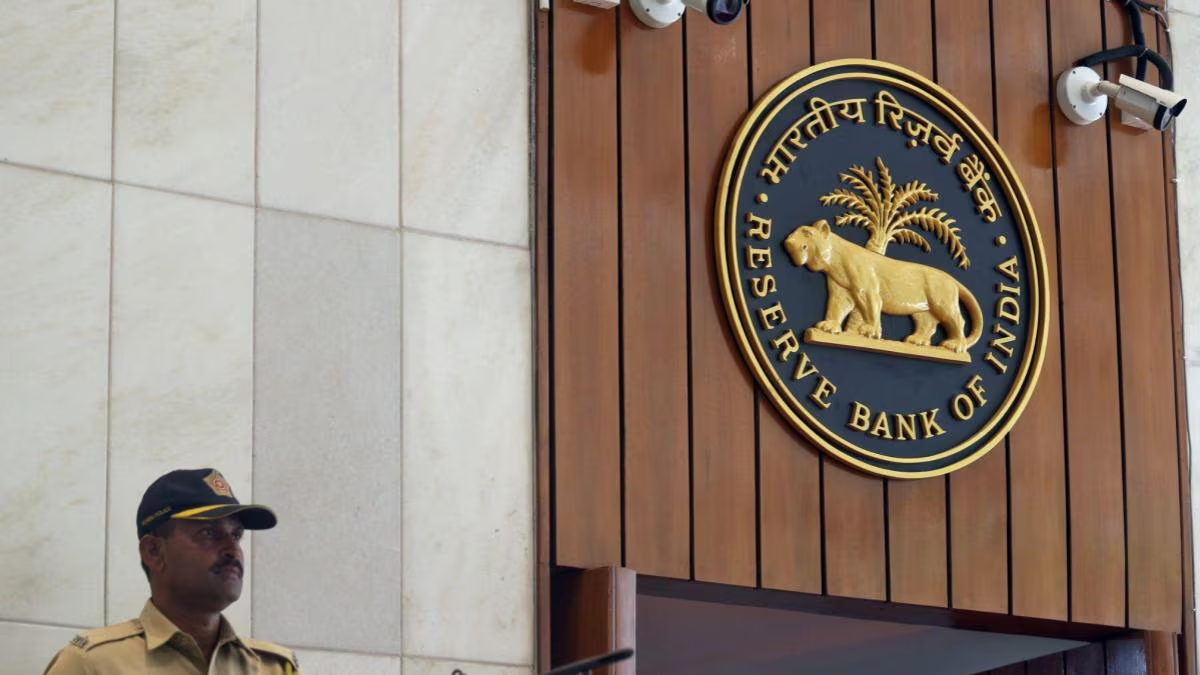
The rapid growth of digital lending has also attracted regulatory attention. The Reserve Bank of India has introduced guidelines to ensure transparency, data protection, and responsible lending practices.
Fintech platforms are required to disclose loan terms clearly and avoid hidden charges. Compliance with these regulations is critical for maintaining trust and sustainability.
Risk management remains a key challenge, especially in unsecured lending segments. Platforms need to balance growth with prudent underwriting to avoid rising defaults.
Investors are closely monitoring asset quality and recovery mechanisms as the sector expands.
Future Outlook for Fintech Lending in Non-Metro India
The outlook for fintech lending platforms remains strong as digital adoption continues to rise. Tier-2 and Tier-3 cities are expected to drive the next phase of growth in India’s credit market.
As more users come into the formal financial system, demand for diverse credit products will increase. Fintech platforms that can offer customised solutions while maintaining low default rates will gain a competitive edge.
Continued funding, regulatory clarity, and technological innovation will shape the sector’s trajectory.
The expansion of digital lending is not just a short-term trend but a structural shift in how credit is accessed and delivered in India.
Takeaways
- Fintech lending platforms are raising capital to meet rising Tier-2 credit demand
- MSMEs and first-time borrowers are key growth drivers
- Technology is enabling faster and more accessible loan disbursal
- Regulatory oversight is increasing to ensure responsible lending
FAQs
Why is credit demand rising in Tier-2 cities?
Growth in small businesses, rising consumption, and improved financial awareness are driving higher borrowing needs.
How do fintech lending platforms differ from traditional banks?
They offer faster approvals, minimal documentation, and use digital data for credit assessment.
Are fintech loans safe for borrowers?
Yes, if the platform follows regulatory guidelines and provides transparent terms.
What risks do fintech lenders face?
Key risks include loan defaults, regulatory compliance challenges, and maintaining asset quality.







Leave a comment