

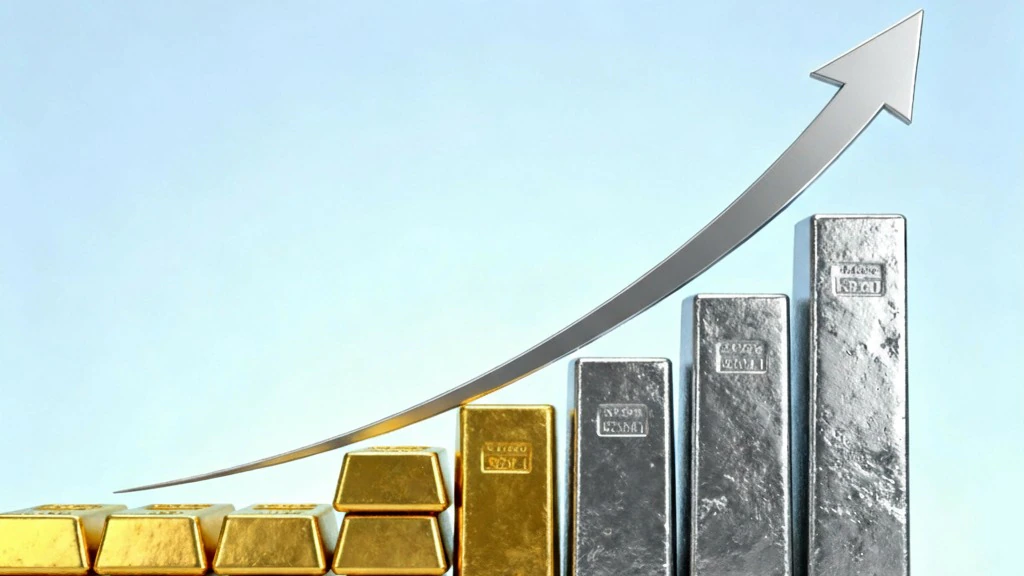
Gold and silver price trends have shifted lower in recent months, changing how Indian savers evaluate safety, returns, and timing. Falling precious metal rates influence household investment decisions, portfolio balance, and buying behaviour across urban and rural markets.
Why gold and silver prices are moving lower
This topic is time sensitive and news driven, linked to recent movements in global and domestic precious metal markets. Gold and silver price trends are reacting to a combination of stable interest rates, controlled inflation expectations, and shifts in global risk sentiment.
When interest rates remain firm, non interest bearing assets like gold and silver become relatively less attractive. Investors tend to move towards yield generating instruments, reducing immediate demand for precious metals. In addition, profit booking after sustained price rallies has added downward pressure on rates.
How lower gold prices affect Indian household savings
Gold plays a unique role in Indian savings, combining emotional value with financial security. Lower gold prices reduce the perceived wealth effect for households holding physical gold, especially in rural and semi urban regions where gold is a primary store of value.
However, lower prices also create an opportunity for gradual accumulation. Savers planning long term purchases for weddings or family needs may benefit from staggered buying rather than chasing price peaks. For existing holders, the focus shifts from short term price movements to long term value preservation.
Silver price trends and their different dynamics
Silver price trends often move differently from gold due to higher industrial usage. Demand from electronics, renewable energy, and manufacturing sectors influences silver prices alongside investment demand.
For Indian savers, silver’s volatility is higher than gold. Lower silver prices may appeal to investors looking for tactical exposure, but risk tolerance matters. Unlike gold, silver prices can swing sharply with changes in industrial demand, making it less stable as a pure hedge.
Impact on jewellery demand and rural buying
Lower precious metal rates tend to support jewellery demand, particularly in price sensitive markets. Rural buyers and Tier-2 consumers often respond quickly to price corrections, leading to volume driven demand rather than value driven buying.
This behaviour helps stabilise prices after sharp declines. Seasonal buying patterns linked to festivals and weddings amplify this effect. For savers, this reinforces the importance of viewing gold primarily as a long term asset rather than a short term trading instrument.
Portfolio diversification and asset allocation perspective
From an investment standpoint, gold and silver serve as diversification tools. Lower prices do not reduce their relevance in a balanced portfolio. Instead, they influence allocation timing.
Financial advisors typically recommend a limited allocation to precious metals to hedge against inflation and market volatility. Falling prices allow disciplined investors to rebalance portfolios without overpaying. The key is consistency rather than speculation based on short term trends.
Gold versus financial instruments in a lower price environment
When gold prices soften, comparisons with financial instruments intensify. Fixed income products, equities, and government backed savings schemes appear more attractive when gold lacks momentum.
However, gold offers protection during periods of financial stress that paper assets cannot always provide. Indian savers often balance this trade off by holding both physical gold and financial assets. Lower gold prices do not eliminate its defensive role but reduce urgency driven buying.
Should savers worry about further downside
Short term price movements are difficult to predict. Gold and silver prices respond to global cues, currency movements, and central bank actions. Further downside cannot be ruled out, but long term demand drivers remain intact.
Indian savers should avoid reacting emotionally to price corrections. Panic selling during declines often locks in losses, while disciplined accumulation aligns better with the traditional role of precious metals in wealth preservation.
Medium term outlook for precious metals in India
The medium term outlook depends on inflation trends, interest rate direction, and global economic stability. If inflation resurfaces or financial markets face stress, gold and silver prices could stabilise or recover.
Until then, price consolidation is likely. This phase rewards patience rather than aggressive positioning. Savers who align purchases with financial goals rather than market noise tend to benefit most.
Takeaways
- Lower gold and silver prices reduce short term returns but support gradual accumulation.
- Gold remains a long term hedge despite near term price weakness.
- Silver offers higher volatility and suits investors with greater risk tolerance.
- Asset allocation discipline matters more than timing the exact price bottom.
FAQs
Why are gold and silver prices falling right now?
Stable interest rates, controlled inflation expectations, and profit booking have reduced immediate demand for precious metals.
Is this a good time for Indian savers to buy gold?
For long term needs, staggered buying during price corrections can be beneficial rather than lump sum purchases.
Should savers sell gold if prices continue to fall?
Gold is best held as a long term asset. Selling during short term declines often works against wealth preservation goals.
Is silver riskier than gold for small investors?
Yes. Silver prices are more volatile due to industrial demand exposure, making it suitable only for investors with higher risk appetite.









Leave a comment