

India’s government borrowing strategy shift in FY26 is emerging as a key factor influencing credit availability for MSMEs. Changes in bond issuance patterns and liquidity management are expected to affect how easily small businesses access loans and working capital.
Government Borrowing Strategy Shift Explained for FY26
The government borrowing strategy shift refers to adjustments in how India raises funds from the bond market. In FY26, there is a visible move toward optimising borrowing costs by reducing reliance on ultra-long bonds and increasing issuance in shorter and medium-term securities.
This approach is designed to manage interest rate risks and maintain flexibility in debt servicing. Instead of locking into long-term debt at current yields, the government is keeping options open to refinance if interest rates soften in the future.
Such changes directly influence liquidity in the banking system because government borrowing competes with private sector demand for funds. When the government borrows more efficiently, it can reduce pressure on overall interest rates.
Impact on MSME Credit Availability and Lending Trends
MSME credit availability is closely tied to how banks allocate funds between government securities and business lending. If government borrowing absorbs a large share of available liquidity, banks may have less capacity to lend to small businesses.
However, the current shift toward balanced borrowing could ease this crowding-out effect. By avoiding excessive long-term borrowing at higher yields, the government may help stabilise interest rates, making it easier for banks to extend credit.
For MSMEs, this means potential improvement in loan access, especially in sectors such as manufacturing, retail, and services. Lower volatility in bond yields can translate into more predictable lending rates, which is critical for business planning.
That said, credit availability also depends on bank risk appetite. Even with improved liquidity, lenders may remain cautious due to concerns around asset quality and repayment capacity in the MSME segment.
Interest Rate Transmission and Cost of Borrowing
Interest rate transmission plays a key role in how borrowing strategy impacts MSMEs. When government bond yields stabilise, banks can price loans more competitively.
A shift toward shorter-duration borrowing may lead to slightly higher yields in the medium term, but overall rate stability is the primary objective. This reduces uncertainty for both lenders and borrowers.
For MSMEs, borrowing costs are influenced by multiple factors including repo rate, bank funding costs, and credit risk assessments. Government borrowing strategy indirectly affects all these variables by shaping the broader interest rate environment.
In practical terms, MSMEs may see gradual improvements rather than immediate reductions in loan interest rates. Stability is often more valuable than sharp rate cuts for long-term business planning.
Liquidity Conditions and Banking System Dynamics
Liquidity conditions in the banking system are a direct outcome of government borrowing patterns. When borrowing is aligned with market demand, it prevents sudden liquidity crunches.
The FY26 strategy appears to focus on maintaining adequate liquidity while avoiding excessive supply of long-duration bonds. This helps banks manage their balance sheets more effectively.
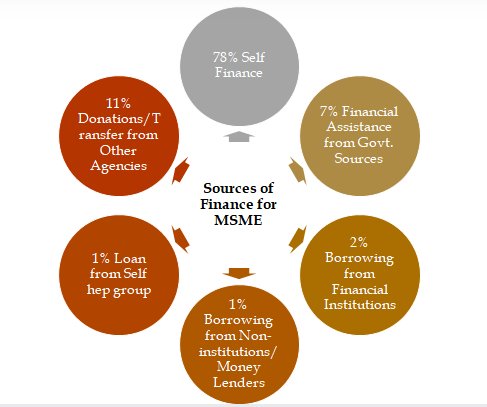
For small businesses, better liquidity conditions can improve access to working capital loans, overdraft facilities, and trade credit. This is especially important in Tier-2 and Tier-3 markets where access to formal finance is still evolving.
Non-banking financial companies also play a role in MSME lending. Stable liquidity and predictable interest rates support their ability to raise funds and extend credit to underserved segments.
Opportunities and Risks for MSMEs in FY26
The government borrowing strategy shift creates both opportunities and risks for MSMEs. On the positive side, improved rate stability and liquidity can enhance credit flow and reduce financing costs over time.
Formalisation trends and better financial data availability further support lending to MSMEs. Banks are increasingly using digital records and GST data to assess creditworthiness, making it easier for compliant businesses to secure loans.
However, risks remain. If global interest rates rise or inflation pressures persist, domestic yields could increase despite the government’s efforts. This would push borrowing costs higher for MSMEs.
Additionally, smaller businesses with weak financial documentation may still struggle to access credit, highlighting the importance of compliance and record-keeping.
Policy Direction and Long-Term Credit Outlook
The broader policy direction indicates a move toward balancing fiscal needs with financial stability. Efficient borrowing strategies help reduce stress on the bond market and support sustainable credit growth.
For MSMEs, the long-term outlook depends on how well these policies translate into actual lending on the ground. Structural improvements in credit delivery, including digital lending platforms and alternative credit scoring, are equally important.
The government’s approach suggests that credit expansion will be gradual and data-driven rather than aggressive. This aligns with the goal of maintaining financial stability while supporting economic growth.
Takeaways
- Government borrowing strategy shift aims to stabilise interest rates and manage debt costs
- MSME credit availability may improve due to better liquidity conditions
- Stable bond yields can lead to more predictable borrowing costs for businesses
- Access to credit will depend on compliance, financial records, and lender risk appetite
FAQs
What is the government borrowing strategy shift?
It refers to changes in how the government raises funds, including reducing ultra-long bond issuance and focusing on shorter maturities.
How does this affect MSMEs?
It can improve credit availability by stabilising interest rates and reducing competition for funds.
Will loan interest rates decrease for small businesses?
Not immediately, but rates may become more stable over time.
Is credit access easier now for MSMEs?
It may improve gradually, especially for businesses with strong financial records.








Leave a comment