

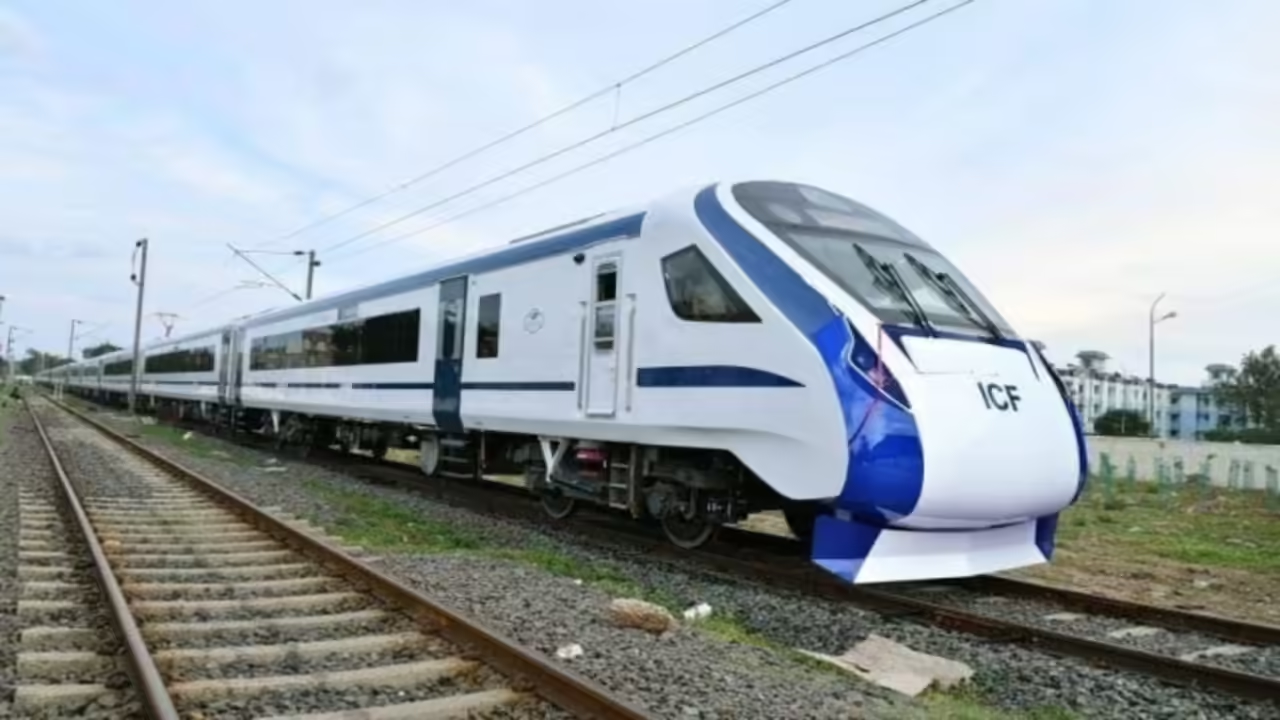
The rise in regional air travel demand has intensified competition in eastern and north east India, and the main keyword sits naturally as this trend interacts with the recent decision to add more railway coaches to premium routes. Business travel dynamics in the region are changing as connectivity improves across both air and rail networks.
The topic is time sensitive because it connects directly to current travel demand patterns and recent operational measures taken to ease congestion. The tone therefore reflects a news style supported by factual context. Regional travel in this part of the country is shaped by availability, affordability and reliability. As air travel sees a surge and railways add capacity, business travellers are reassessing their preferred mode depending on price, comfort, predictability and access to smaller towns.
Air travel surge and its effect on business mobility in the region
Secondary keywords such as regional air travel and business mobility explain why demand has grown sharply. Eastern and north east India have historically faced connectivity gaps that limited movement of entrepreneurs and sales teams. Improved airport infrastructure and new routes have lifted air traffic, making quick same day trips more feasible for small and mid sized enterprises. This growth has been faster in states like Assam, Tripura and Odisha where expanding aviation networks serve new city pairs.
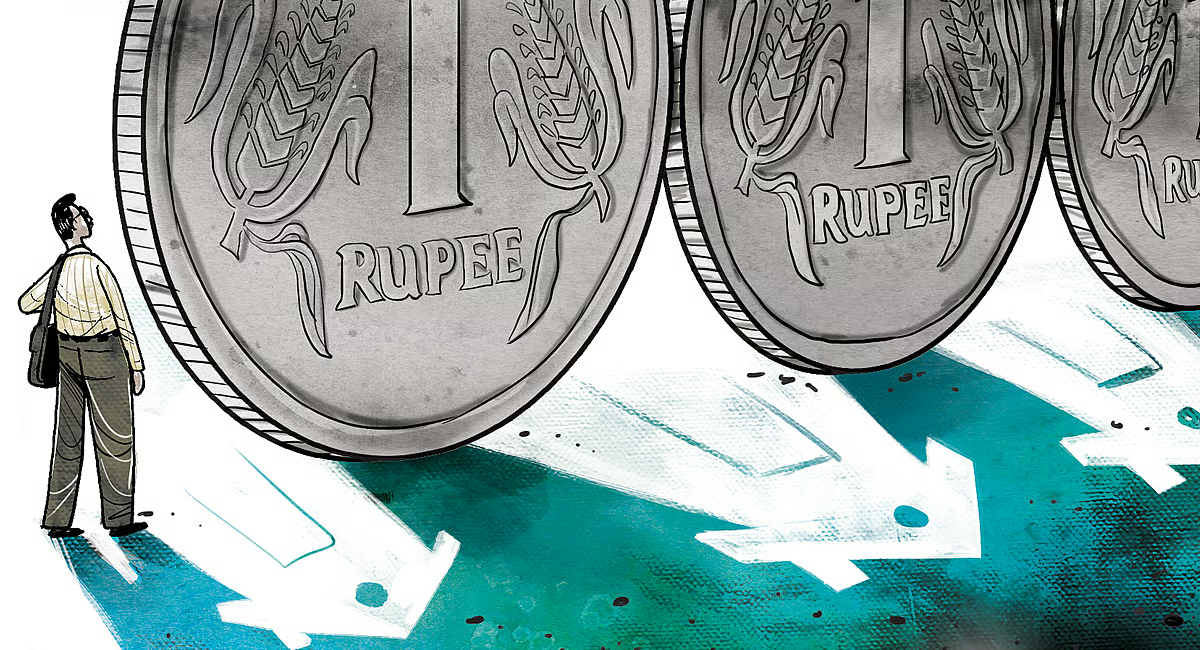
However, rising air demand often brings volatility in fares and seat availability. Business travellers who operate on fixed budgets or need predictable schedules sometimes struggle to secure timely flights. This is particularly true during seasonal peaks. The imbalance between rising demand and limited capacity creates pressure on airline operations and results in last minute cancellations or delays that affect business planning in smaller cities.
How additional railway coaches alter inter city travel economics
Railways adding coaches on premium trains introduces a new balance point for inter city business travel. This section uses secondary keywords such as railway capacity and travel economics. Increasing coach capacity eases waitlist pressure and enables more predictable ticket availability on key routes connecting Kolkata, Guwahati, Siliguri, Bhubaneswar and smaller commercial hubs.
For many businesses, especially those based outside tier one cities, railway travel continues to provide cost efficiency and reliability. With additional coaches, travellers can access more confirmed berths without depending on dynamic pricing or last minute flight adjustments. The upgrade also supports movement across intermediate towns that are not connected by air routes but hold strong commercial activity, such as Jorhat, Malda and Kharagpur.
This capacity expansion may shift a portion of business travel from air to rail, particularly for trips where overnight trains offer competitive travel time. The comfort improvements in premium trains and consistent on time performance on select corridors make the railway option more attractive for teams that coordinate inter district trade activity.
Interplay between air and rail networks in a high demand environment
Both sectors influence each other in regions with uneven infrastructure. Secondary keywords like inter city demand and transport choices help explain the interaction. When air demand rises sharply, congestion increases at smaller airports. Railway expansions act as a stabilising force by giving travellers alternative options that do not rely on limited runway or terminal capacity.
Airlines often rationalise routes based on load factors and profitability. This can leave gaps in connectivity between smaller commercial hubs. Enhanced railway capacity fills these gaps and creates a hybrid travel environment where business travellers choose based on trip urgency. A same day high priority visit may require air travel, while planned vendor meetings, procurement trips or team movements may shift toward premium trains with added coaches.
Impact on SMEs and regional business ecosystems
For SMEs spread across eastern and north east India, these developments influence how teams manage travel budgets and operational schedules. Secondary keywords such as SME travel planning and regional business networks add clarity. More railway capacity reduces travel uncertainty for field teams who move frequently between districts. This can improve supply chain coordination, vendor management and on ground sales operations.
SMEs often rely on fixed travel budgets. If air fares rise due to demand spikes, switching certain trips to rail becomes a practical decision. The added coaches make this shift smoother by ensuring more consistent seat availability. Better mobility also improves access to exhibitions, market clusters and government offices, which in turn strengthens commercial activity in smaller towns.
The long term outcome will likely be a dual mode travel pattern where air and rail support each other. Businesses will continue to use flights for urgent trips while railways capture steady demand for predictable, cost controlled travel.
TAKEAWAYS
Added railway coaches improve reliability and seat availability for business travellers.
Air travel demand growth creates congestion that makes rail a practical alternative.
SMEs benefit from more predictable and cost efficient travel options across regions.
Eastern and north east India may see a balanced multi mode travel ecosystem.
FAQs
Why has regional air travel demand risen in eastern and north east India
Better airport infrastructure, expanded routes and stronger commercial activity in smaller cities have increased air travel demand across the region.
How do additional railway coaches affect business travel choices
They reduce waitlists, improve comfort and make rail travel more reliable, encouraging businesses to use trains for planned trips.
Will air travel lose significant share to railways
Not immediately. Urgent and long distance business trips will remain air dominant, but railways will gain share for cost sensitive and predictable travel.
Do SMEs stand to benefit from these changes
Yes. More travel options allow SMEs to manage budgets better, coordinate operations and access regional markets efficiently.










Leave a comment