

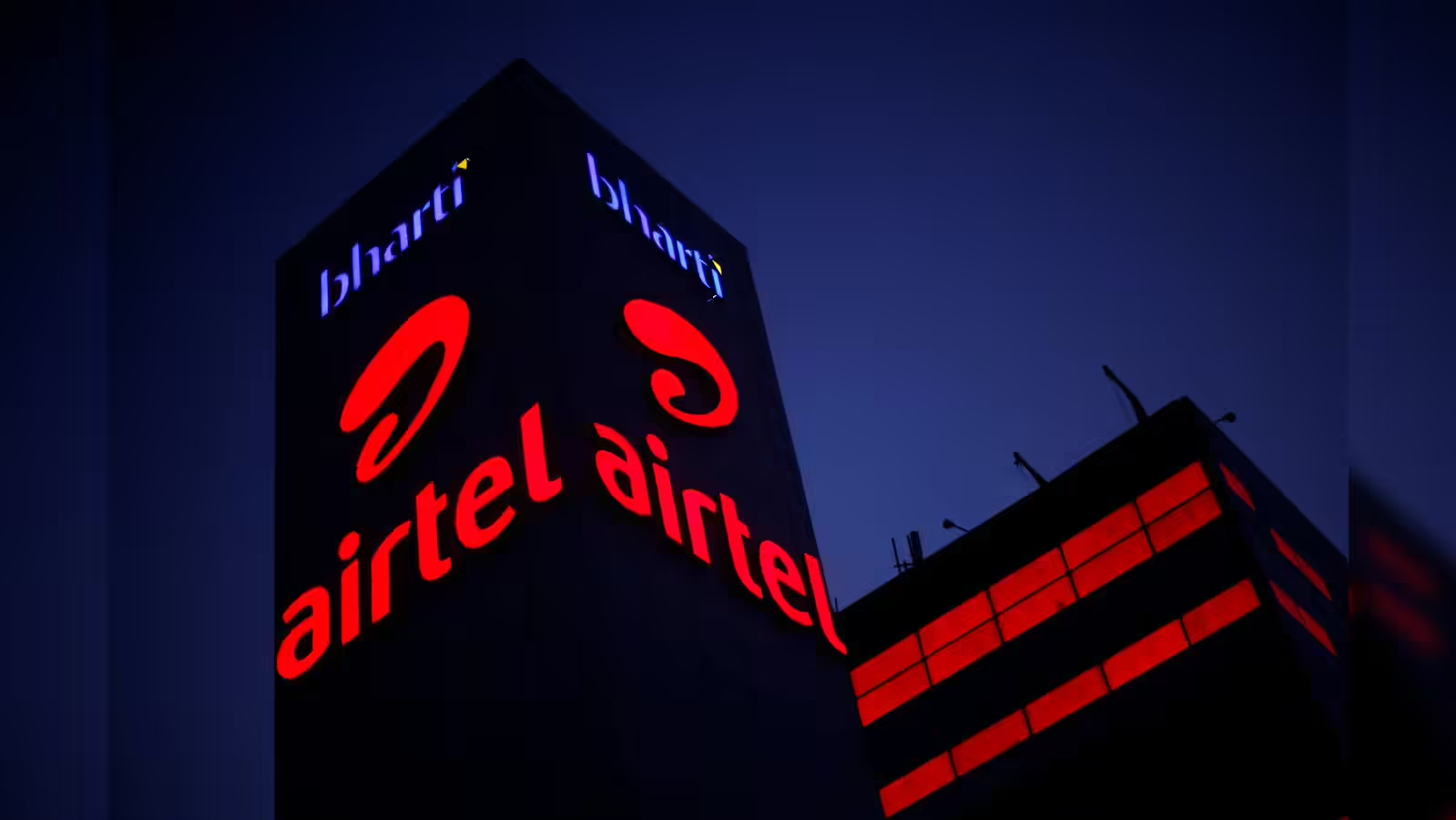
Bharti Airtel’s $2.2 billion fintech push signals a serious expansion into digital lending beyond metro cities. With deeper capital allocation and NBFC scale up, the telecom major is positioning itself to influence how consumer credit is accessed in Tier 2 and Tier 3 India.
Bharti Airtel’s $2.2 billion fintech push comes at a time when digital lending in India is undergoing regulatory tightening and structural consolidation. The company is expanding its financial services footprint to capture growing demand for small ticket consumer loans outside metros, where formal credit access still trails digital adoption.
Why Airtel Is Scaling Fintech Now
India’s digital public infrastructure has matured rapidly over the past decade. Aadhaar based eKYC, UPI payments and widespread smartphone penetration have lowered entry barriers for financial services. However, access to unsecured consumer credit remains uneven in smaller cities and semi urban districts.
Airtel already operates Airtel Payments Bank and has built partnerships in digital lending distribution. The fresh $2.2 billion commitment indicates a shift from being a facilitator to becoming a more direct credit player through expanded NBFC operations.
The timing is strategic. Consumer credit growth in India has remained robust, particularly in unsecured personal loans and small ticket retail lending. Telecom operators possess large, verified customer bases with recurring transaction data, giving them an underwriting edge if executed carefully.
Digital Lending Outside Metros Is Underpenetrated
Digital lending outside metros has grown but still faces structural gaps. Banks often prefer salaried urban customers with established credit histories. In contrast, many borrowers in Tier 2 and Tier 3 markets are self employed, informal sector workers or first time borrowers.
NBFCs and fintech lenders have stepped in to bridge this gap, offering quick approval personal loans, buy now pay later options and micro credit products. Airtel’s push could expand this segment further by combining telecom data, payments history and digital onboarding.
Smaller cities such as Nagpur, Indore, Lucknow and Coimbatore have witnessed strong growth in digital payments usage. Yet credit bureau penetration in these regions remains lower than in metros. A scaled fintech operation could bring more borrowers into the formal credit ecosystem.
How Telecom Data Strengthens Underwriting Models
Airtel’s advantage lies in its telecom ecosystem. It services millions of prepaid and postpaid users with consistent recharge and billing data. This creates behavioral patterns that can complement traditional credit bureau scores.
For example, regular recharge frequency, timely bill payments and stable usage patterns can signal financial discipline. When combined with bank account linkage and digital KYC, lenders can assess risk more accurately for thin file customers.
This data driven underwriting model has been used globally by telecom linked lenders. In India, regulatory oversight requires that data usage complies with privacy norms and explicit customer consent. Airtel’s scale means governance and compliance frameworks will be critical.
Competition and Regulatory Oversight
The digital lending market is already crowded. Established NBFCs, fintech startups and traditional banks are aggressively expanding retail loan books. Large ecommerce platforms and fintech apps have also entered credit distribution.
Airtel’s capital commitment of $2.2 billion gives it balance sheet strength, but regulatory compliance will shape its execution. The Reserve Bank of India has tightened digital lending guidelines in recent years. Lenders must disclose interest rates clearly, route disbursals directly to borrower accounts and avoid unauthorized data access.
If Airtel maintains strong underwriting discipline and transparent pricing, it can scale responsibly. However, rapid unsecured loan growth without adequate risk controls could elevate asset quality concerns. Execution will determine whether this becomes a sustainable credit engine or a short term growth spike.
Impact on Consumers and Small Businesses
For consumers in non metro India, greater competition in digital lending can mean faster approvals and broader product availability. Small ticket personal loans, device financing and emergency credit could become more accessible.
Small merchants and micro entrepreneurs may also benefit. Working capital loans and inventory financing in smaller towns are often constrained by documentation requirements at banks. A telecom integrated fintech model could streamline onboarding and credit assessment.
Lower distribution costs through mobile apps reduce dependence on physical branches. This is particularly relevant in districts with limited banking infrastructure. Over time, expanded access to formal credit can improve financial inclusion and credit score building for first time borrowers.
Long Term Implications for India’s Credit Ecosystem
Airtel’s $2.2 billion fintech push reflects a broader shift where large digital platforms are entering regulated financial services at scale. Telecom, ecommerce and payments companies are moving closer to core lending operations.
For India, the next wave of credit growth is expected to come from beyond the top eight metros. As digital identity, payments and data trails strengthen, lenders can serve previously excluded segments with more confidence.
However, financial literacy and responsible borrowing will remain essential. Easy digital access to credit must be balanced with awareness about repayment obligations, interest costs and credit scores.
If executed prudently, Airtel’s expansion could accelerate the formalization of consumer credit outside metros and reshape competitive dynamics in India’s digital lending market.
Takeaways
• Airtel’s $2.2 billion fintech expansion targets digital lending growth beyond metro cities
• Telecom data can enhance underwriting for first time and thin file borrowers
• Strong regulatory compliance will be crucial for sustainable scale
• Greater competition could improve credit access in Tier 2 and Tier 3 markets
FAQs
Q1. What does Airtel’s fintech push involve?
It involves scaling its financial services operations, including expanded NBFC activities, to offer digital lending products directly to consumers.
Q2. Why focus on lending outside metros?
Tier 2 and Tier 3 cities show rising digital adoption but remain underpenetrated in formal consumer credit, creating growth opportunity.
Q3. How can telecom data help in lending decisions?
Usage patterns, recharge behavior and bill payment consistency can complement traditional credit scores for risk assessment.
Q4. Is digital lending regulated in India?
Yes, digital lending is regulated by the Reserve Bank of India, with strict rules on transparency, data usage and borrower protection.










Leave a comment