

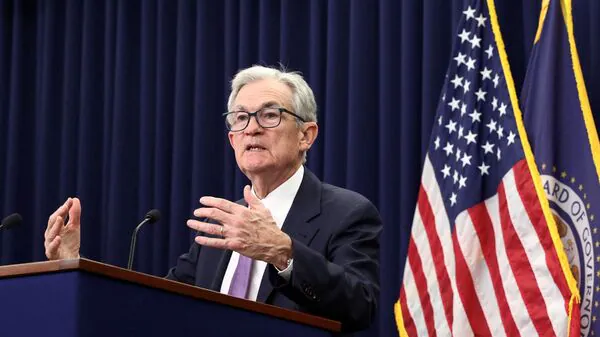
The US Federal Reserve rate cut is influencing Indian market sentiments as investors reassess global liquidity, capital flows and the outlook for inflation. The main keyword appears naturally here as the rate cut signals a shift in global monetary conditions that directly affects equities, bonds and currency expectations in India.
Indian markets track US rate decisions closely because they shape global risk appetite and determine how foreign investors allocate capital across emerging markets. A rate cut typically lowers borrowing costs in the United States and improves liquidity conditions worldwide. This change often encourages funds to move toward faster growing economies, and India remains one of the most attractive destinations in this cycle.
Impact on equity markets and foreign investor flows
The current rate cut has altered momentum in equity markets, particularly in sectors sensitive to global capital flows such as banking, technology, manufacturing and consumer discretionary. Lower US rates improve foreign portfolio investor participation by reducing the comparative yields available in American markets. This often leads to renewed buying in Indian large caps and selective interest in mid caps with strong earnings visibility.
Markets also respond to expectations rather than only to the action itself. The Federal Reserve signaled a continued focus on stabilising economic growth, which reassures investors that liquidity will remain supportive through the coming quarters. As a result, benchmark indices in India have shown mixed but broadly stabilising reactions. Volatility has moderated compared to earlier in the year when inflation concerns and rate uncertainty were elevated.
Domestic institutions have maintained steady inflows as well. With bank credit growth strong and corporate earnings generally resilient, the rate cut supports optimism that global conditions will not disrupt India’s economic trajectory. Traders are currently pricing in moderate appreciation in select rate sensitive sectors if liquidity inflows strengthen further.
Currency market reaction and secondary inflation pressures
The Indian rupee typically reacts to shifts in the dollar index, bond yields and global risk sentiment that follow a Federal Reserve rate cut. A reduction in US rates can ease pressure on the rupee by weakening the dollar. This improves the stability of India’s import bill, particularly for crude oil which remains a major contributor to inflation dynamics.
A more stable currency environment supports price stability for essential goods and reduces volatility in corporate cost structures. Import heavy industries such as chemicals, electronics, renewable energy components and automotive parts benefit from reduced exchange rate uncertainty.
However, traders also watch for secondary inflation pressures. If the rate cut accelerates economic demand in the United States, global commodity prices could rise. Higher commodity costs would put upward pressure on India’s inflation trajectory. Policymakers therefore monitor both the direct and indirect effects to ensure domestic inflation stays within manageable bounds. Early indicators suggest that the current cycle remains supportive rather than inflationary for India.
Bond market expectations and cost of borrowing for companies
Indian bond markets respond to global rate cycles because they influence the spread between domestic yields and US yields. A Federal Reserve rate cut narrows this spread, making Indian bonds more attractive relative to US Treasuries. Increased foreign interest in Indian government securities can lower yields over time, reducing borrowing costs for the government and improving liquidity in corporate debt markets.
Lower yields create a conducive environment for companies planning capital expenditure or refinancing existing debt. Infrastructure firms, renewable energy developers and manufacturing companies may see marginal improvements in financing conditions if demand for Indian debt strengthens. Banks also track global rates as part of their treasury operations, with potential valuation gains on bond portfolios.
This environment can support broader economic activity, especially as India remains focused on large scale public and private sector investment. If global liquidity continues improving, the cost of capital for Indian businesses may soften gradually, although domestic monetary policy will remain the primary determinant.
Retail investor behaviour and market sentiment indicators
Retail participation has grown sharply in the past five years and now plays a significant role in how Indian markets respond to global events. A Federal Reserve rate cut is usually interpreted by retail investors as a signal that risk assets could perform better in the short to medium term. This perception influences systematic investment plans, futures positions and trading volumes across sectors.
Sentiment indicators such as market breadth, volatility indices and sector rotation patterns show that investors expect stable conditions rather than aggressive rallies. Most retail investors are cautiously optimistic, focusing on sectors with strong domestic drivers such as banking, infrastructure, defence manufacturing and consumer services.
Analysts advise watching three indicators in the coming weeks. First, foreign investor net flows after the rate cut. Second, crude oil price movements. Third, domestic inflation print and the Reserve Bank of India’s commentary. These factors collectively determine how Indian markets absorb the global monetary shift.
Takeaways
• The US Federal Reserve rate cut supports liquidity and improves foreign investor sentiment toward Indian markets.
• The rupee gains stability as dollar strength moderates, easing import related inflation risks.
• Bond yields may soften if foreign demand for Indian debt improves, reducing borrowing costs.
• Equity markets remain cautiously optimistic, with selective opportunities in rate sensitive and domestic driven sectors.
FAQ
How does the US rate cut affect Indian markets immediately
It influences equity flows, bond yields and currency strength by shifting global liquidity toward emerging markets and reducing dollar pressure.
What sectors benefit most from improved liquidity
Banking, technology, manufacturing and consumer sectors often see improved sentiment when foreign investor participation increases.
Does a US rate cut automatically strengthen the rupee
Not always, but it typically reduces dollar dominance and can stabilise the rupee if global risk appetite improves.
Will borrowing costs in India decline because of this rate cut
Borrowing costs depend mainly on domestic policy, but improved foreign demand for Indian bonds can indirectly support lower yields over time.










Leave a comment