

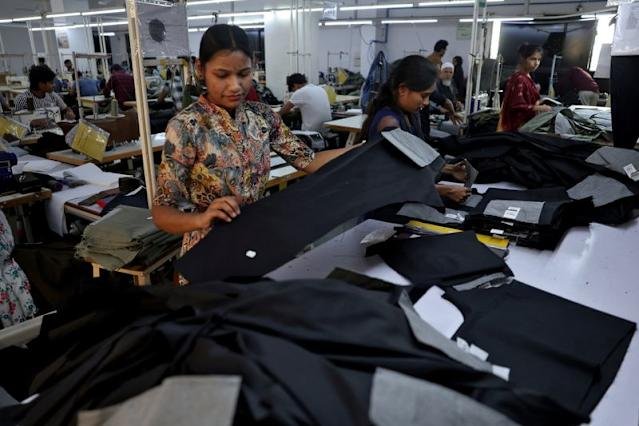
India’s manufacturing sector has touched a four month high, signaling renewed industrial momentum. The latest PMI data indicates stronger factory output, rising new orders, and improving business confidence. For MSMEs and local job markets, this uptick carries practical and immediate implications.
India’s manufacturing sector recorded its strongest expansion in four months, according to the latest Purchasing Managers’ Index reading. The PMI remained well above the 50 mark, which separates expansion from contraction, indicating sustained growth in factory activity.
This improvement was driven primarily by higher new orders and a steady rise in production volumes. Both domestic demand and export demand contributed to the momentum. For India’s broader economy, manufacturing remains a core driver of employment, supply chains, and regional industrial clusters.
For policymakers, the rebound reinforces the resilience of India’s industrial base. For small businesses and workers in Tier 2 and Tier 3 cities, the data translates into tangible opportunities.
What Is Driving The Manufacturing Growth
The recent rise in the manufacturing PMI reflects stronger demand conditions. Companies reported an increase in new domestic orders, supported by infrastructure spending, improving rural demand, and stable urban consumption patterns.
Export orders also showed improvement. Sectors such as engineering goods, chemicals, electronics, and auto components witnessed steady order flows. This is particularly significant for MSMEs that operate as ancillary suppliers to larger exporters.
Another important driver is easing input cost pressures. While global commodity prices remain volatile, input inflation has moderated compared to previous peaks. Lower cost escalation improves margins for manufacturers, especially smaller firms that operate on thin profit buffers.
Capacity utilization levels have also improved. When factories operate closer to optimal capacity, they are more likely to invest in hiring and incremental expansion.
What This Means For MSMEs
MSMEs form the backbone of India’s manufacturing ecosystem. They account for a substantial share of industrial output and employ millions across semi urban and rural regions.
A four month high in manufacturing activity benefits MSMEs in several ways. First, higher new orders increase revenue visibility. This improves working capital cycles and creditworthiness when approaching banks or NBFCs.
Second, improved demand encourages expansion of production lines. MSMEs supplying to sectors like construction materials, textiles, auto components, and consumer goods are likely to experience spillover effects.
Third, stronger manufacturing activity can reduce payment delays in supply chains. When large companies receive steady inflows, they are better positioned to clear dues to smaller vendors. This has direct liquidity benefits.
However, challenges remain. Access to affordable credit, compliance costs, and technology adoption gaps continue to constrain many small manufacturers. The positive PMI reading is a tailwind, not a structural solution.
Impact On Local Jobs And Tier 2 Cities
Manufacturing growth has a direct multiplier effect on employment. Unlike capital intensive sectors, many manufacturing segments rely on labor intensive processes, particularly in textiles, food processing, leather goods, and light engineering.
When factories ramp up output, hiring typically follows. This includes shop floor workers, technicians, logistics staff, and contract labor. Tier 2 and Tier 3 cities often house industrial clusters where such hiring is concentrated.
Improved manufacturing momentum can also revive ancillary services. Transport operators, warehousing providers, local packaging units, and maintenance vendors benefit indirectly.
For states that have invested in industrial corridors and production linked incentive schemes, sustained PMI expansion strengthens the case for further industrialization. Local administrations may see higher GST collections and improved economic activity.
Risks And Sustainability Of The Trend
While the four month high is encouraging, sustainability depends on multiple factors. Global demand remains uncertain due to geopolitical tensions and uneven growth across major economies. Any sharp slowdown in exports could impact order books.
Domestic demand must remain stable. Inflation trends, rural income growth, and infrastructure spending will influence the trajectory of manufacturing expansion.
Interest rate movements are another variable. Higher borrowing costs can dampen capital expenditure by MSMEs. Conversely, stable or easing rates can encourage machinery upgrades and automation investments.
The current data reflects momentum, but sustained policy support, supply chain stability, and demand resilience will determine whether the trend continues into the coming quarters.
Takeaways
• Manufacturing PMI at a four month high signals broad based industrial expansion
• MSMEs stand to gain through stronger order flows and improved cash cycles
• Tier 2 and Tier 3 cities could see higher hiring across factory and logistics roles
• Sustained growth depends on export demand, credit access, and stable input costs
FAQs
Q1. What does a four month high in manufacturing PMI indicate
It means factory activity is expanding at its fastest pace in four months, reflecting higher production and new orders.
Q2. How does this affect MSMEs
MSMEs may benefit from stronger demand, better revenue visibility, and improved payment cycles from larger clients.
Q3. Will this lead to more jobs
Manufacturing growth typically leads to incremental hiring, especially in labor intensive industries and industrial clusters.
Q4. Is this growth sustainable
Sustainability depends on domestic demand, export trends, cost pressures, and access to credit for small manufacturers.












Leave a comment