

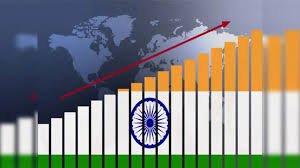
India is being framed as a global growth stabiliser in a recent macro outlook by a former RBI governor, highlighting the country’s resilience amid global volatility. Strong domestic demand, policy continuity, and financial sector stability are central to this assessment.
India as a global growth stabiliser is emerging as a key theme in the latest macro outlook articulated by a former RBI governor. At a time when advanced economies are grappling with slower expansion, inflation adjustments, and geopolitical risks, India’s relative macro stability is drawing attention.
This is a time sensitive development because global growth forecasts remain uneven. Major economies are facing structural headwinds, while emerging markets are experiencing divergent performance. In this environment, India’s consistent GDP growth, stable banking system, and improving fiscal metrics are being viewed as anchors of stability.
Understanding The Global Growth Context
Global growth has moderated in recent years due to tighter monetary policies, supply chain disruptions, and regional conflicts. Advanced economies have experienced slower expansion following aggressive interest rate hikes aimed at curbing inflation.
Emerging markets have also faced capital flow volatility and currency pressures. Against this backdrop, India has maintained one of the highest growth rates among large economies. Real GDP growth has remained robust relative to peers, supported by domestic consumption and public capital expenditure.
The framing of India as a global growth stabiliser reflects this divergence. While global trade growth remains uncertain, India’s internal demand base provides a cushion that reduces exposure to external shocks.
Domestic Demand And Consumption Strength
A central pillar of India’s macro outlook is domestic demand. Private consumption contributes a significant share to GDP, and government infrastructure spending has reinforced investment momentum.
Large scale capital expenditure on roads, railways, digital infrastructure, and manufacturing incentives has created multiplier effects across sectors. This has supported employment generation and improved business sentiment.
Urban consumption has shown resilience, particularly in services, automobiles, and housing. Rural demand has experienced periodic fluctuations but remains supported by agricultural output and targeted welfare schemes.
This balanced demand structure reduces reliance on exports alone, which is critical when global trade conditions are uncertain.
Financial Sector Stability And Banking Reforms
Another factor strengthening India’s position is financial sector stability. In recent years, Indian banks have improved asset quality, reduced non performing assets, and strengthened capital buffers.
Regulatory oversight by the central bank has focused on prudential norms, liquidity management, and digital payment systems. The expansion of UPI and financial inclusion initiatives has deepened formal financial penetration.
A stable banking system supports credit growth. When credit flows efficiently to MSMEs, infrastructure projects, and retail borrowers, economic momentum sustains itself even if global capital markets tighten.
Compared to several emerging economies facing banking stress or currency crises, India’s macro fundamentals appear relatively stable.
Inflation Management And Monetary Policy Credibility
Inflation control remains central to any macro outlook. India has experienced periods of elevated inflation driven by food and fuel prices, but policy interventions have aimed to anchor expectations.
Monetary policy adjustments have balanced growth and price stability objectives. Maintaining credibility in inflation targeting strengthens investor confidence and reduces volatility in bond markets.
Stable inflation expectations also protect household purchasing power. This supports consumption and shields lower income segments from sharp real income erosion.
In a global context where inflation volatility has challenged several economies, consistent policy signaling adds to India’s stabiliser narrative.
Risks And Structural Challenges
While the macro outlook is positive, risks remain. Global commodity price shocks, oil price spikes, and geopolitical tensions can influence India’s import bill and fiscal balance.
Employment quality and labor force participation require sustained focus. High growth must translate into formal job creation to maintain social and economic stability.
Private investment revival beyond public capex is another structural objective. Long term productivity improvements depend on technology adoption, skill development, and manufacturing competitiveness.
India’s role as a global growth stabiliser will depend on how effectively these structural issues are addressed alongside cyclical resilience.
Implications For Investors And Policymakers
For global investors, the stabiliser narrative reinforces India’s attractiveness as a long term allocation destination. Equity markets, bond yields, and foreign direct investment flows are influenced by macro credibility.
For domestic policymakers, maintaining fiscal discipline and reform momentum is critical. Infrastructure expansion, digital transformation, and regulatory clarity must continue.
The former RBI governor’s macro outlook underscores that stability is not accidental. It is built on policy continuity, financial sector strength, and domestic demand depth.
If these pillars remain intact, India’s relative growth advantage may persist even amid global uncertainty.
Takeaways
• India is being viewed as a global growth stabiliser amid uneven global expansion
• Strong domestic demand and infrastructure spending support macro resilience
• Financial sector stability and inflation management enhance credibility
• Structural reforms remain essential for sustaining long term growth
FAQs
Q1. What does global growth stabiliser mean
It refers to an economy that maintains steady expansion and supports overall global growth when other major economies slow down.
Q2. Why is India seen as stable compared to peers
India has maintained relatively high GDP growth, stable banking conditions, and consistent policy frameworks.
Q3. Are there risks to this outlook
Yes. Global commodity shocks, employment challenges, and private investment gaps remain key risks.
Q4. How does this affect investors
A stable macro environment can attract long term investment and reduce volatility in financial markets.








Leave a comment