

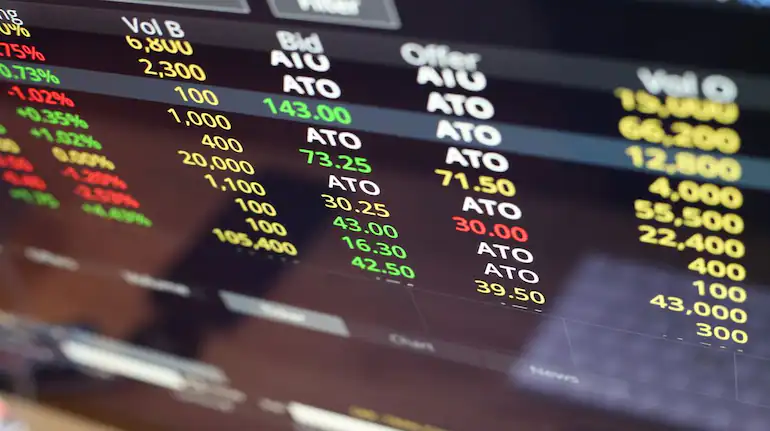
Indian markets climbed for a second straight session with the Nifty holding firmly above the 25,700 mark. The rally was supported by positive global cues, steady domestic institutional flows and renewed interest in large cap stocks across banking and energy.
Indian markets continued their upward momentum as the Nifty stayed above 25,700 for the second consecutive trading session, reflecting improving investor sentiment. The move comes amid supportive global signals and sustained domestic liquidity, reinforcing confidence in frontline indices. The Sensex also tracked gains, supported by heavyweights in financials and capital goods. While volatility remains present, the broader structure of the market suggests resilience rather than short term speculation.
Global Cues Support Risk Appetite
The latest stock market rally has been influenced by firm global cues, particularly stable US equity performance and easing concerns around interest rate trajectories. When global risk sentiment improves, emerging markets like India typically benefit from foreign portfolio flows.
US bond yields have shown signs of stabilisation after recent fluctuations, reducing pressure on equity valuations. Asian peers also traded largely in the green, providing a constructive backdrop. For Indian equities, global stability reduces uncertainty in sectors such as IT, metals and export oriented businesses that are sensitive to overseas demand trends.
However, analysts continue to monitor crude oil prices and currency movement. A sharp spike in oil or rupee volatility can quickly change short term momentum. For now, external conditions appear supportive.
Domestic Institutional Flows Anchor the Market
One of the key drivers behind the Nifty holding above 25,700 has been consistent domestic institutional investment. Mutual funds and insurance companies have continued to deploy capital into equities, offsetting intermittent foreign outflows.
Systematic investment plan inflows remain robust, reflecting growing retail participation across Tier 2 and Tier 3 cities. This steady stream of domestic liquidity provides stability during global volatility. Unlike previous cycles that relied heavily on foreign institutional investors, the current market structure is more balanced.
Banking and financial stocks have played a central role in supporting indices. Strong credit growth, stable asset quality and healthy balance sheets have kept investor interest intact. Capital goods and infrastructure counters also attracted buying as government spending momentum continues.
Sector Rotation and Broader Market Trends
The second session rally was not limited to a single sector. Market breadth improved with participation from mid caps and select small caps. While large caps provided stability, broader market indices showed selective strength.
Information technology stocks saw renewed buying interest after recent corrections, supported by improved global tech sentiment. Auto and energy counters also contributed to gains.
That said, valuations in certain mid cap segments remain elevated. Investors are increasingly differentiating between earnings backed growth and speculative moves. The current environment favours fundamentally strong companies with visible cash flows rather than momentum driven trades.
Technical Positioning of the Nifty
From a technical perspective, holding above 25,700 is significant. This level now acts as a near term support zone. Sustaining above this range improves the probability of testing higher resistance bands in the coming sessions.
Market participants are watching institutional activity closely. If buying continues and volatility remains contained, the index may attempt further consolidation at higher levels. On the downside, any breach below recent support could trigger short term profit booking.
Volumes during the rally indicate genuine participation rather than thin liquidity driven spikes. That is a constructive sign for the sustainability of the move.
What It Means for Retail Investors
For retail investors, the current stock market trend reinforces the importance of disciplined allocation. Chasing rallies in overheated segments can be risky. Instead, staggered investments and diversified exposure remain prudent strategies.
Tier 2 and Tier 3 investors are increasingly accessing equities through SIPs and direct demat participation. This structural shift has strengthened domestic ownership of Indian markets. Long term investors may continue focusing on sectors linked to infrastructure, banking, manufacturing and consumption themes.
Short term traders, however, should remain alert to global triggers. Events such as central bank commentary, geopolitical developments or sharp commodity moves can influence intraday direction.
Takeaways
Indian markets extended gains for a second straight session with Nifty sustaining above 25,700
Global stability and domestic institutional flows are supporting the rally
Banking, capital goods and select IT stocks are driving index strength
Investors should focus on fundamentals rather than speculative mid cap momentum
FAQs
Q1. Why is the Nifty holding above 25,700 important?
It acts as a key technical support level. Sustaining above it indicates positive short term sentiment and reduces immediate downside risk.
Q2. What role are domestic institutional investors playing?
Domestic institutions are providing consistent liquidity through mutual fund and insurance flows, helping stabilise markets during global volatility.
Q3. Are global cues still influencing Indian markets?
Yes. US bond yields, global equity performance and crude oil prices continue to affect investor sentiment in India.
Q4. Should retail investors increase exposure now?
Long term investors can continue disciplined allocations, but aggressive short term buying at elevated valuations should be approached cautiously.










Leave a comment