

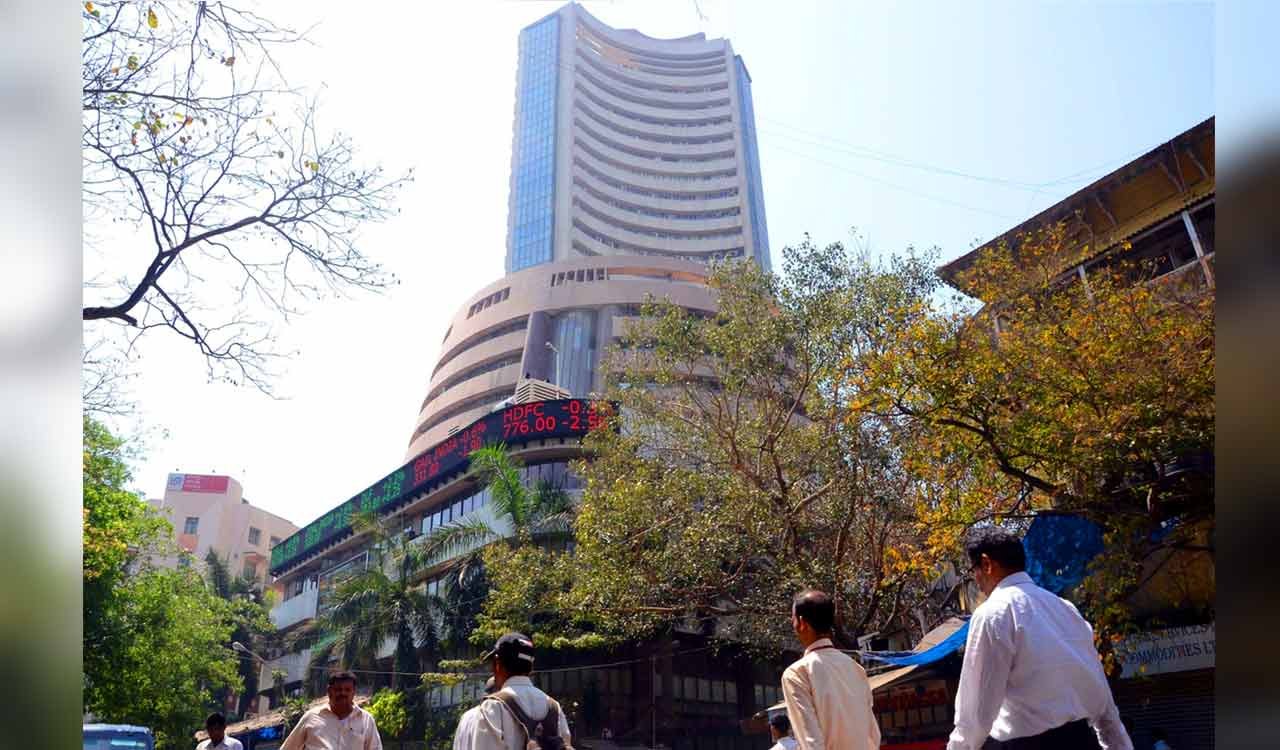
Indian markets opened lower as global tariff worries weighed on investor sentiment, dragging the Sensex and Nifty into the red during early trade. The weakness reflected caution across global equities, with traders reacting to renewed protectionist signals from major economies.
Indian markets reacted to global tariff worries at the opening bell, setting a cautious tone for domestic equities. The Sensex and Nifty slipped in early trade as investors turned risk averse, tracking weak global cues and uncertainty around international trade policies. Banking, IT, and export linked stocks saw the earliest pressure.
Global tariff concerns set the tone for Indian equities
The primary trigger behind the market dip was fresh anxiety around global tariff measures and retaliatory trade actions. Investors are increasingly worried that higher tariffs could disrupt global supply chains, increase input costs, and slow cross border trade. For India, this matters because sectors like IT services, metals, chemicals, and auto ancillaries are closely linked to global demand and export flows.
Asian markets opened mixed, while US futures indicated a cautious start, reinforcing the negative mood. Indian market participants responded by trimming positions in stocks that are sensitive to global trade cycles. This early selling pressure pushed benchmark indices lower within minutes of the opening.
Sensex and Nifty performance in early trade
In early trade, the Sensex slipped as heavyweight stocks faced selling pressure. The Nifty also traded below its previous close, with more losers than gainers on the index. Banking stocks, which often mirror broader risk sentiment, traded weak as investors avoided aggressive bets.
IT stocks also declined, reflecting concerns that tighter trade policies and global economic uncertainty could impact client spending. Metal stocks showed mild weakness as global commodity prices remained volatile amid fears of reduced demand. FMCG and select defensive stocks offered limited support, preventing a sharper fall.
Sectoral trends and stock specific action
The impact of global tariff worries was not uniform across sectors. Export oriented sectors such as IT, metals, and textiles faced the most pressure due to their dependence on overseas markets. Auto stocks also traded cautiously as higher tariffs globally can raise costs for components and affect export volumes.
On the other hand, select domestic focused sectors showed relative resilience. FMCG and healthcare stocks attracted mild buying as investors looked for stability. Midcap and smallcap stocks also saw cautious trade, with broader market indices underperforming the benchmarks in early deals.
What this means for retail and long term investors
For retail investors, the early dip highlighted how global developments can quickly influence Indian markets. While short term volatility may persist, long term investors often view such corrections as opportunities, provided domestic fundamentals remain stable.
India’s macroeconomic indicators, corporate earnings outlook, and policy continuity continue to offer medium to long term comfort. However, near term market direction is likely to remain sensitive to global headlines, especially related to trade policies, interest rates, and geopolitical developments.
Outlook for the rest of the trading session
Market participants will closely track global market movements, currency trends, and any fresh updates on trade policy during the session. If global cues stabilize, Indian markets could see some recovery from early losses. However, sustained uncertainty around tariffs may keep sentiment subdued.
Traders are expected to remain stock specific, focusing on companies with strong balance sheets and domestic demand visibility. Volatility could stay elevated as investors balance global risks with local growth prospects.
Takeaways
- Indian markets opened lower due to global tariff related concerns
- Sensex and Nifty slipped in early trade amid weak global cues
- Export oriented sectors like IT and metals faced selling pressure
- Domestic fundamentals remain key for long term investors despite short term volatility
FAQs
Why did Indian markets fall in early trade today?
Indian markets declined due to concerns over global tariff measures, which raised fears of trade disruption and slower global growth.
Which sectors were most affected by global tariff worries?
IT, metals, and other export oriented sectors were most impacted as they depend heavily on global demand and trade flows.
Is this market fall driven by domestic factors?
The early decline was largely driven by global cues rather than domestic economic concerns.
Should long term investors worry about such market dips?
Short term volatility is common during global uncertainty, but long term investors typically focus on fundamentals and may use dips selectively.










Leave a comment