

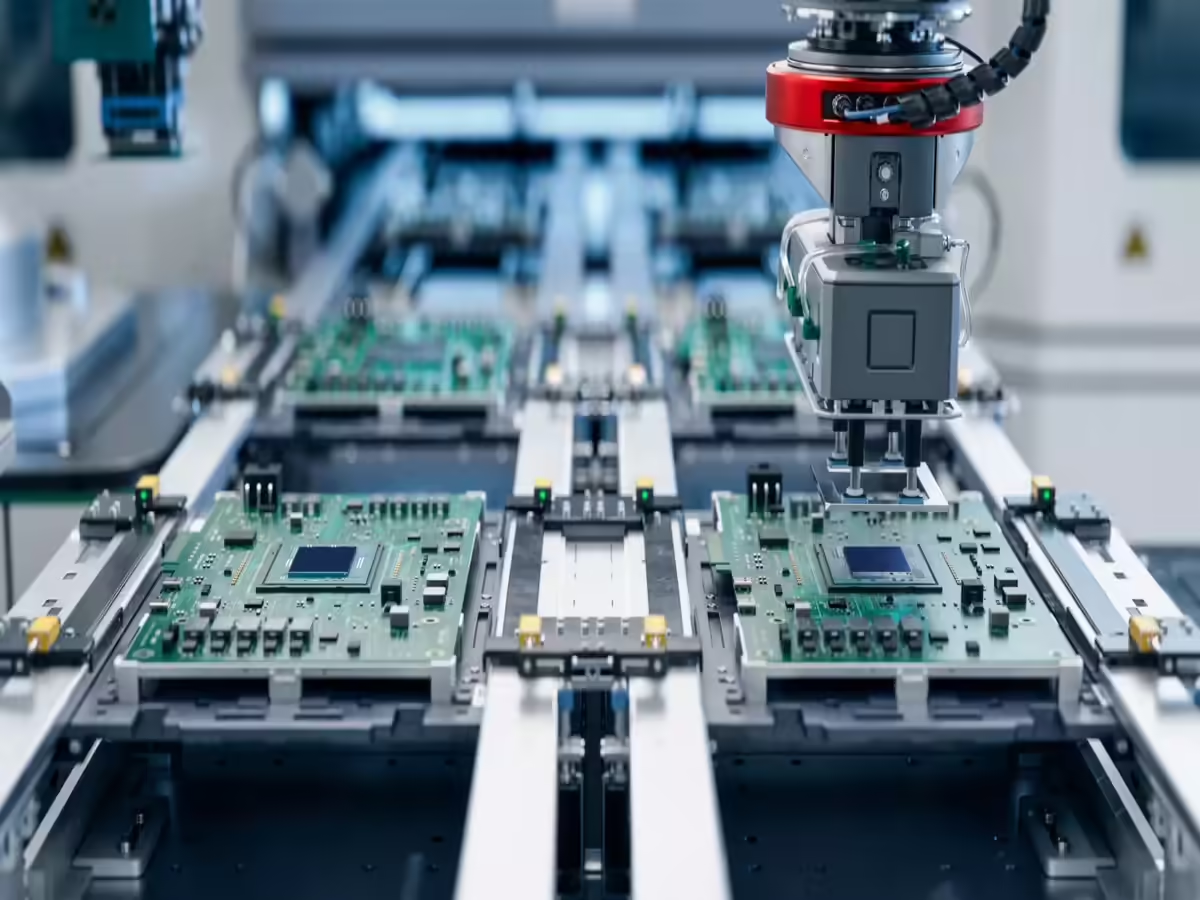
India’s Semiconductor Mission 2.0 aims to accelerate domestic chip production and strengthen the country’s electronics manufacturing ecosystem. The initiative builds on earlier semiconductor policies and seeks to attract global investments while reducing India’s dependence on imported semiconductor components.
India’s Semiconductor Mission 2.0 Expands the Chip Manufacturing Push
India’s Semiconductor Mission 2.0 is expected to play a crucial role in transforming the country into a global electronics manufacturing hub. The semiconductor mission was initially launched in 2021 with a government incentive package of around ₹76,000 crore to support semiconductor fabrication units, chip design companies, and related supply chains.
The updated policy framework under Semiconductor Mission 2.0 focuses on improving execution, attracting additional investors, and building a stronger domestic semiconductor ecosystem. India currently imports the majority of its semiconductor requirements, which are essential for products such as smartphones, laptops, automobiles, telecommunications equipment, and consumer electronics.
By strengthening local chip manufacturing capabilities, India aims to reduce supply chain vulnerabilities and ensure long term technological self reliance.
Semiconductor Manufacturing Incentives and Government Support
Government incentives remain a central pillar of India’s semiconductor strategy. Under the semiconductor incentive scheme, the government offers financial support covering a significant portion of project costs for semiconductor fabrication plants, display manufacturing units, and compound semiconductor facilities.
Several global companies have already shown interest in setting up semiconductor related facilities in India. In recent years, semiconductor projects have been announced in states such as Gujarat and Karnataka, supported by both central and state government incentives.
The semiconductor mission also includes programs to encourage chip design startups and research initiatives. India already has a strong semiconductor design workforce, with many global technology companies operating design centers in cities like Bengaluru and Hyderabad.
Strengthening domestic manufacturing capacity is the next step in building a complete semiconductor value chain within the country.
Impact on Electronics Manufacturing in India
India’s semiconductor push is closely linked to the broader electronics manufacturing industry. Electronics production in India has grown rapidly over the past decade due to initiatives such as the Production Linked Incentive scheme for electronics manufacturing.
Domestic manufacturing of smartphones, televisions, and electronic components has expanded significantly, with companies like Apple suppliers and other global electronics manufacturers establishing production units in India.
However, the absence of local semiconductor fabrication plants has remained a major gap in the supply chain. Electronics manufacturers still depend heavily on imported chips from countries such as Taiwan, South Korea, and the United States.
Semiconductor Mission 2.0 aims to address this gap by encouraging chip fabrication facilities that can support domestic electronics manufacturing industries. If successful, the policy could strengthen India’s position in the global electronics supply chain.
Opportunities for Semiconductor Design and Startup Innovation
Another important aspect of India’s semiconductor strategy is the promotion of chip design and semiconductor startups. India already has a large pool of engineers working in semiconductor design, verification, and testing.
Programs under the semiconductor mission encourage startups and research institutions to develop indigenous chip designs for sectors such as telecommunications, defense technology, automotive electronics, and artificial intelligence applications.
Government backed initiatives also support academic partnerships, skill development programs, and innovation labs focused on semiconductor technologies. These efforts aim to develop a talent pipeline capable of supporting advanced chip manufacturing and design operations.
For startups, this creates new opportunities in areas such as embedded systems, specialized processors, and semiconductor testing technologies.
Challenges in Building a Semiconductor Manufacturing Ecosystem
Despite strong government support, semiconductor manufacturing remains a highly complex and capital intensive industry. Establishing semiconductor fabrication plants requires investments of several billion dollars along with advanced technology and skilled manpower.
Countries that dominate semiconductor manufacturing today built their ecosystems over several decades through strong industry collaboration and long term policy support.
India must address challenges related to infrastructure, power supply reliability, water availability, and supply chain logistics to successfully build semiconductor fabs. Access to cutting edge manufacturing technology and strategic partnerships with global semiconductor companies will also be critical.
Industry experts believe that while India may not immediately compete with established chip manufacturing leaders, it can gradually build specialized capabilities in areas such as compound semiconductors, chip packaging, and semiconductor design.
What Semiconductor Mission 2.0 Means for India’s Technology Future
India’s semiconductor strategy is closely tied to the country’s long term digital and industrial ambitions. Semiconductors power nearly every modern technology including smartphones, electric vehicles, data centers, telecommunications networks, and artificial intelligence systems.
By strengthening domestic semiconductor capabilities, India aims to secure its position in the global technology economy. A successful semiconductor ecosystem would support manufacturing growth, create high skill employment opportunities, and attract global technology investments.
The semiconductor mission also aligns with broader national initiatives such as Make in India and Digital India, which focus on strengthening domestic manufacturing and technological innovation.
While the journey toward large scale semiconductor production will take time, Semiconductor Mission 2.0 represents a strategic step toward building a more resilient and competitive electronics manufacturing sector.
Takeaways
• India’s Semiconductor Mission 2.0 aims to strengthen domestic chip manufacturing and reduce import dependence.
• Government incentives are designed to attract global semiconductor investments and technology partnerships.
• The initiative supports the growth of India’s electronics manufacturing and semiconductor design ecosystem.
• Building a full semiconductor supply chain will require long term investment, infrastructure, and global collaboration.
FAQs
What is India’s Semiconductor Mission 2.0?
India’s Semiconductor Mission 2.0 is a government initiative aimed at developing domestic semiconductor manufacturing, supporting chip design innovation, and strengthening the electronics supply chain.
Why are semiconductors important for electronics manufacturing?
Semiconductors are essential components used in smartphones, computers, automobiles, and communication devices. Local chip manufacturing helps reduce import dependence and strengthens supply chain security.
How does the government support semiconductor companies in India?
The government offers financial incentives, infrastructure support, and policy frameworks to encourage semiconductor fabrication plants, display manufacturing units, and semiconductor design companies.
Can India become a global semiconductor manufacturing hub?
India has strong potential due to its engineering talent and growing electronics manufacturing sector, but building a competitive semiconductor ecosystem will require long term investments and global technology partnerships.











Leave a comment