

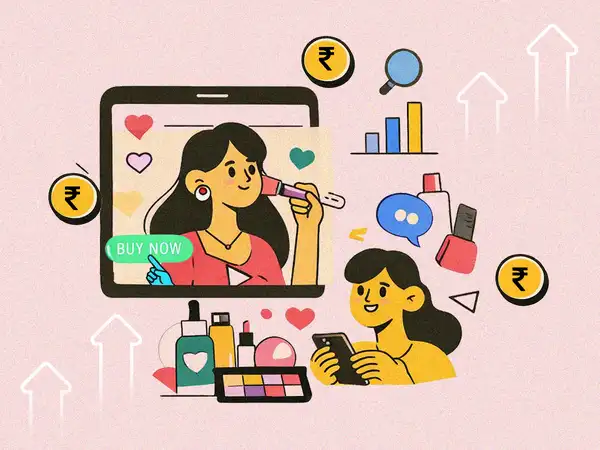
India’s beauty market is estimated to be worth around $27 billion and is drawing strong interest from global companies. The surge is driven by rising disposable income, digital influence, and growing demand from Tier 2 and Tier 3 cities.
India Beauty Market Growth Driven by Rising Consumption
India beauty market growth has accelerated over the past few years, supported by changing consumer behavior and expanding access to products. The $27 billion valuation reflects not just urban demand but also a sharp rise in consumption across smaller cities.
Consumers are spending more on skincare, haircare, and personal grooming products. This shift is linked to higher income levels, increasing awareness of self-care, and exposure to global beauty trends through social media.
Unlike earlier years, where beauty spending was largely urban-centric, Tier 2 and Tier 3 cities are now contributing significantly. Affordable product ranges and improved distribution networks have made beauty products more accessible than ever before.
Global Beauty Brands Expanding Presence in India
Global beauty brands in India are actively increasing investments to capture this growing market. Companies such as L’Oréal, Estée Lauder, and Unilever are expanding their product lines and distribution strategies.
These companies are not only launching premium products but are also focusing on localized offerings tailored to Indian skin types, climate conditions, and price sensitivities. This dual strategy allows them to target both high-end consumers and mass-market buyers.
India’s large population and increasing digital penetration make it one of the most attractive markets globally. For multinational companies facing slower growth in developed markets, India offers a strong opportunity for expansion.
Rise of Digital Beauty and Influencer-Led Demand
Digital beauty trends in India are playing a major role in shaping consumer preferences. Platforms like Instagram and YouTube have become key channels for product discovery.
Beauty influencers and content creators are driving awareness around skincare routines, makeup techniques, and product reviews. This has reduced the reliance on traditional advertising and shifted power towards digital communities.
Consumers today are more informed and experimental. They are willing to try new brands and products based on online recommendations, which has lowered entry barriers for both global and domestic players.
Indian Beauty Startups Compete with Global Players
Indian beauty startups growth is another defining feature of this boom. Brands such as Nykaa and Mamaearth have built strong market positions by focusing on digital-first strategies.
These companies understand local preferences better and often emphasize natural ingredients, affordability, and transparency. Their direct-to-consumer models allow them to engage closely with customers and adapt quickly to trends.
The competition between global giants and domestic startups is intensifying, leading to innovation in product offerings, pricing, and marketing strategies.
Tier 2 and Tier 3 Cities Powering Beauty Demand
Tier 2 beauty market India is emerging as a major growth engine. Cities beyond metros are witnessing increased demand due to rising aspirations and better access to online shopping platforms.
E-commerce platforms have played a crucial role in this expansion. Consumers in smaller cities can now access the same range of products available in metros, often at competitive prices.
Additionally, regional influencers and vernacular content are helping brands connect with audiences in their preferred languages. This localized approach is accelerating adoption and building trust among new consumers.
Premiumization and Shift Towards Skincare
Skincare market India is growing faster than traditional makeup categories. Consumers are prioritizing long-term skin health over cosmetic enhancements.
There is also a visible trend towards premiumization. While affordability remains important, a segment of consumers is willing to pay more for high-quality and specialized products.
Global brands are leveraging this trend by introducing advanced skincare solutions, while Indian brands are focusing on herbal and ayurvedic formulations that resonate with local preferences.
What This Means for the Future of the Industry
The expansion of India’s beauty market signals long-term structural growth rather than a short-term trend. Increasing competition is expected to benefit consumers through better product quality, wider choices, and competitive pricing.
For businesses, the key challenge will be balancing scale with localization. Companies that can adapt to diverse consumer needs across regions are likely to succeed.
The beauty industry is also expected to generate employment and contribute to economic growth, particularly in manufacturing, retail, and digital services.
Key Takeaways
• India’s beauty market is valued at around $27 billion and continues to grow rapidly
• Global brands are expanding aggressively while local startups strengthen competition
• Digital platforms and influencers are reshaping consumer buying behavior
• Tier 2 and Tier 3 cities are becoming major drivers of demand
FAQs
Why is India’s beauty market growing so fast?
The growth is driven by rising incomes, digital influence, and increased awareness of personal care across urban and rural areas.
Which companies are leading the beauty market in India?
Global players like L’Oréal and Estée Lauder, along with Indian brands like Nykaa and Mamaearth, are key contributors.
How important are Tier 2 and Tier 3 cities in this growth?
They are becoming major demand centers due to improved access, affordability, and growing aspirations.
What trends are shaping the future of the beauty industry in India?
Skincare focus, premiumization, digital influence, and localized product strategies are key trends.











Leave a comment