

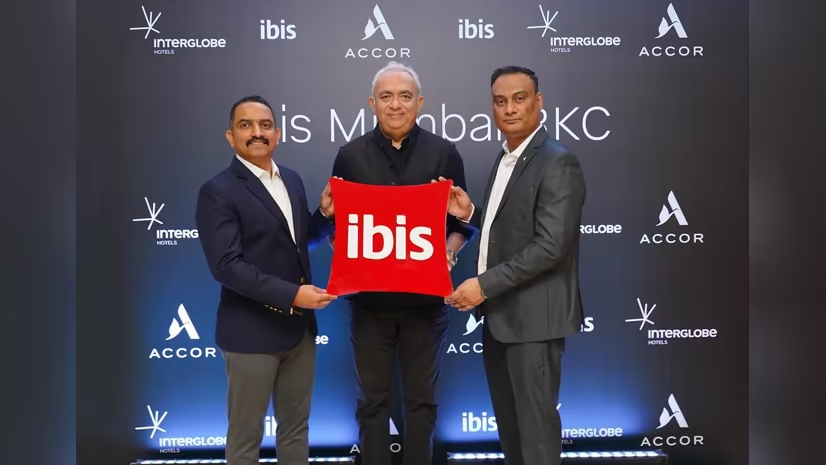
InterGlobe-Accor hospitality venture eyes IPO as the hotel platform accelerates network expansion across India, positioning itself to tap capital markets amid rising travel demand. The proposed listing comes at a time when the hospitality cycle remains strong and occupancy levels are improving nationwide.
InterGlobe-Accor hospitality venture eyes IPO at a stage when India’s hotel industry is experiencing sustained recovery and expansion. The joint platform, which combines InterGlobe’s local market expertise with Accor’s global hospitality brand portfolio, is scaling its presence across business and leisure destinations. The move to explore an initial public offering signals confidence in the growth trajectory of branded hotel assets in India.
The timing is significant. India’s hospitality sector has benefited from robust domestic travel, increasing corporate activity and large-scale events that have supported occupancy and room rates over the past two years.
Hospitality Industry Recovery and Strong Demand Trends
India’s hospitality industry has moved into a strong upcycle. Average room rates across major cities have risen, and occupancy levels have remained firm due to sustained travel demand. Corporate travel has recovered steadily, while domestic leisure travel continues to grow, particularly in tier two and tier three destinations.
The InterGlobe-Accor platform operates a portfolio spanning premium, midscale and economy segments. This diversified positioning enables it to capture demand from business travelers, tourists and value-conscious consumers. Expansion into emerging cities is aligned with infrastructure growth, airport development and rising disposable incomes.
As the sector consolidates, branded hotel operators are gaining share from unorganized and standalone properties. Investors have increasingly viewed hospitality as a cyclical sector with improving visibility in the current phase.
IPO Plans and Capital Raising Strategy
The InterGlobe-Accor hospitality venture eyes IPO to potentially raise capital for further expansion and balance sheet optimization. An initial public offering would provide funding for new hotel openings, renovations and brand penetration in underserved markets.
Public listing also offers benefits such as enhanced corporate governance standards, improved access to institutional capital and greater brand visibility. For a capital-intensive business like hospitality, equity funding can reduce reliance on debt and strengthen financial flexibility.
India has seen renewed activity in hospitality listings in recent years, reflecting investor appetite for travel and tourism themes. If market conditions remain supportive, the IPO could attract both domestic and foreign institutional investors looking for exposure to India’s consumption growth story.
Rapid Network Expansion Across Cities
Network expansion is central to the venture’s growth strategy. The company has been increasing its presence through management contracts, franchise agreements and selective owned assets. Asset-light expansion models help scale faster while limiting capital expenditure intensity.
Tier two and tier three cities represent a significant opportunity. Rising business activity, improved connectivity and growing event tourism are driving demand for branded hotels beyond metro markets. The company’s multi-brand strategy allows it to tailor offerings to different price points and customer segments.
Expansion is also being supported by digital transformation in booking platforms and loyalty programs. As online travel agencies and direct booking channels gain traction, hotel chains with strong distribution capabilities are better positioned to optimize occupancy and pricing.
Competitive Landscape and Market Positioning
India’s hospitality sector includes domestic and international players across luxury, upper upscale, midscale and economy categories. Competition remains intense, particularly in metro markets. However, demand growth has absorbed additional supply in recent quarters.
The InterGlobe-Accor venture benefits from Accor’s global brand recognition and loyalty network, combined with InterGlobe’s understanding of local real estate and operations. This dual advantage strengthens positioning in both established and emerging markets.
The company’s focus on operational efficiency, revenue management systems and cost optimization will be closely evaluated by potential investors during the IPO process. Profitability metrics, occupancy trends and average daily rates are key indicators for assessing sustainability of growth.
Risks and Outlook for Investors
While the hospitality cycle is currently favorable, the sector remains sensitive to economic slowdowns, geopolitical disruptions and travel demand fluctuations. Any decline in corporate travel or consumer spending could impact occupancy and room rates.
Additionally, new supply entering key markets may create pricing pressure if demand growth moderates. Regulatory changes related to tourism policies, taxation or land use can also influence expansion plans.
However, India’s long-term travel and tourism outlook remains positive. Rising middle-class incomes, expanding aviation networks and increasing event-driven travel provide structural support. If executed effectively, the IPO could position the InterGlobe-Accor venture as a leading listed hospitality platform in India.
The proposed listing reflects broader confidence in India’s consumption and services economy. Investors will assess valuation, growth visibility and management execution track record before making allocation decisions.
Takeaways
The InterGlobe-Accor venture is exploring an IPO during a strong hospitality cycle
Expansion into tier two and tier three cities is a key growth driver
Public listing could strengthen capital access and reduce leverage
Hospitality remains cyclical but supported by domestic travel growth
FAQs
Q1. Why is the InterGlobe-Accor venture considering an IPO?
The company aims to raise capital for expansion, improve financial flexibility and capitalize on strong investor interest in hospitality assets.
Q2. How is India’s hospitality sector performing currently?
The sector has seen rising occupancy and average room rates due to strong domestic travel and corporate demand.
Q3. What are the main growth drivers for the venture?
Network expansion, multi-brand positioning and increasing travel demand in emerging cities are key growth drivers.
Q4. What risks should investors consider?
Hospitality is cyclical and sensitive to economic conditions, new supply additions and changes in travel demand patterns.











Leave a comment