

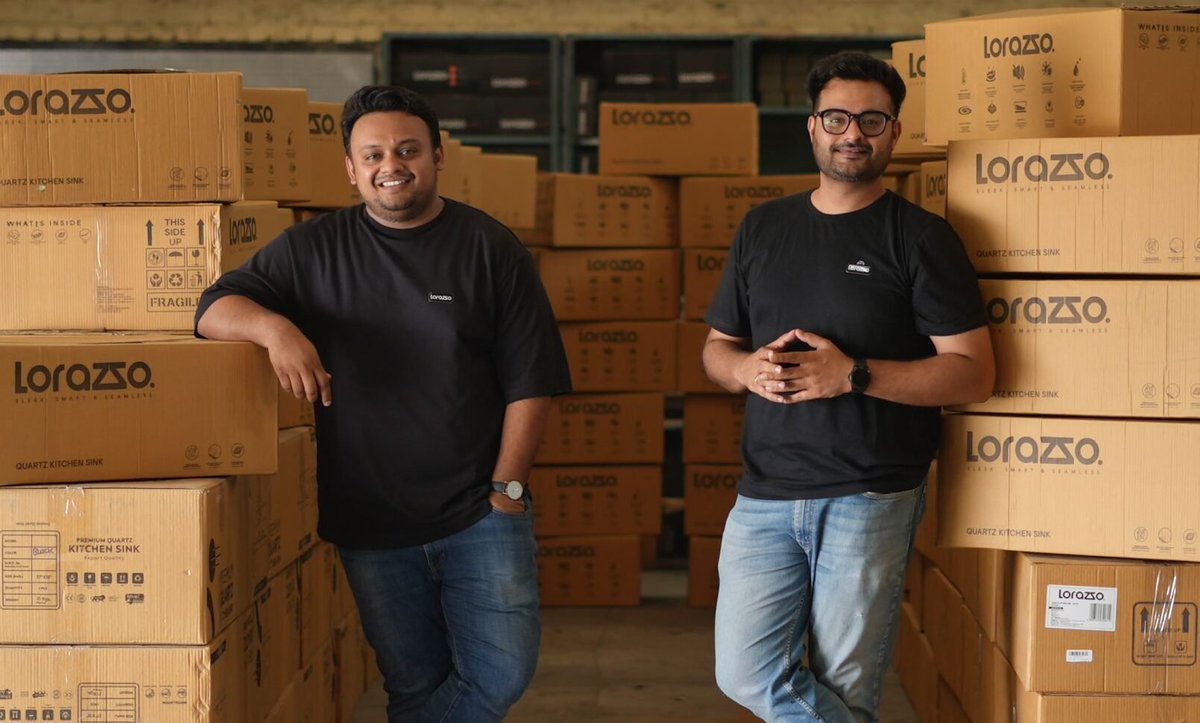
Lorazzo’s ₹5 Cr seed round is a time sensitive development that highlights growing investor interest in premium home tech startups in India. The funding reflects shifting consumer preferences toward design led, technology enabled home products and a maturing startup ecosystem that rewards focused execution.
Lorazzo’s ₹5 Cr seed round places the spotlight on a category that has quietly gained momentum, premium home tech. As Indian consumers spend more on homes, investors are backing early stage startups that combine aesthetics, functionality and technology rather than mass market pricing alone.
Why Lorazzo’s seed round matters right now
Lorazzo’s ₹5 Cr raise is a news driven topic because it reflects current investor behaviour at the seed stage. Capital is flowing selectively into startups that address clear demand trends rather than broad lifestyle narratives.
The home and interiors category has seen renewed interest post pandemic as remote work, home ownership and renovation activity increased. However, investors are no longer backing generic home brands. They are focusing on premium positioning, differentiated products and controlled scale.
The main keyword Lorazzo’s ₹5 Cr seed round fits naturally here. The funding shows that even at the seed stage, investors expect clarity on target customers, margins and long term brand direction.
What Lorazzo represents in the premium home tech space
Lorazzo operates in the premium home tech segment, blending design focused products with technology enabled functionality. This positioning sets it apart from traditional furniture or decor brands.
Premium home tech startups typically focus on modular solutions, smart features, superior materials and customisation. These products cater to urban and affluent consumers who value quality and experience over price alone.
Secondary keywords like premium home tech startups and design led home brands explain the appeal. Lorazzo’s approach aligns with a growing segment of buyers willing to pay more for well designed, durable and tech integrated home solutions.
For investors, this category offers higher margins and stronger brand loyalty compared to mass market home products.
Why seed stage investors are backing premium home startups
Seed stage investors are increasingly backing premium home startups because the category offers a balance of demand stability and brand defensibility. Homes are long term assets, and spending on them tends to be less volatile than discretionary fashion or gadgets.
Unlike pure consumer electronics, home tech products often have longer replacement cycles but higher ticket sizes. This allows startups to grow revenue without chasing volume at any cost.
Secondary keywords such as seed funding home tech and premium consumer startups capture this shift. Investors are betting that early entry into premium niches can lead to strong brand recall and pricing power over time.
Seed rounds like Lorazzo’s indicate confidence in founders who understand both design sensibility and operational execution.
Broader momentum in India’s home tech ecosystem
Lorazzo’s ₹5 Cr seed round is part of a broader momentum in India’s home tech ecosystem. Startups across smart lighting, modular kitchens, home automation and premium fittings have seen rising interest.
This momentum is driven by urbanisation, rising disposable incomes and exposure to global design standards. Indian consumers are increasingly comparing local offerings with international brands.
Secondary keywords like home tech market India and smart home adoption India align with this trend. While mass adoption is gradual, premium segments are moving faster due to higher willingness to experiment.
Investors see these startups as long term plays rather than quick scale stories.
Challenges premium home tech startups must navigate
Despite strong interest, premium home tech startups face challenges. Manufacturing quality, supply chain reliability and after sales support are critical and complex.
Customer expectations are higher at premium price points. Any quality issues can damage brand trust quickly. Startups must invest early in quality control and service infrastructure.
Secondary keywords like home tech startup challenges and premium brand execution are relevant here. Seed funding must be deployed carefully to avoid over expansion before operational foundations are strong.
This makes disciplined founders more attractive to investors than aggressive growth seekers.
What Lorazzo’s funding says about investor expectations
Lorazzo’s seed round highlights that investors expect clear focus even at early stages. Product market fit, defined customer segments and margin visibility are becoming baseline requirements.
Investors are less interested in wide category plays and more in startups that dominate a specific niche. Premium home tech fits this approach well.
Secondary keywords like seed investor expectations and early stage startup focus capture this reality. Founders must demonstrate not just vision but also execution readiness.
The ₹5 Cr raise suggests that Lorazzo has convinced investors of its ability to build a premium brand with scalable operations.
Implications for other home and lifestyle startups
For other home and lifestyle startups, Lorazzo’s funding offers a clear signal. Premiumisation combined with technology and design is gaining investor attention.
However, this does not mean all premium ideas will attract capital. Differentiation, founder expertise and realistic go to market strategies remain crucial.
Secondary keywords like lifestyle startup funding trends and home decor startups India reflect this evolving landscape. Copycat models or purely aesthetic brands without operational depth may struggle.
Startups that combine design thinking with supply chain discipline stand a better chance.
What to watch after the seed round
Post funding, attention will shift to how Lorazzo deploys capital. Product refinement, pilot expansion and customer feedback will be critical milestones.
Scaling manufacturing without compromising quality will be a key test. Partnerships with architects, developers or interior designers could accelerate adoption.
If Lorazzo executes well, it could validate premium home tech as a strong seed stage investment theme in India.
Takeaways
- Lorazzo’s ₹5 Cr seed round highlights rising interest in premium home tech
- Investors are backing focused, design led and tech enabled home startups
- Premium positioning offers higher margins but demands strong execution
- Seed funding is becoming more selective and expectation driven
FAQs
Why is Lorazzo’s seed funding important?
It signals investor confidence in premium home tech as a scalable category.
Are premium home startups easier to fund than mass market ones?
They attract interest if they show differentiation and margin potential.
What risks do premium home tech startups face?
Quality control, supply chain reliability and high customer expectations.
Will more seed funding flow into home tech startups?
Funding is selective, but strong premium models are likely to see interest.












Leave a comment