

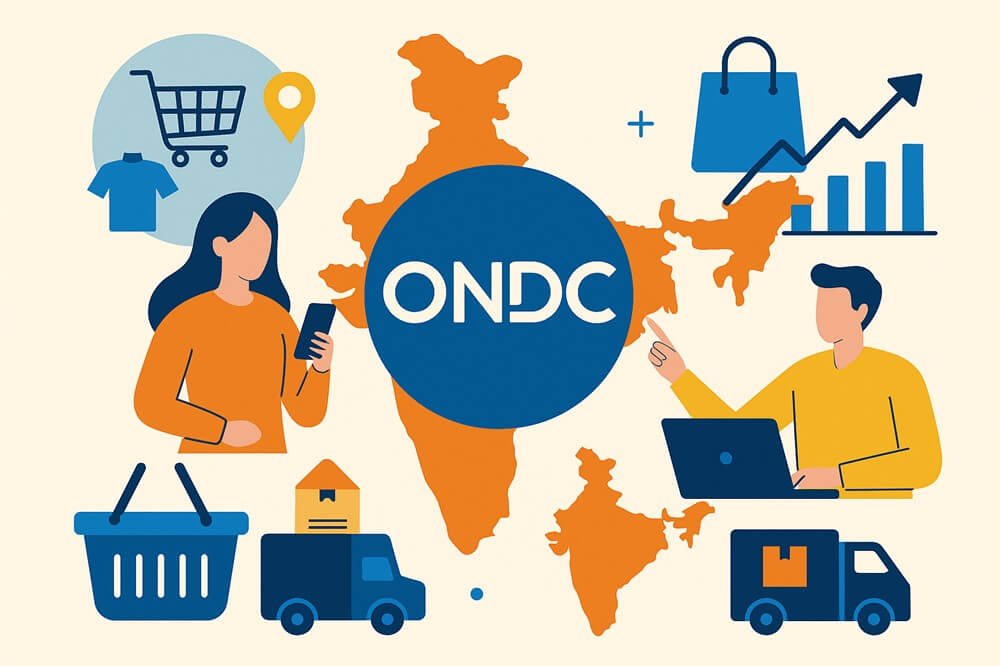
India’s ONDC expansion into smaller cities is gaining momentum as the government-backed network pushes deeper into Tier-2 and Tier-3 markets. The move aims to democratize digital commerce, but execution challenges could determine whether it delivers sustainable value for businesses and consumers.
What ONDC Expansion Means for Smaller Cities
The Open Network for Digital Commerce has been positioned as an alternative to platform-led e-commerce models. Its expansion into smaller cities is a strategic push to bring local sellers, kirana stores, and service providers into a unified digital ecosystem.
Unlike traditional marketplaces, ONDC operates as a network where buyers and sellers connect through multiple apps. This removes platform dependency and reduces commission costs. For small businesses in cities like Nagpur, Indore, and Coimbatore, this creates a potential entry point into online commerce without heavy onboarding barriers.
The expansion is aligned with the government’s broader digital inclusion strategy. Increased smartphone penetration, UPI adoption, and logistics improvements have made smaller cities viable for e-commerce growth. However, adoption depends on awareness and ease of use.
Opportunity for MSMEs and Local Sellers
ONDC presents a clear opportunity for MSMEs looking to digitize operations. Lower commissions compared to established e-commerce platforms can improve margins for small sellers. It also allows businesses to retain more control over pricing and customer relationships.
For regional businesses, especially those selling groceries, food, and daily essentials, ONDC can enable hyperlocal delivery models. This is particularly relevant in Tier-3 markets where large platforms have limited reach or high delivery costs.
Another advantage is access to a wider buyer base. Sellers are not restricted to a single app but can be discovered across multiple buyer interfaces integrated with ONDC. This increases visibility without additional marketing spend.
The network also encourages competition among logistics and service providers, potentially reducing delivery costs over time.
Execution Challenges in Tier-2 and Tier-3 Markets
Despite the opportunity, execution remains the biggest risk. One of the primary challenges is onboarding quality sellers at scale. Many small businesses lack digital literacy, structured inventory systems, or standardized pricing.
Logistics infrastructure is another constraint. While metros have well-developed delivery networks, smaller cities still face issues related to last-mile connectivity, delivery timelines, and return handling.
Consumer experience is also inconsistent. Since ONDC relies on multiple apps and service providers, the user journey can vary significantly. Issues like delayed deliveries, incorrect orders, or poor customer support can impact trust.
Payment reconciliation and dispute resolution mechanisms are still evolving. For small businesses with limited resources, handling these complexities can become a barrier.
Competition With Established E-commerce Platforms
ONDC is entering a market dominated by large e-commerce players that have already built strong logistics, customer trust, and brand recall. These platforms offer seamless user experience, fast deliveries, and reliable return policies.
For ONDC to compete effectively, it must match or exceed these standards while maintaining its cost advantage. This requires coordination across multiple stakeholders, including sellers, logistics partners, and technology providers.
In smaller cities, where trust plays a critical role in purchase decisions, even minor service failures can push users back to established platforms.
However, ONDC’s open network model gives it a structural advantage in the long term. If executed well, it can reduce monopolistic control and create a more competitive ecosystem.
What Needs to Improve for Sustainable Growth
For ONDC to succeed in smaller cities, the focus must shift from expansion to execution quality. Seller education programs are essential to improve onboarding and operational efficiency. Training in inventory management, pricing, and order handling can significantly enhance performance.
Improving logistics partnerships is equally important. Faster deliveries, better tracking systems, and efficient return handling will directly impact customer satisfaction.
Standardizing the user experience across apps can reduce confusion and improve adoption. Clear guidelines for service quality and dispute resolution will build trust among both buyers and sellers.
Government support in terms of awareness campaigns and incentives can accelerate adoption in non-metro markets.
Takeaways
- ONDC offers strong margin benefits and wider reach for small businesses
- Execution gaps in logistics and user experience remain key risks
- Tier-2 and Tier-3 markets present high growth potential for digital commerce
- Success depends on seller education, trust building, and service consistency
FAQs
1. What is ONDC and why is it expanding into smaller cities?
ONDC is a government-backed open e-commerce network designed to reduce platform dependency. Its expansion targets smaller cities to bring more local businesses into digital commerce.
2. How does ONDC benefit small businesses?
It lowers commission costs, increases visibility across multiple apps, and allows sellers to retain control over pricing and customer interactions.
3. What are the main challenges in ONDC expansion?
Key challenges include logistics limitations, inconsistent user experience, low digital literacy among sellers, and evolving dispute resolution systems.
4. Can ONDC compete with major e-commerce platforms?
It has long-term potential due to its open network model, but success depends on execution quality and ability to match service standards.










Leave a comment