

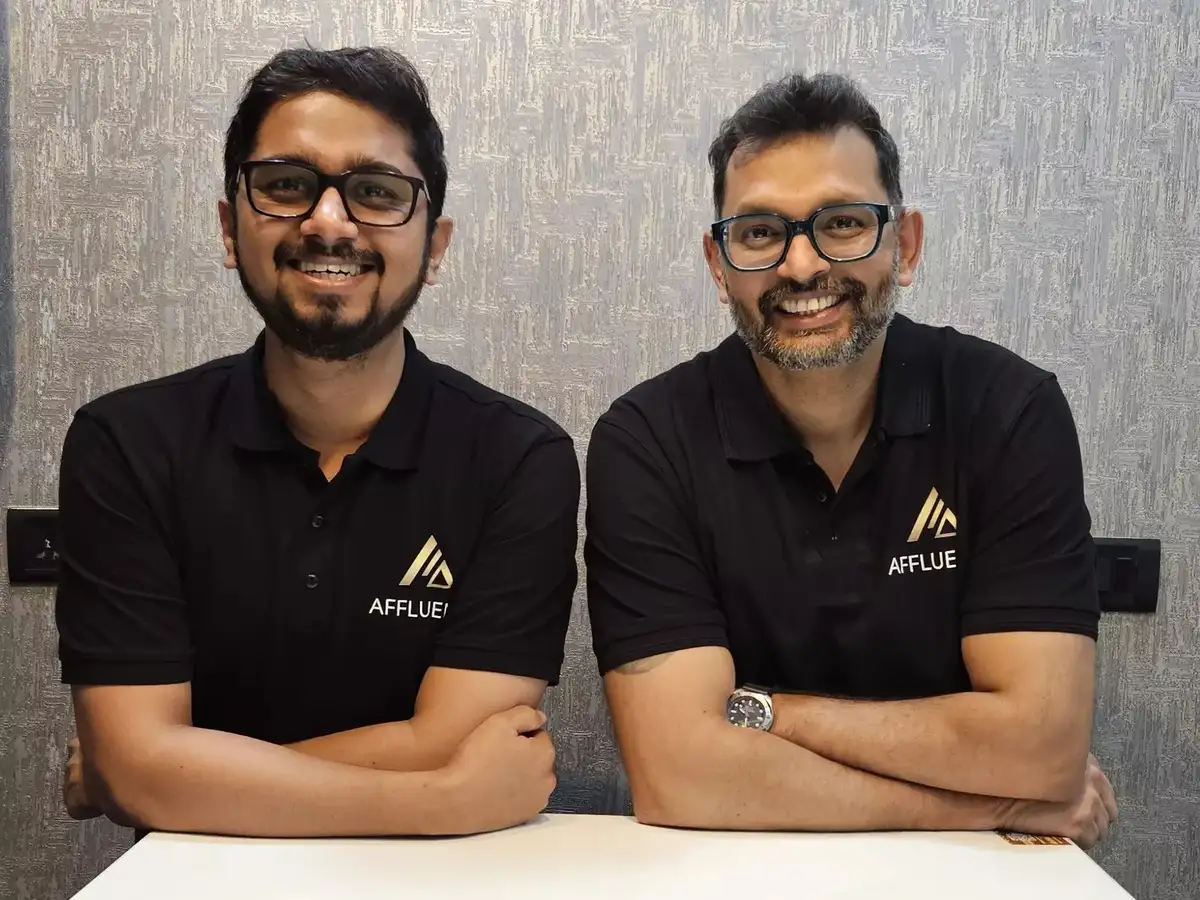
Bengaluru-based startup Pype AI has secured a pre-seed funding round of $1.2 million, underscoring the growing investor appetite for voice-AI in healthcare and signalling important opportunities for founders in smaller Indian cities.
The startup and the funding event
Pype AI’s funding raise marks a significant milestone in the early-stage ecosystem. The company, founded in 2024, focuses on building voice-based AI agents tailored for hospital and clinic workflows such as appointment scheduling, follow-ups and patient-support communication. The $1.2 million round was led by an established venture capital firm, with other investors participating. The capital will be used to deepen product development and accelerate market expansion.
This funding event is time-sensitive and reported today, fitting into the wider narrative of increased investment in health-tech and Indian AI startups.
Why the voice-AI in healthcare angle matters
Voice-AI in healthcare is a compelling frontier in India because of several factors: large hospitals face high volumes of patient interaction, non-metro hospitals often lack robust triage or digital support, and regional language interfaces remain under-served. A startup like Pype AI is tapping into these unmet needs. By automating routine voice tasks and integrating with hospital information systems, such solutions promise cost savings, improved patient experience and broader access.
For founders in non-metro regions, this trend suggests that niche technology stacks built around real-world workflows can attract early-stage capital even if the founders are not based in major metros. The technology ecosystem is shifting toward use cases rather than location alone.
Implications for non-metro founders and regional startup ecosystems
The fact that a Bengaluru-based startup has raised meaningful capital sends a positive signal for founders outside metro hubs. Here are the key implications:
- Access to capital may broaden: Investors increasingly look at sector fit and scalability rather than just city address. This means regional founders developing domain-specific solutions (for example, health-tech, agri-tech, local language voice-AI) can compete.
- Focus on scalable workflows: Pype AI shows that finding a repeatable workflow (hospital voice-agent) that addresses systemic inefficiencies is attractive. Non-metro founders should aim for clear value propositions with measurable outcomes (e.g., reduced missed appointments, cost per call).
- Language and regional market remain an advantage: Many smaller city hospitals have multilingual requirements and low digital maturity. A startup that develops voice-AI for local languages or underserved geographies can carve a niche.
- Ecosystem improvement: When early-stage funding flows into health-tech and Indian AI, it strengthens mentoring networks, regional accelerators and talent pools. Non-metro founders will benefit from spill-over of resources, partnerships and visibility.
What founders should learn from Pype AI’s journey
There are strategic lessons for regional entrepreneurs:
- Go after a meaningful pain-point: Pype AI did not chase an abstract AI opportunity but targeted voice workflows in healthcare—an industry with clear need. Founders should aim for such well-defined problems that offer measurable improvement.
- Build early traction: Though pre-seed, the startup has already deployed in hospitals and is preparing to scale. For non-metro startups, securing pilot projects or beta customers adds credibility.
- Think systematic scaling: The $1.2 million raise is not just for local deployment—it includes planned expansion. Founders must keep an eye on scalability (technology, operations, language support) from day one.
- Leverage capital and strategic partnerships: The funding allows deeper development and market entry. Regional founders should prepare to use capital not just for product but for partnerships, go-to-market, regulatory compliance and talent-building.
Broader ecosystem perspective
This funding round is part of a wider shift in Indian venture themes. Health-tech, AI and enterprise solutions are gaining traction. Early-stage capital in India is increasingly available for well-positioned startups. For regional founders this means the ecosystem is more accessible but also more competitive. It requires stronger execution, clear differentiation and readiness for growth.
Also, such funding events help build investor confidence in Indian startups beyond metro geographies. When a Bengaluru company with a clear use case raises capital, it sets a precedent: business models originating or deploying in smaller cities can succeed. That matters in the long term for regional startup hubs.
Takeaways
- The pre-seed raise by Pype AI highlights how voice-AI in healthcare can attract early-stage funding in India.
- Regional founders should focus on domain-specific solutions, measurable outcomes and multi-lingual/regional use-cases.
- Capital access is improving for startups outside metros, but execution quality remains critical.
- Startup ecosystems in Tier-2 and Tier-3 towns stand to gain from spill-over of capital, talent and ecosystem maturity.
FAQs
Q: Does this raise mean non-metro founders will automatically get funded?
Not automatically. While the capital trend is positive, investors still look for traction, scalability and a clear value proposition. Location alone is not sufficient.
Q: Why is voice-AI important for healthcare in India?
Because many hospitals and clinics face high communication loads (appointments, follow-ups) and struggle with language diversity, staffing, and operational inefficiencies. Voice-AI offers automation and scalability.
Q: What should a regional founder focus on to raise similar funding?
Focus on a well-defined problem, early customer validation, scalable technology, and regional differentiation (e.g., language, local workflows).
Q: Does the amount ($1.2 million) indicate high valuations?
In early-stage rounds such amounts reflect investor confidence but not necessarily huge valuations. The emphasis is typically on product-market fit, traction and scalability, rather than just valuation metrics.












Leave a comment