


Public sector banks are increasing their focus on gold loans as demand rises across smaller towns and semi-urban regions. This trend reflects changing borrower behavior, tighter liquidity conditions, and the growing need for quick, secured credit among households and small businesses.
PSU banks gold loans are witnessing a renewed push as public sector lenders expand their presence in smaller towns to capture rising demand for secured credit. In recent months, banks such as SBI, Bank of Baroda, and Canara Bank have strengthened their gold loan portfolios, responding to increased borrowing from households and MSMEs in Tier-2 and Tier-3 markets.
Rising gold loan demand in Tier-2 and rural markets
Demand for gold loans has been steadily increasing in smaller towns, driven by immediate liquidity needs and limited access to unsecured credit. Gold remains a widely held asset in Indian households, especially in rural and semi-urban areas, making it a convenient collateral option.
Borrowers are increasingly opting for gold loans due to faster processing, minimal documentation, and lower interest rates compared to unsecured personal loans. In Tier-2 cities, this has become a preferred financing route for both consumption needs and business-related expenses.
Secondary keyword focus such as gold loan demand India and rural credit trends highlights how deeply embedded gold-backed lending is in non-metro financial ecosystems.
PSU banks strengthen secured lending strategies
Public sector banks are actively prioritising secured lending products, including gold loans, as part of a broader strategy to manage risk. With tighter liquidity conditions and cautious lending sentiment, secured assets provide a safer alternative compared to unsecured retail loans.
PSU banks benefit from their extensive branch networks, especially in rural and semi-urban areas, allowing them to scale gold loan offerings effectively. Many banks are also introducing simplified gold loan products with competitive interest rates to attract new borrowers.
This shift aligns with broader banking trends where asset quality and risk-adjusted returns are becoming central to lending decisions.
Competition with NBFC gold loan players intensifies
The increased focus from PSU banks is also reshaping competition in the gold loan segment. Traditionally dominated by NBFCs such as Muthoot Finance and Manappuram Finance, the segment is now seeing stronger participation from banks.
PSU banks have a cost advantage due to lower cost of funds, enabling them to offer more competitive interest rates. Additionally, their established trust among customers in smaller towns gives them an edge in attracting first-time borrowers.
However, NBFCs continue to maintain strengths in faster disbursal and customer service. The competition is leading to better product offerings and pricing for borrowers across markets.
Impact of gold prices on lending growth
Gold prices play a critical role in shaping the gold loan market. Elevated gold prices increase the loan amount that borrowers can avail against the same quantity of gold, making these loans more attractive.
In recent periods, relatively high gold prices have supported the growth of gold loan portfolios for banks. Borrowers are able to unlock higher liquidity, while lenders benefit from improved collateral coverage.
Secondary keywords like gold price impact on loans and secured lending growth India help explain how macro factors influence lending behavior in this segment.
MSMEs and households drive usage patterns
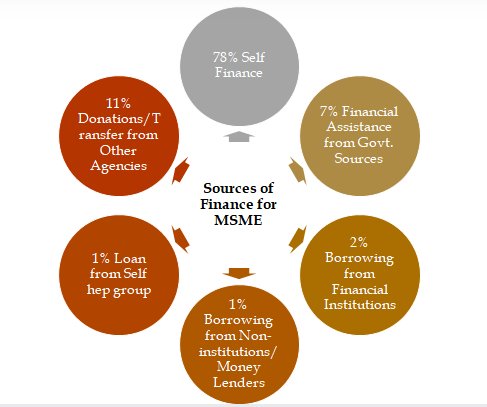
Gold loans are not limited to personal consumption. In smaller towns, MSMEs and small traders are increasingly using gold loans as working capital financing. These loans provide quick access to funds without the need for extensive financial documentation.
For households, gold loans are often used to manage short-term financial needs such as education expenses, medical emergencies, or seasonal spending. The flexibility and accessibility of these loans make them a critical component of the rural credit ecosystem.
This dual usage pattern is contributing to sustained demand growth, even as other credit segments experience volatility.
Outlook for gold loan growth in PSU banks
The outlook for PSU banks gold loans remains strong, supported by structural demand in smaller towns and ongoing economic uncertainty. As banks continue to expand their secured lending portfolios, gold loans are expected to remain a key growth driver.
However, maintaining proper valuation practices, monitoring loan-to-value ratios, and managing auction risks will be critical to ensure asset quality. Regulatory guidelines also require banks to maintain prudent lending standards in this segment.
Overall, the increasing focus on gold loans reflects a broader shift toward stability and risk management in the banking sector, while also addressing the credit needs of underserved markets.
Takeaways
• PSU banks are expanding gold loan offerings to tap rising demand in smaller towns
• Gold loans provide quick, secured credit for households and MSMEs
• Competition between PSU banks and NBFCs is intensifying in this segment
• High gold prices are supporting higher loan eligibility and portfolio growth
FAQs
Why are PSU banks focusing more on gold loans?
Gold loans are secured, lower-risk products that help banks maintain asset quality while meeting rising credit demand.
Who typically takes gold loans in smaller towns?
Both households and MSMEs use gold loans for short-term needs such as working capital, emergencies, and consumption.
How do gold prices affect loan amounts?
Higher gold prices increase the value of collateral, allowing borrowers to access larger loan amounts.
Are gold loans cheaper than personal loans?
Yes, gold loans generally have lower interest rates because they are backed by collateral.










Leave a comment