

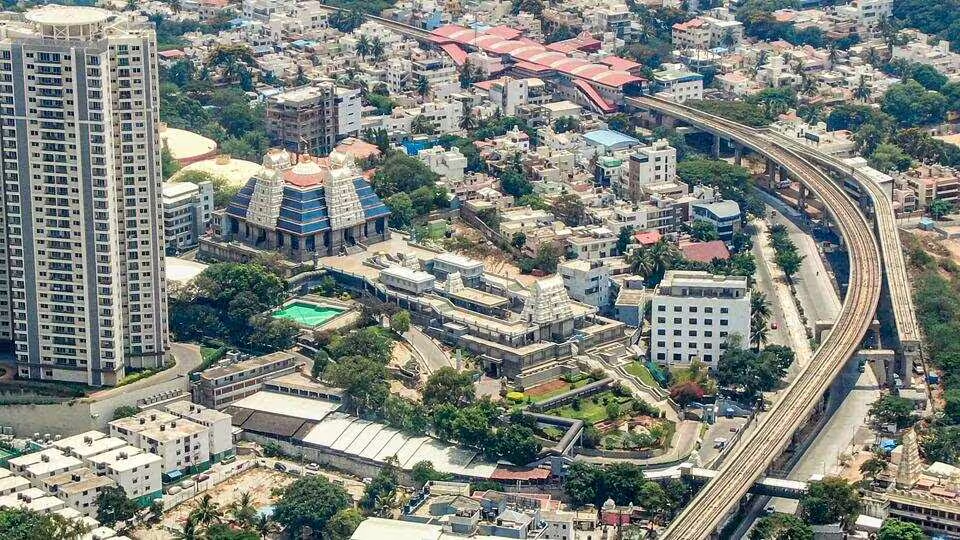
Regional VC hubs are emerging across India outside Bengaluru and Mumbai as investors diversify their sourcing models and founders build scalable companies in newer markets. The main keyword regional VC hubs reflects a structural expansion of the startup ecosystem that is no longer limited to traditional metros.
This topic is evergreen because the rise of new investment clusters is driven by long term digital adoption, infrastructure upgrades and a maturing entrepreneurial landscape. The tone therefore uses an analytical and educational approach focused on the cities gaining attention and the forces behind their growth.
Why India’s VC landscape is shifting beyond traditional metros
For more than a decade, Bengaluru, Mumbai and Delhi NCR dominated early stage and growth stage funding. However, increased digital penetration, cheaper startup costs and evolving investor strategies have opened the door for strong ecosystems in Tier 2 and emerging Tier 1 cities.
VC firms now seek differentiated founders who understand regional markets, build cost efficient models and solve problems beyond metro specific use cases. This requires broader geographic presence.
Another factor driving this shift is the rise of domestic capital from family offices, AIFs and corporate venture arms. These investors have local roots and often back founders operating closer to their home regions. As domestic participation grows, capital flows naturally widen across the country.
Improved connectivity, the spread of co working spaces, stronger incubators and increased government support for innovation in smaller cities also accelerate the formation of new VC hubs.
Indore: a fast growing centre for consumer, food and SaaS startups
Indore has emerged as a strong VC destination due to its entrepreneurial culture, business friendly environment and rising number of high quality early stage startups.
The city hosts active incubators, student led innovation programs and strong local investor participation. Sectors such as food processing, SaaS for SMEs, logistics tech and D2C consumer brands see consistent activity. Indore’s strategic location and efficient municipal governance make it attractive for startups building operationally intensive models.
Founders benefit from lower operating costs and easy access to talent through local engineering and management colleges. Investors increasingly view Indore as a city where early stage companies mature faster due to disciplined execution.
Jaipur: a rising hub for D2C, crafts, fintech and mobility
Jaipur has gained visibility as a regional hub for digitally native consumer brands, artisan led startups, mobility platforms and financial services.
The city’s strong design heritage and skilled artisan communities support the growth of craft based and fashion D2C companies. Fintech founders also leverage Jaipur’s emerging tech talent pool and regulatory familiarity to build scalable solutions.
Government backed incubators and startup missions offer mentorship, seed funding and structured learning programs that help founders professionalise their operations. Investors note that Jaipur based startups often achieve early traction due to strong unit economics and competitive cost structures.
Coimbatore: a powerful centre for manufacturing, engineering and deep tech
Coimbatore has become one of India’s most important regional VC hubs due to its engineering ecosystem, industrial clusters and deep technical expertise.
The city is known for machinery, electric vehicles, textiles, precision components and automation solutions. This makes it a natural base for deep tech startups building hardware enabled or industrial products.
VC firms exploring AI in manufacturing, robotics, climate tech and mobility frequently source opportunities from Coimbatore. Local universities and research institutions provide steady engineering talent, and the industrial supply chain gives startups early access to prototyping and testing facilities.
The city’s business culture also supports disciplined growth and operational efficiency, aligning well with current investor priorities.
Kochi and Thiruvananthapuram: Kerala’s rising innovation corridor
Kerala is emerging as a southern innovation corridor with Kochi and Thiruvananthapuram at its centre. These cities attract attention due to strong digital literacy, global exposure and a growing pool of product and technology talent.
Sectors such as health tech, marine technology, tourism tech and software development flourish due to the region’s unique strengths. Incubators such as startup missions and entrepreneurship cells play an active role in connecting founders with VCs.
VC firms are particularly interested in Kochi’s logistics and maritime potential, while Thiruvananthapuram’s educational institutions produce strong engineering talent for AI and deep tech ventures.
Ahmedabad and Vadodara: Gujarat’s expanding startup corridor
Gujarat is emerging as an investment friendly region with Ahmedabad and Vadodara showing increasing startup activity.
Ahmedabad hosts a growing cluster of fintech, consumer brands, agritech and manufacturing tech startups. Strong business literacy, established industrial networks and proactive state policies support this momentum.
Vadodara attracts engineering, energy, chemicals and materials startups due to its industrial base and research facilities. Investors appreciate the region’s discipline around compliance and financial structuring, which improves governance quality at early stages.
Nagpur: a strategic logistics and mobility driven hub
Nagpur has been gaining momentum as a startup city due to its central location, logistics infrastructure and growing presence of aerospace and mobility driven ventures.
The city’s connectivity and warehousing ecosystem make it ideal for supply chain innovation, D2C fulfilment models and regional commerce startups.
Founders in Nagpur benefit from lower competition, reasonable talent costs and proximity to large markets across central India. As logistics and mobility scale further nationwide, Nagpur is becoming a natural node for VC discovery.
Why these emerging hubs matter for investors and founders
Diversified VC hubs reduce concentration risk and create a more inclusive national startup ecosystem. Investors gain access to different business models, regional insights and customer segments that were previously overlooked.
Founders outside metros gain easier access to capital, mentorship and market networks, enabling them to build strong companies without relocating.
The rise of regional hubs also increases innovation quality. Startups solving real world problems across healthcare, agriculture, manufacturing, mobility and local commerce come from cities where these challenges are deeply understood.
Long term, the presence of multiple VC hubs strengthens India’s overall competitiveness by spreading economic opportunity and accelerating job creation.
Takeaways
- India’s VC expansion beyond metros is driven by digital penetration, domestic capital and maturing regional ecosystems.
- Indore, Jaipur, Coimbatore, Kochi, Thiruvananthapuram, Ahmedabad, Vadodara and Nagpur are standout regional hubs to watch.
- These hubs offer sector specific strengths, strong talent pools and favourable cost structures.
- A more distributed VC ecosystem improves innovation diversity and supports startups solving real regional challenges.
FAQs
Q: Why are VCs expanding beyond Bengaluru and Mumbai
A: Investors want access to new markets, cost efficient founders and region specific innovation that is growing quickly outside traditional metros.
Q: Which sectors thrive most in regional VC hubs
A: D2C brands, manufacturing tech, mobility, health tech, agritech, fintech and deep tech often emerge strongly in Tier 2 hubs.
Q: Do founders need to relocate to metros to raise funding
A: No. Many investors now source deals directly from regional hubs and support founders who continue building from their home cities.
Q: What makes these emerging hubs attractive to investors
A: Strong unit economics, lower operating costs, sector specialisation and improved ecosystem support make these cities compelling for VC activity.










Leave a comment