

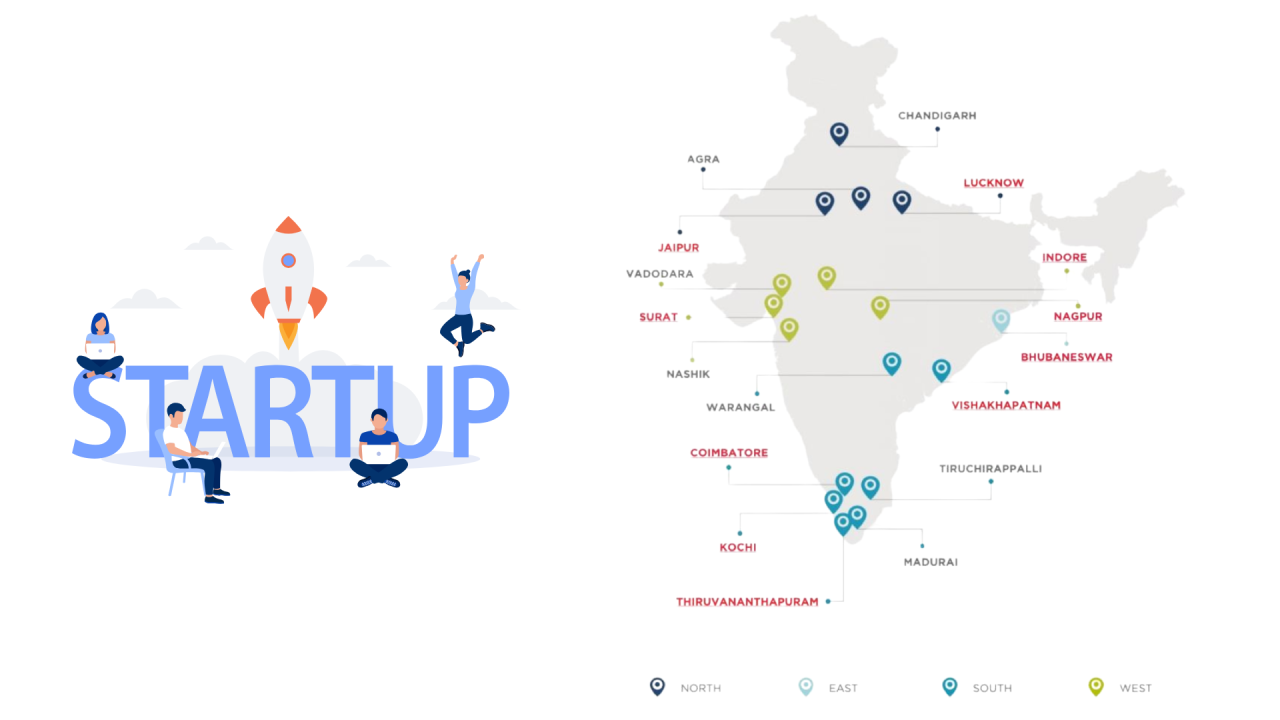
Sona Incubations has allocated ₹11 crore to 17 startups across Tier-2 and Tier-3 cities, spanning healthcare, drone technology, and deep innovation sectors. The move signals growing institutional focus on regional startup ecosystems beyond India’s traditional metro hubs.
Funding Push Highlights Shift Toward Regional Innovation
The Sona Incubations ₹11 crore allocation is a time sensitive development that reflects a clear shift in India’s startup funding landscape. Capital is increasingly flowing beyond Bengaluru, Mumbai, and Delhi into smaller cities where operating costs are lower and problem statements are more grounded in local demand.
By backing 17 startups across diverse sectors, Sona Incubations is spreading risk while capturing early-stage innovation that may scale nationally. This approach aligns with the broader trend of incubators and government-backed funds supporting entrepreneurship in underserved regions. For Tier-2 and Tier-3 founders, access to early capital remains one of the biggest barriers. This allocation directly addresses that gap.
Sector Spread From Healthcare to Drone Technology
The portfolio supported by Sona Incubations spans healthcare, agritech, drone technology, and allied deeptech areas. Healthcare startups in smaller cities often focus on affordability, diagnostics, and last-mile delivery. These models are increasingly relevant as demand for accessible healthcare expands beyond urban centres.
Drone technology startups, meanwhile, are finding use cases in agriculture, logistics, infrastructure inspection, and disaster management. Tier-2 and Tier-3 regions offer natural testing grounds due to proximity to farms, industrial corridors, and semi-urban infrastructure. Supporting such startups early allows incubators to nurture solutions that are practical rather than purely experimental.
The diversified sector exposure also reflects a disciplined investment strategy rather than a thematic bet on a single trend.
Why Tier-2 and Tier-3 Cities Are Gaining Attention
Tier-2 and Tier-3 cities are becoming attractive startup hubs due to talent availability, lower costs, and policy support at the state level. Many founders are choosing to build locally rather than migrate to metros. This has led to clusters of innovation around regional problems such as rural healthcare access, logistics inefficiencies, and precision agriculture.
Incubators like Sona are tapping into this momentum. By investing early, they can shape governance, product direction, and go-to-market strategy from the ground up. For investors, this also means lower entry valuations and longer runways compared to metro-based startups.
This funding move reinforces the idea that innovation is no longer geographically concentrated.
Structure and Intent of the Allocation
While the total allocation stands at ₹11 crore, the intent appears to be strategic rather than purely financial. Incubation-led funding typically combines capital with mentoring, access to networks, and operational guidance. For early-stage founders, this support can be as valuable as the cheque itself.
Spreading capital across 17 startups suggests a focus on proof-of-concept and early validation stages. The objective is likely to help startups reach milestones such as pilot deployments, regulatory approvals, or early revenue traction. Once achieved, these startups become better positioned to raise follow-on funding from institutional investors.
This model reduces early failure rates and improves capital efficiency.
Implications for the Broader Startup Ecosystem
The Sona Incubations initiative sends a signal to the broader ecosystem that quality startups can emerge from any geography. It also encourages other incubators and angel networks to look beyond saturated metro markets.
For policymakers, such allocations validate efforts to promote entrepreneurship through regional incubators and academic partnerships. For founders, it reinforces that building in smaller cities is no longer a disadvantage. Access to capital, mentorship, and markets is becoming more decentralised.
Over time, this could lead to more balanced economic development and job creation across regions.
Challenges for Regional Startups
Despite growing support, Tier-2 and Tier-3 startups still face challenges. Access to experienced talent, limited exposure to large enterprise clients, and slower fundraising cycles can hinder growth. Incubators must actively bridge these gaps through structured programs and partnerships.
Execution risk also remains high. Founders must balance local relevance with scalability. Products designed for regional markets need to be adaptable for national expansion without losing cost advantages.
Investments like this are a starting point, not a guarantee of success.
What to Watch Going Forward
The key metric to watch will be follow-on funding and commercial traction from these 17 startups. Success will be measured not just by survival but by their ability to scale beyond pilot stages.
If a meaningful portion of this cohort raises subsequent rounds or secures large customers, it will strengthen the case for regional incubation models. It may also attract more private capital into similar initiatives.
Takeaways
- Sona Incubations has allocated ₹11 crore to 17 Tier-2 and Tier-3 startups
- The portfolio spans healthcare, drone tech, and deep innovation sectors
- Regional startup ecosystems are gaining institutional backing
- Execution and follow-on funding will determine long-term impact
FAQs
What is Sona Incubations’ recent funding initiative?
It has allocated ₹11 crore across 17 startups based in Tier-2 and Tier-3 cities.
Which sectors are covered under this allocation?
Healthcare, drone technology, agritech, and other deeptech-focused sectors.
Why are Tier-2 and Tier-3 startups attracting attention now?
Lower costs, local problem-solving, and improved access to talent and policy support.
Will this funding help startups scale nationally?
It provides early support, but scalability will depend on execution and follow-on capital.











Leave a comment