

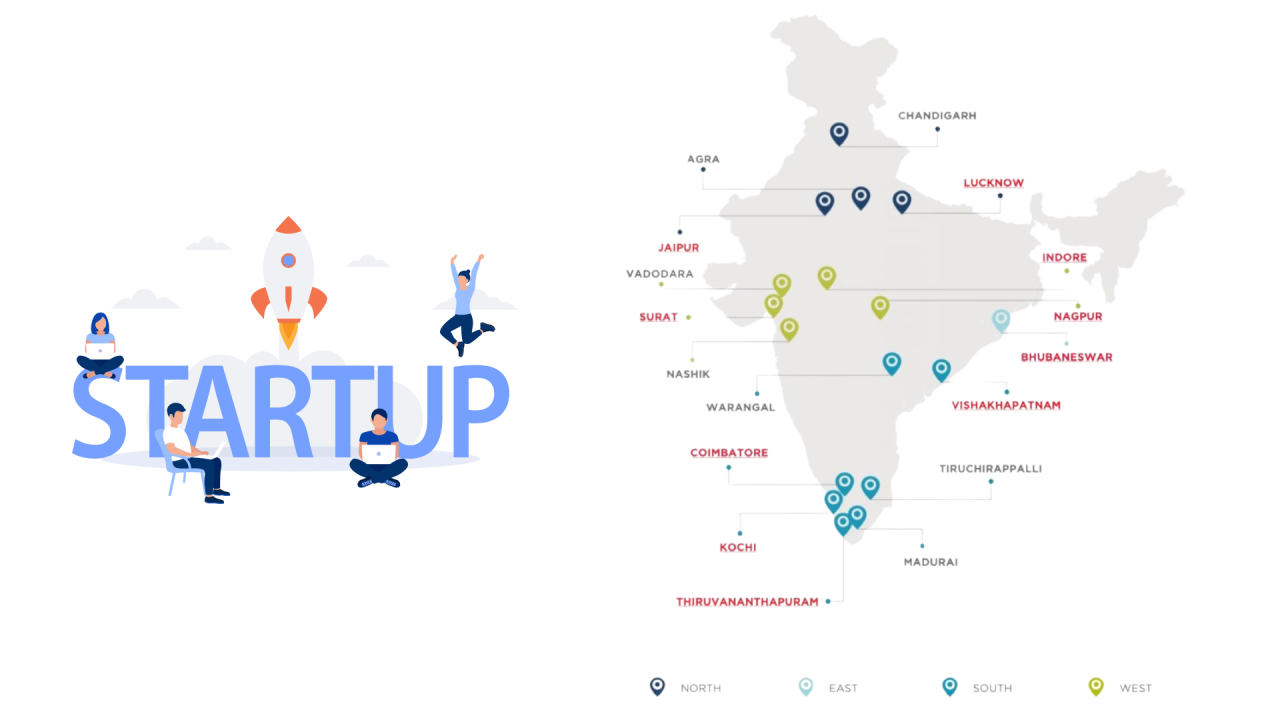
India’s startup ecosystem is no longer limited to Bengaluru and a few metro cities. Tier 2 startup hubs such as Jaipur, Indore, Kochi, and Chandigarh are steadily building strong entrepreneurial ecosystems and attracting founders, investors, and technology talent.
India’s startup ecosystem has long been associated with Bengaluru, often called the country’s startup capital. However, Tier 2 startup hubs are quietly emerging as strong competitors by offering lower costs, growing talent pools, and increasing access to digital infrastructure. Cities beyond the traditional technology clusters are now producing successful startups and attracting venture capital attention.
This shift is changing the geography of entrepreneurship in India. While Bengaluru remains a dominant startup hub, founders in smaller cities are proving that technology companies can scale from outside the major metropolitan centers.
Rise of Tier 2 Startup Ecosystems in India
Tier 2 startup hubs have gained momentum in recent years due to improvements in digital infrastructure, remote work adoption, and supportive government policies. Cities such as Jaipur, Indore, Ahmedabad, Kochi, Coimbatore, and Chandigarh are seeing increasing startup activity.
These cities offer several advantages for entrepreneurs. Operating costs including office space, salaries, and logistics are significantly lower compared with Bengaluru, Mumbai, or Delhi. Lower burn rates allow startups to operate more efficiently, especially in the early stages.
Local universities and engineering colleges also provide a steady pipeline of skilled graduates. Many founders who once moved to large metro cities are now choosing to build companies in their hometowns.
State governments have also launched startup policies, incubation programs, and innovation missions to encourage entrepreneurship in these regions.
Lower Operating Costs Attract Startup Founders
One of the biggest advantages of Tier 2 startup hubs is cost efficiency. Founders can launch and run startups at a fraction of the cost required in major metropolitan cities.
Office rentals, employee salaries, and administrative expenses are typically lower in smaller cities. This allows startups to extend their runway and focus on product development instead of constantly raising capital.
Lower living costs also make these cities attractive for employees. Startups can hire skilled professionals who prefer a better work life balance compared with the high cost and congestion of larger cities.
Several startup founders have stated that operating from Tier 2 cities allows them to maintain lean teams while still building scalable technology products.
Digital Infrastructure Enables Distributed Startup Growth
The growth of Tier 2 startup hubs has been supported by improvements in India’s digital infrastructure. High speed internet, cloud computing services, and digital collaboration tools have made it possible for startups to operate remotely without needing to be based in major tech clusters.
The COVID 19 pandemic accelerated the acceptance of remote work across the technology industry. Many startups realized that engineering teams, product managers, and designers can work effectively from different cities.
Digital payment systems, ecommerce logistics networks, and cloud platforms have also enabled startups to serve customers across the country regardless of their physical location.
As a result, founders in smaller cities can now build products for national and global markets without relocating to Bengaluru or other metro hubs.
Investor Interest Expands Beyond Metro Cities
Venture capital investors are increasingly exploring opportunities in Tier 2 startup hubs. Early stage investors and angel networks are actively scouting for founders outside traditional startup centers.
Many venture capital firms now run regional outreach programs and startup accelerators to discover companies in emerging cities. Investors recognize that strong startup ideas can come from anywhere, particularly in sectors that solve local market challenges.
Startups based in Tier 2 cities often focus on practical problems such as rural commerce, logistics, agritech, healthcare services, and small business software. These sectors offer large addressable markets across India.
Because operating costs are lower, startups from smaller cities can achieve profitability earlier, which makes them attractive to investors looking for sustainable business models.
Bengaluru Still Leads But Competition Is Growing
Bengaluru continues to dominate India’s startup landscape with the largest concentration of technology companies, venture capital firms, and experienced founders. The city has a well established ecosystem that includes incubators, accelerators, research institutions, and global technology companies.
However, the growth of Tier 2 startup hubs is gradually diversifying the ecosystem. Instead of replacing Bengaluru, these cities are complementing the existing startup network.
Some startups maintain headquarters or investor relations teams in Bengaluru while building engineering and operations teams in smaller cities. This hybrid model allows founders to benefit from both ecosystems.
Over time, the rise of multiple startup hubs could create a more balanced and resilient innovation landscape across India.
What the Rise of Tier 2 Startup Hubs Means
The emergence of Tier 2 startup hubs reflects a broader shift in how technology companies are built in India. Entrepreneurship is no longer restricted to a handful of metropolitan centers.
Improved connectivity, access to digital tools, and supportive state policies are enabling founders to build successful startups from diverse regions. This decentralization of innovation may also help address regional economic disparities.
For investors, it expands the pipeline of startups and introduces new categories of businesses focused on underserved markets. For founders, it proves that world class technology companies can be built without relocating to traditional startup capitals.
The next decade may see India’s startup ecosystem become far more geographically distributed than it is today.
Takeaways
Tier 2 startup hubs in cities like Jaipur, Indore, and Kochi are gaining momentum in India’s startup ecosystem.
Lower operating costs and better work life balance are attracting founders and employees to smaller cities.
Digital infrastructure and remote work have made it easier for startups to operate outside traditional tech hubs.
Investors are increasingly exploring opportunities in emerging startup ecosystems beyond Bengaluru.
FAQs
What are Tier 2 startup hubs in India?
Tier 2 startup hubs refer to emerging entrepreneurial ecosystems in smaller cities such as Jaipur, Indore, Kochi, Ahmedabad, and Chandigarh.
Why are startups moving to Tier 2 cities?
Lower operating costs, access to local talent, and improved digital infrastructure make smaller cities attractive for founders.
Is Bengaluru losing its position as India’s startup capital?
Bengaluru still remains the largest startup hub, but other cities are gradually expanding the national startup ecosystem.
Are investors funding startups from Tier 2 cities?
Yes. Many venture capital firms and angel investors are actively looking for startups outside metro cities, especially in sectors solving real world problems.











Leave a comment