


Digital lending platform True Balance has secured $10 million in debt funding to support its expansion in India’s fast growing fintech lending market. The funding is expected to strengthen the company’s loan portfolio, technology infrastructure, and financial inclusion initiatives.
True Balance Secures $10 Million Debt Funding for Growth
Digital lending platform True Balance secures $10 million in debt funding to expand its financial services operations in India. The funding comes as demand for digital credit solutions continues to rise among underserved consumers and small businesses.
True Balance operates as a fintech platform offering digital lending, bill payments, and financial services primarily through its mobile application. The company has focused on serving customers who may not have easy access to traditional banking or credit products.
The new debt funding will help the company increase lending capacity and scale its operations in India’s competitive digital lending sector. Fintech platforms often use debt financing to support loan disbursements while maintaining operational liquidity.
India’s fintech lending industry has grown rapidly over the past decade due to smartphone adoption, digital payments infrastructure, and improved access to financial services.
Growth of Digital Lending Platforms in India
Digital lending platforms have become an important part of India’s financial services ecosystem. These platforms use technology driven credit assessment models to provide quick loans through mobile applications and online platforms.
Traditional bank lending often involves lengthy documentation and approval processes. Digital lenders use automated systems and data analytics to evaluate borrower profiles and disburse loans faster.
Many digital lending companies focus on small ticket loans for consumers, gig workers, and micro entrepreneurs who may lack formal credit histories. By analyzing alternative data sources such as mobile usage, transaction records, and digital payment behavior, fintech companies can assess creditworthiness more efficiently.
Platforms like True Balance have gained popularity among customers looking for convenient access to short term credit and digital financial services.
Role of Debt Funding in Fintech Lending Expansion
Debt funding plays a critical role in the growth strategy of digital lending platforms. Unlike equity funding, which supports business operations and expansion, debt funding is typically used to finance the loan books of lending companies.
When fintech firms raise debt capital, they can increase the amount of money available for lending to customers. This allows them to expand their credit portfolio without diluting ownership stakes.
Many digital lending platforms work with banks, non banking financial companies, and institutional investors to secure debt financing. These partnerships help fintech firms scale their lending activities while maintaining regulatory compliance.
For True Balance, the $10 million debt funding will likely be used to strengthen its lending capacity and support new customer acquisition initiatives.
Financial Inclusion and Access to Digital Credit
One of the major objectives of digital lending platforms is improving financial inclusion. Millions of individuals in India still lack access to formal credit due to limited credit histories or geographic barriers.
Fintech companies have leveraged mobile technology and digital identity systems to bridge this gap. By offering app based loan applications and simplified verification processes, digital lenders can reach customers who may not be served by traditional financial institutions.
True Balance has positioned itself as a platform that supports financial inclusion by offering digital financial services to underserved populations. Its mobile application combines lending services with bill payments, recharge services, and digital wallet features.
Government initiatives promoting digital payments and financial inclusion have also created a favorable environment for fintech companies operating in the digital lending space.
Regulatory Oversight in India’s Digital Lending Sector
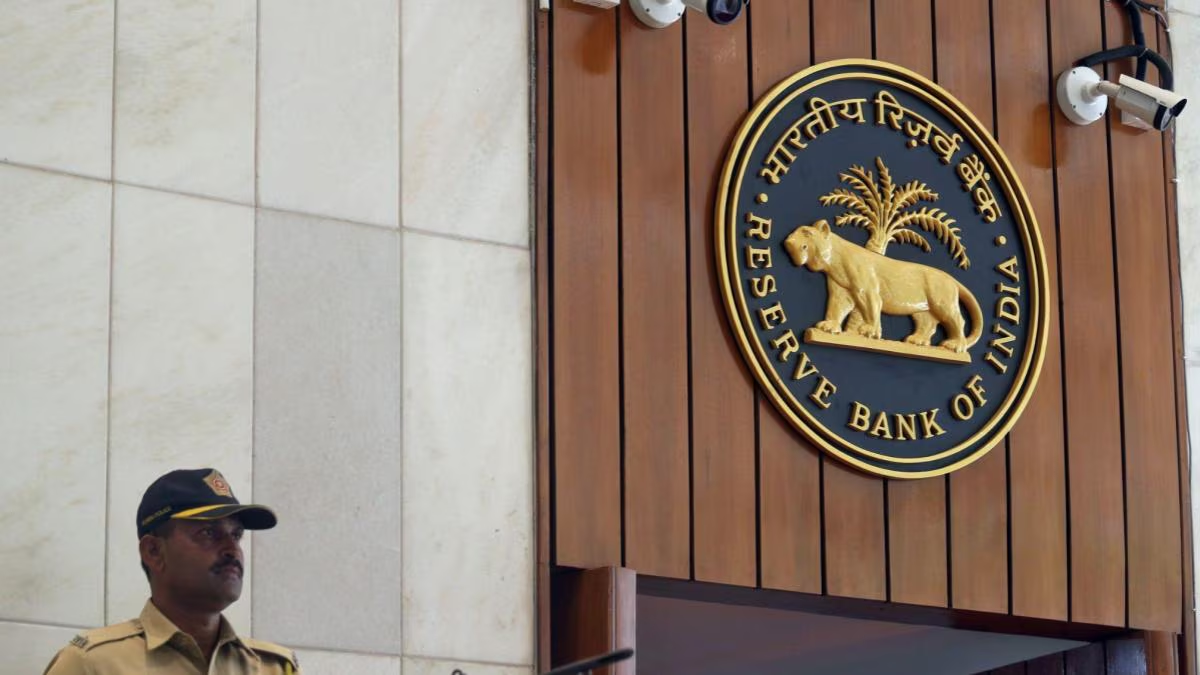
India’s digital lending sector operates under increasing regulatory oversight to ensure consumer protection and responsible lending practices. The Reserve Bank of India has introduced several guidelines aimed at improving transparency and preventing predatory lending practices.
These regulations require digital lending platforms to disclose loan terms clearly, maintain data privacy standards, and partner with regulated financial institutions where necessary.
Regulatory frameworks have also addressed concerns around unauthorized lending apps and data misuse. Fintech companies operating in India must comply with strict guidelines related to interest rate disclosure, grievance redressal mechanisms, and digital security.
Companies that maintain strong compliance standards are more likely to build long term trust with customers and regulators.
Future Outlook for Digital Lending in India
India’s digital lending market is expected to expand significantly over the coming years as technology adoption continues to reshape financial services. Rising smartphone penetration and digital payment adoption are making financial services more accessible across urban and rural regions.
Fintech companies are also exploring new products such as embedded finance, buy now pay later solutions, and credit services integrated within e commerce platforms.
Data analytics and artificial intelligence are expected to further improve credit assessment models and risk management practices. This may allow digital lenders to expand their customer base while maintaining responsible lending standards.
For companies like True Balance, securing debt funding is an important step toward scaling their lending operations and strengthening their position in India’s evolving fintech ecosystem.
Takeaways
• Digital lending platform True Balance secured $10 million in debt funding for expansion.
• The funding will support loan portfolio growth and customer acquisition.
• Digital lending platforms are expanding financial inclusion through technology driven credit models.
• Regulatory oversight from the Reserve Bank of India aims to ensure responsible lending practices.
FAQs
What is True Balance?
True Balance is a digital financial services platform that provides mobile based lending, bill payments, and financial services primarily targeting underserved customers.
Why do fintech lending companies raise debt funding?
Debt funding allows fintech lenders to increase their lending capacity and expand loan disbursements without diluting equity ownership.
How do digital lending platforms assess borrowers?
Many platforms use data analytics and alternative data sources such as transaction history and digital payment behavior to evaluate borrower creditworthiness.
Is digital lending regulated in India?
Yes, digital lending platforms must follow guidelines issued by the Reserve Bank of India related to transparency, consumer protection, and responsible lending practices.










Leave a comment