

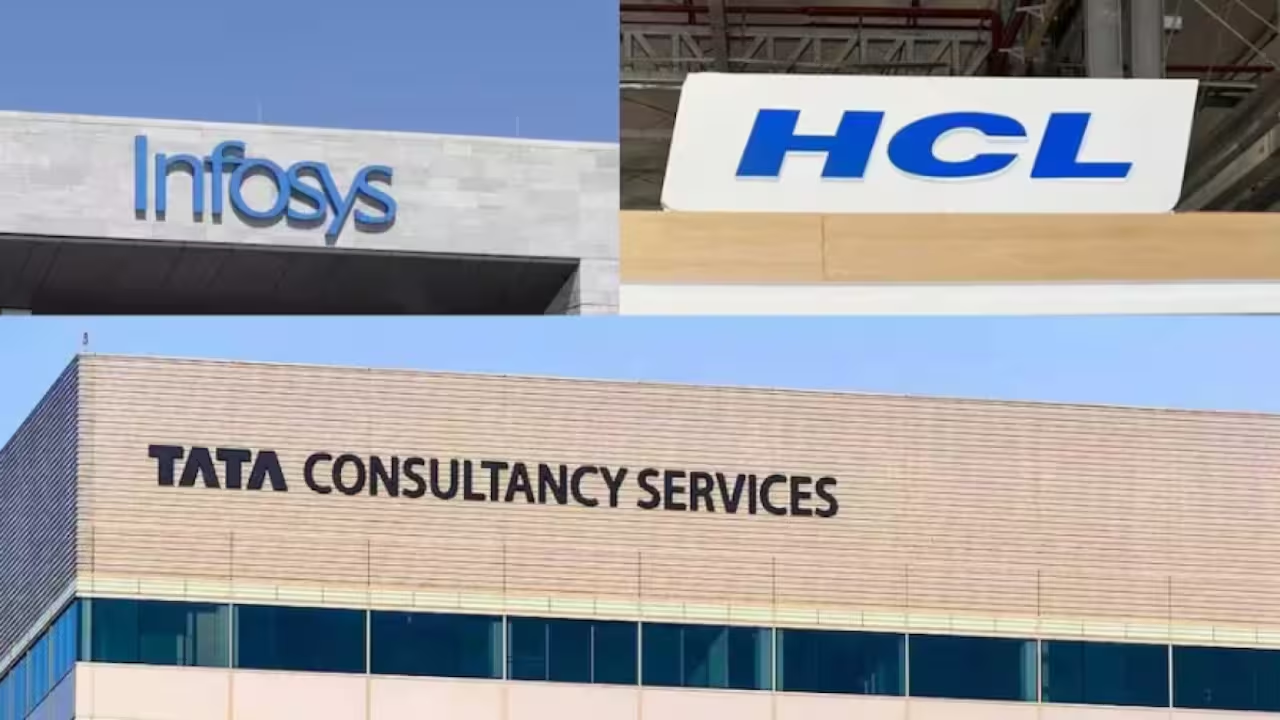
TCS losing its long held valuation lead to Infosys and HCL Technologies has become a defining moment for India’s IT sector. This shift in market leadership changes how investors, talent and regional planners view the industry, and it directly affects the future prospects of emerging Tier 2 IT hubs.
Valuation shift and what it signals for India’s IT market
For over a decade, TCS commanded the highest valuation among Indian IT services firms because of its consistency, margins and global client base. Its premium has now narrowed, with Infosys and HCL Technologies currently drawing higher earnings multiples.
This indicates a recalibration of investor expectations. Growth visibility, deal structure, automation adoption and sector diversification are factors influencing this shift. When the market begins rewarding rivals more strongly, it reflects real changes in performance drivers, not just sentiment.
Tier 2 cities should track this closely because IT investment patterns often follow leadership trends. A shift in valuation signals where firms may allocate expansion budgets in the next planning cycle.
Why this matters for regional IT expansion plans
TCS has been instrumental in building early scale in cities outside metros. Its centres in Indore, Gandhinagar, Nagpur and other smaller locations helped position these cities as viable technology clusters.
If competitors strengthen their market standing, regional governments and local industry bodies will adjust their targeting strategies. Infosys and HCL Technologies are already deepening their presence in several non metro locations because of lower attrition, lower cost of operations and easier access to engineering talent.
For Tier 2 hubs, this environment increases the possibility of new delivery centres, research units or digital operations hubs being announced by firms seeking to match their strategic positioning with investor expectations.
Impact on local talent pools and skill development
A shift in valuation leadership typically triggers shifts in talent movement as well. Professionals often map career stability, project diversity and vertical growth to the companies performing best.
If Infosys and HCL Technologies continue to outperform or maintain stronger visibility, Tier 2 engineering graduates may see more structured hiring pipelines from them. This can change training patterns within universities and skill institutes, with a stronger emphasis on cloud services, enterprise platforms, AI based operations and cybersecurity.
Over time, cities that build strong local talent pools in these domains will become more attractive for campus expansions by fast growing IT firms.
Effects on Tier 2 business ecosystems and local industries
A valuation reshuffle influences more than just hiring. The broader ecosystem around IT services also shifts.
Local suppliers, infrastructure partners, real estate developers and managed service providers tend to follow companies that are expanding faster. If momentum moves from TCS to its rivals, Tier 2 cities may witness different demand patterns for office parks, data centres and training facilities.
This can reshape how regional economies plan their long term digital capacity. Local industries, from BFSI processing units to healthcare analytics firms, may also adjust which IT partner they align with, depending on sector capabilities and innovation track records.
What Tier 2 policymakers and business leaders should prepare for
For government stakeholders and regional development bodies, the priority should be anticipating how expansion strategies of major IT firms will evolve.
They should invest early in acquiring land, strengthening transport connectivity and building specialised training pipelines in areas where the fastest growing IT firms are investing.
Cities that can guarantee rapid hiring readiness, policy clarity and reliable infrastructure will be best positioned to take advantage of this leadership shift. The next wave of IT expansion will be more distributed, and Tier 2 cities have a real opportunity to attract high value digital jobs.
Takeaways
• The valuation shift reflects structural changes in India’s IT sector, not a temporary fluctuation.
• Tier 2 cities may see renewed interest from Infosys, HCL Technologies and mid tier firms looking to expand capacity.
• Local universities and skill institutions become critical to supporting this shift.
• Policymakers should prepare for more competition between Tier 2 hubs seeking long term IT investments.
FAQ
Q: Is TCS losing its valuation lead a sign of long term decline?
Not necessarily. It indicates a phase of slower growth relative to rivals. The company still has strong fundamentals but faces margin and demand pressures that competitors are currently navigating more effectively.
Q: Why do Tier 2 cities benefit from this valuation change?
Because firms gaining valuation leadership tend to accelerate hiring and capacity expansion. These expansions increasingly occur in Tier 2 centres due to cost efficiency and talent depth.
Q: Which Tier 2 cities are best positioned to gain IT investments next?
Cities with strong engineering education bases and improving infrastructure, such as Indore, Coimbatore, Kochi, Bhubaneswar and Jaipur, remain well placed.
Q: Will this shift change the type of IT work sent to smaller cities?
Yes. Digital operations, cloud transformation tasks, AI assisted delivery and platform engineering are increasingly being distributed to Tier 2 locations.












Leave a comment