

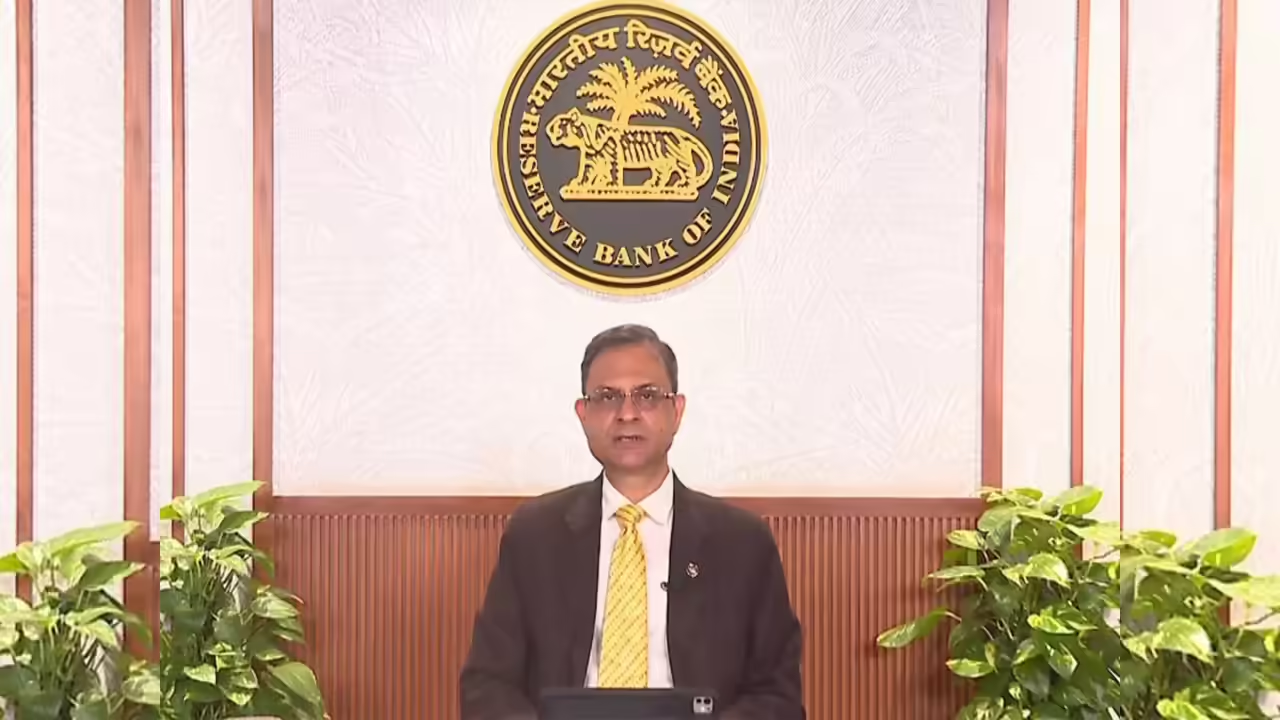
The Reserve Bank of India’s 25 bps rate cut signals easier credit conditions, especially for borrowers outside major cities. The change in the policy rate influences lending costs, liquidity and short term business decisions, making it a crucial development for small town enterprises and informal sector borrowers who rely heavily on affordable finance.
Lower borrowing costs and stronger cash flow for small enterprises
The main keyword here is the RBI rate cut, and its immediate effect is on interest linked borrowing. Small town businesses often operate with thin margins and depend on bank loans or cooperative credit to manage working capital cycles. A 25 bps rate reduction typically leads to gradual cuts in lending rates, particularly in MSME focused products. Even a small reduction in monthly payments can improve cash flow for firms that borrow frequently to purchase inventory or manage seasonal demand.
The informal sector, which includes traders, service providers and micro units, benefits indirectly because many depend on lenders who adjust their rates based on broader monetary signals. While not all NBFCs and microfinance institutions pass on the cut instantly, competitive pressure usually pushes them to offer better terms to protect borrower retention.
Improved liquidity and better credit availability in smaller markets
Liquidity conditions improve when the policy rate is softer, and this helps smaller cities where bank branches often face tighter credit constraints. With the lending environment becoming more supportive, banks are more willing to extend working capital limits or approve fresh credit for businesses that previously struggled with stricter underwriting.
Secondary keywords like credit growth and liquidity matter here. The central bank’s move is a nudge for lenders to restart risk appetite after a cautious phase. For Tier 2 and Tier 3 towns, where business expansions are often held back by lack of timely credit, smoother liquidity flow can unlock suppressed demand. Examples include local manufacturing units upgrading machinery, traders increasing stock levels before peak seasons and transport operators refinancing older loans at more affordable rates.
Impact on microfinance borrowers and informal lending structures
Microfinance borrowers are among the most sensitive groups when it comes to rate movement. Even a small reduction in interest burden can allow borrowers to redirect savings toward inventory purchases or household needs. Many informal sector workers rely on weekly repayment structures, and a lower annualized cost eases repayment stress and reduces dependence on high cost unregulated lenders.
Subheads with secondary keywords such as microfinance impact and informal credit trends help clarify the operational effects. When the formal credit system becomes more affordable, borrowers have fewer incentives to use informal lenders who charge higher rates. Over time, this improves financial stability in households that rely on unpredictable income streams.
Boost to consumption and regional economic activity
A reduction in the policy rate can support consumption in smaller markets. When EMIs fall, households and proprietors feel more confident to spend, invest or upgrade. Businesses benefit from improved demand, creating a positive cycle.
This effect is especially visible in sectors like two wheeler sales, small retail and local services where purchase decisions are closely tied to cash availability. The 25 bps cut will not dramatically shift the economy overnight, but it provides direction and signals policy support for growth in non metro regions.
Secondary keywords like consumption boost and rural demand matter here. With borrowing becoming slightly cheaper, capital circulation in regional economies strengthens. For borrowers operating in semi formal setups, even a marginally lower debt burden increases their capacity to reinvest in productive assets.
TAKEAWAYS
The 25 bps rate cut supports lower borrowing costs for small enterprises.
Liquidity conditions become more favorable for lenders in smaller towns.
Microfinance and informal sector borrowers gain from reduced repayment stress.
Improved sentiment can lift local demand and regional economic activity.
FAQs
How soon will borrowers feel the effect of the RBI rate cut
Transmission varies by lender. Banks adjust lending rates linked to external benchmarks faster, while NBFCs and microfinance institutions take longer but generally move in the same direction.
Will informal borrowers directly benefit from the rate cut
They benefit indirectly. Lower formal lending rates reduce dependence on high cost informal credit and improve bargaining power for borrowers seeking alternative financing.
Does a 25 bps cut significantly change loan EMIs
The change is small for each installment but meaningful over the full loan period. For frequent borrowers or micro enterprises with tight cash cycles, the cumulative savings improve financial flexibility.
Is the move expected to boost business confidence in smaller cities
Yes. Lower credit costs and improved liquidity give small businesses more room to invest, restock or expand operations.










Leave a comment