

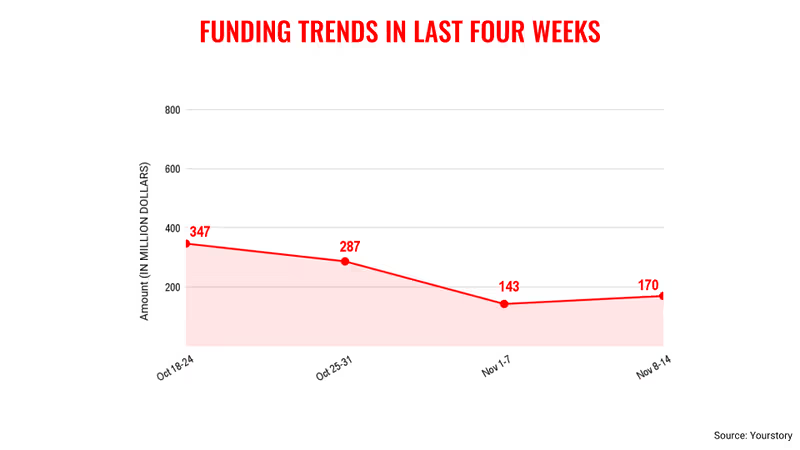
The latest funding data reveals that weekly VC inflows into Indian startups have increased only slightly, which signals continued caution in the investment environment rather than a full rebound. For startups operating in Tier-3 towns, this modest uptick in venture capital investment underscores the need to sharpen strategy, readiness, and positioning to capture scarce but available funding.
Understanding the “marginal rise” in VC inflows
For the week in question, venture capital inflows rose from approximately US$143 million to around US$170 million across India. While this reflects an improvement, the total remains well under historic levels when large-ticket rounds drove totals above US$250 million weekly. What this means is the market is still selective, deal sizes are smaller, and investor appetite remains guarded. For Tier-3 startups this environment means that although capital exists, competition is intense and terms may be tighter.
Why Tier-3 startups must interpret this trend carefully
Startups based in Tier-3 towns face structural disadvantages: fewer local investors, less visibility, logistic and talent constraints and weaker ecosystems compared to metros. In a funding environment where even national totals are modest, these disadvantages matter more. The marginal rise in flows means that funds are being directed to startups that can clearly demonstrate traction, regional moat, cost advantage and scalable execution. For a small-town startup this means location is no longer a sufficient angle; operational strength, metrics and narrative matter more than ever.
Strategic moves for Tier-3 startups in a tight VC market
First, now is the time to sharpen your metrics: monthly recurring revenue (MRR), churn, customer acquisition cost (CAC) and lifetime value (LTV) must be clear and improving. Investors will demand proof of traction, not just plans. Second, strengthen governance and readiness: even smaller rounds will come with terms, and being audit-ready, having clean cap-table, qualified board/advisors or at least a defined advisory structure builds trust. Third, expand your investor outreach beyond local networks: participate in national demo days, virtual pitch sessions, join accelerator programmes that showcase regional talent. Fourth, leverage your regional advantage: highlight how being in a Tier-3 town gives cost benefits, local customer insights, lower competition, and a talent pool overlooked by larger cities. Use that as a value proposition rather than a limitation.
Risks and caution points in the current VC climate
Even with the rise in weekly VC inflows, risks remain. Large deals are scarce, so many startups will receive smaller tickets than hoped, which may limit runway and force tougher milestone delivery. There is also the risk of a funding gap: if metrics slip or planned milestones are delayed, follow-on funding may be delayed or denied. For Tier-3 startups, infrastructure or talent bottlenecks can amplify these risks. Reliance on local resources without backup plans can hurt scalability. Founders must have contingency plans, clear funding strategy for the next 12-18 months and readiness to show execution under constrained resources.
Positioning for the next phase of funding beyond the weekly uptick
This marginal rise in VC inflows should be treated as an opportunity to build momentum, not a guarantee of easier funding. Tier-3 startups should aim to convert the current interest into strategic partnerships, pilot projects, strong customer case studies and credible growth path. Focus on sustainable unit economics rather than chasing growth at any cost. Build incremental milestones, ensure cost discipline and invest in differentiators such as local market insight, lean operations, regional customer feedback loops. Also align with sector themes attracting investment—fintech, SaaS, agritech, regional logistics, healthtech—where location can amplify advantage.
Takeaways
- Weekly VC inflows have risen slightly, but funding remains constrained and selective.
- Tier-3 startups will benefit only if they demonstrate clear metrics, governance and regional advantage.
- Focus on investor readiness, expand outreach and turn your location advantage into a strength.
- Be cautious: smaller tickets mean tighter runway, tougher follow-on risk and need for execution discipline.
FAQs
Q: Does this marginal increase mean more funding is available for every startup?
No. The increase is modest and selective. Only startups with strong traction, metrics and credibility will likely gain access to funding in this environment.
Q: What should Tier-3 startups prioritise in their investor pitch right now?
They should prioritise clean metrics (revenue, growth, retention), clear use of funds, cost efficient operations, regional differentiation and solid governance structures.
Q: Is being located in a Tier-3 town a disadvantage given this market?
Not necessarily. It is a disadvantage only if the startup treats it as a weakness. If the startup leverages cost benefits, local insights and under-penetrated markets, it can become a distinct strength.
Q: How can a startup prepare for follow-on funding in this climate?
They should build a 12-18 month roadmap tied to measurable milestones, monitor cash-burn tightly, engage with investors early, set up governance and compliance, and be ready to show results rather than promises.











Leave a comment