

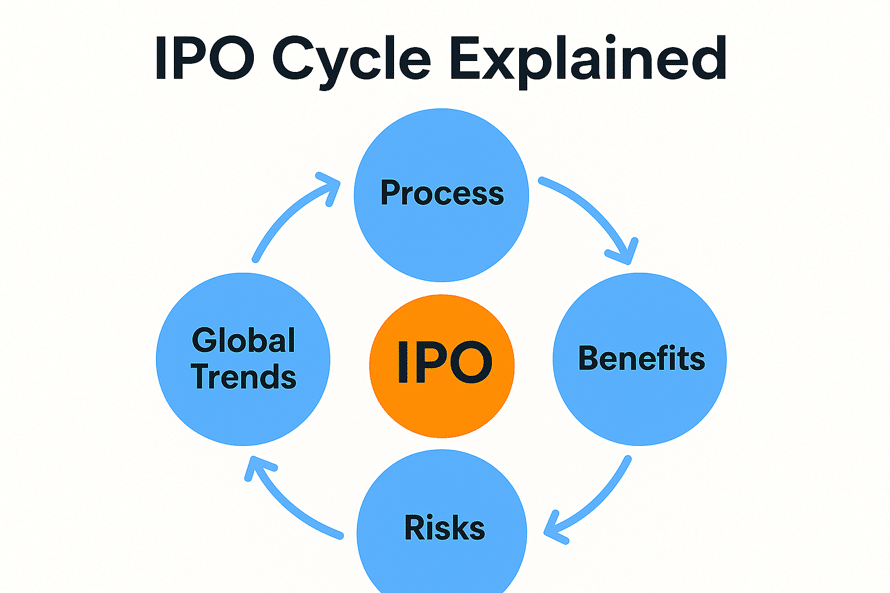
Large publicly listed IPOs are sending a clear signal through the Indian startup ecosystem as early investor exits influence how founders plan their fundraising, growth timelines and governance. This shift is altering capital cycles for both late stage and early stage startups across metros and smaller hubs.
Why early investor exits matter in the current cycle
The main keyword here is early investor exits and their influence on fundraising strategy. In the last few years, large IPOs have demonstrated that exit windows are opening for investors who entered during earlier funding cycles. When a well known company performs strongly after listing, investors gain confidence that liquidity paths exist beyond acquisitions or secondary deals.
This directly impacts fundraising strategy because venture capital firms calibrate their deployment pace and cheque sizes depending on how predictable their exit channels are. When IPOs show stability, funds become more comfortable making long horizon bets. When listings struggle, funds turn selective and push for clearer unit economics before investing.
Founders feel this shift as investors scrutinise burn rates, valuation expectations and clarity on profitability. The IPO market serves as both a benchmark and a warning, shaping how future deals are priced and structured.
How strong or weak IPOs reset valuation discipline
India’s public markets reward operationally strong companies and penalise those that scale without durable economics. When a large IPO lists at a premium and sustains performance, early investors realise meaningful returns that validate patient capital and disciplined governance. This sets an example for earlier stage founders, who recognise that public markets demand predictable financial behaviour.
On the other hand, when IPOs underperform, late stage valuations correct, pushing VC firms to analyse risk in mid stage companies. This forces founders to reconsider growth at all costs strategies. Many now raise smaller rounds, extend runway, reduce experimental verticals and prioritise near term revenue stability.
The valuation recalibration driven by large IPO performance has become one of the strongest forces shaping India’s startup funding model. It brings a degree of market realism that was less prominent during peak liquidity cycles.
Impact on early stage founders and seed ecosystems
While IPO events involve late stage companies, the ripple effects reach early stage startups across urban and regional hubs. Early stage investors evaluate whether a startup is building a long term business capable of listing or achieving large scale liquidity. This shifts attention to governance, documentation, compliance, clear revenue models and strong customer validation from day one.
Seed stage founders, including those in Tier 2 and Tier 3 cities, must now operate with the assumption that investors will look for IPO capable discipline. This does not mean every company must target listing, but it means building credible unit economics, maintaining financial hygiene and avoiding opaque business models.
In practice, this helps regional ecosystems because it levels the playing field. Earlier, founders in smaller cities often struggled to compete with metro based startups raising aggressive rounds. Today, capital favours clarity over hype. This is an opportunity for founders building sustainable, domain specific or regionally relevant businesses.
Why early investor behaviour influences fundraising timelines
When early investors successfully exit through IPOs, they recycle capital into new funds at a faster pace. This increases availability of capital for new startups. Funds with strong exit records can also raise larger vehicles, which benefits founders seeking meaningful backing.
However, when investors face delayed or weak exits, they slow deployments and hold reserves for follow on rounds instead of new investments. This delays early stage funding cycles and increases competition for capital.
Founders must understand this dynamic when planning fundraising timelines. In periods when IPO markets perform well, fundraising windows widen. When public markets correct, rounds take longer, and investors become more selective.
Clear communication, transparent planning and realistic growth targets become essential in such environments. Early investors also push for structured governance frameworks to ensure the company is IPO compatible should the need arise.
How this trend shapes the long term Indian startup landscape
Large IPO performance shapes not only fundraising strategy but also sectoral capital allocation. Investors gravitate towards sectors that show strong public market appetite, such as fintech infrastructure, enterprise software, manufacturing, logistics and digital services with stable revenue.
Sectors with poor post listing performance see sharp corrections in investor interest. This creates natural cycles of discipline where only robust business models continue to attract capital.
Over time, this leads to a healthier startup ecosystem where companies aim for solvency, efficiency and clarity rather than uncontrolled expansion. The shift benefits India’s broader economy by driving companies to build sustainable models that can withstand public market expectations.
For regional markets, predictable exit paths attract new angel networks, state led funds and corporate investors. As liquidity events grow, local capital begins flowing into early stage ventures, strengthening smaller hubs.
Takeaways
- Early investor exits through large IPOs strongly influence India’s startup fundraising strategy.
- Public market performance resets valuation expectations and forces stronger financial discipline.
- Early stage founders, including those in regional hubs, must demonstrate clear unit economics and governance readiness.
- Strong IPO cycles recycle capital faster, expanding funding opportunities for the next generation of startups.
FAQs
Q: Do all startups need to target an IPO now?
No. But they must build governance, compliance and financial discipline that aligns with long term sustainability, whether they list or not.
Q: How do IPO trends affect early stage funding?
Strong exits increase investor confidence and capital supply. Weak exits reduce risk appetite and result in slower deployment.
Q: Are investors becoming stricter because of IPO performance?
Yes. They expect clearer revenue models, better documentation and predictable paths to profitability.
Q: What does this mean for founders in smaller towns?
It means they can compete on fundamentals. Investors reward clarity and execution, not geography.












Leave a comment