

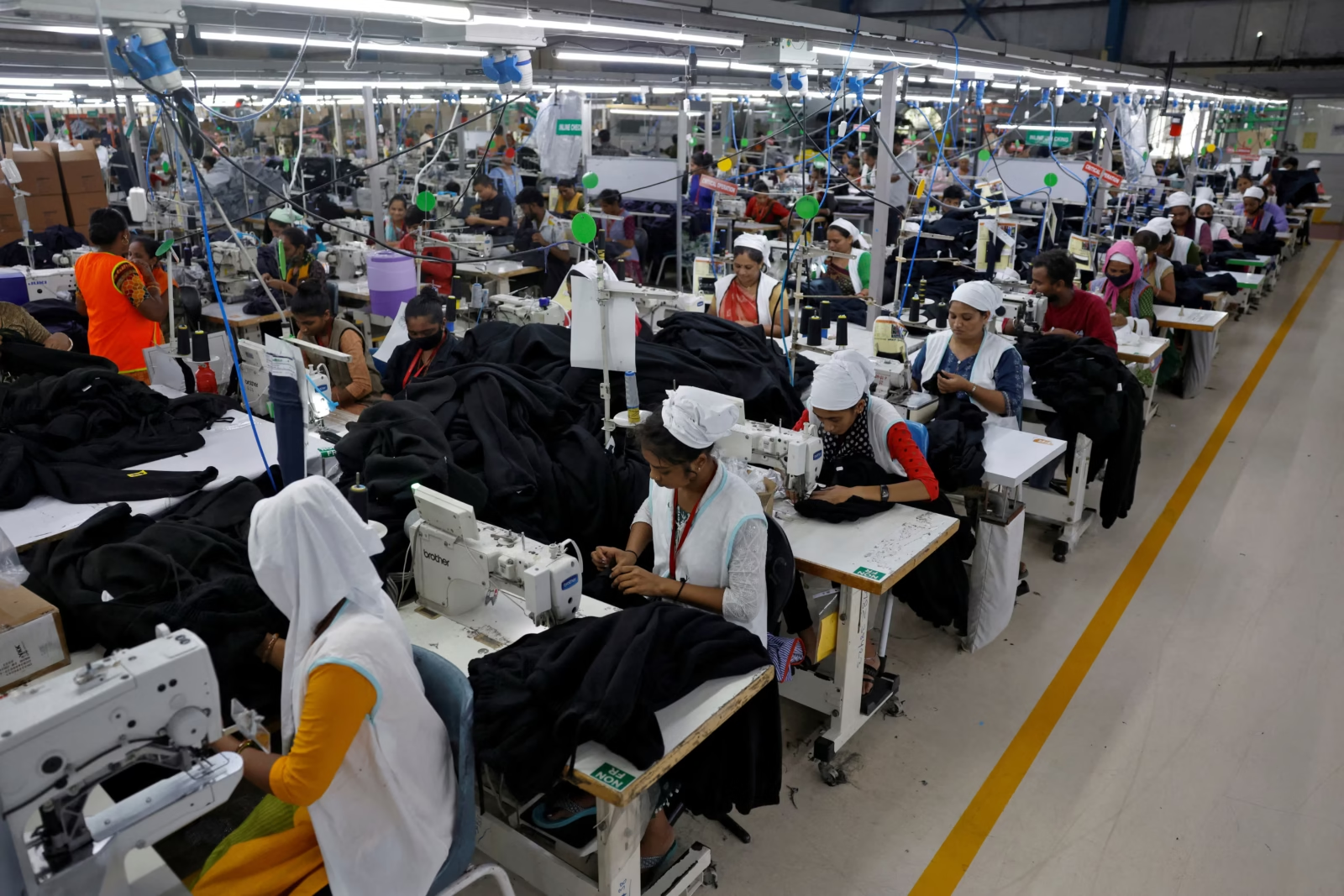
India’s private sector growth, the main keyword for this topic, slowed to a six month low in November as manufacturing output weakened. This shift signals pressure building across regional industry hubs where factories rely heavily on steady orders, efficient logistics and predictable pricing conditions.
Growth indicators show clear deceleration
The latest composite PMI reading came in lower than the previous month, confirming reduced momentum in both output and new orders. Manufacturing accounted for most of the drag, with slower production, moderated hiring and softer domestic demand. While services continued to expand, the pace was not enough to offset the manufacturing slump. For smaller industrial clusters, a dip in PMI often translates into tighter working capital cycles and reduced factory utilisation.
Manufacturing slowdown hits regional hubs differently
Secondary keyword: regional industry hubs.
Industrial belts in Pune, Coimbatore, Rajkot, Hosur, Indore and Jamshedpur tend to feel declines quicker because many units operate on thin margins and depend on contract manufacturing. When new orders soften, small and medium factories scale back production to avoid carrying excess inventory. The manufacturing slowdown also reduces transport activity, warehouse throughput and repair services in these regions, creating a chain reaction across the local economy. Businesses supplying components to larger OEMs may see delays in order renewal, prompting cautious hiring and conservative production planning.
External and domestic pressures are increasing
Import competition, currency fluctuations and volatile raw material costs are all putting pressure on India’s manufacturing competitiveness. Many export oriented units outside metros rely on consistent foreign demand to maintain volumes. If export orders weaken, the impact reaches smaller suppliers downstream. Domestic weather disruptions earlier in the season added another layer of unpredictability. High input costs and delayed shipments have forced some factories to rework delivery timelines, affecting reliability and overall output stability.
Opportunities emerging despite the slowdown
While the slowdown is clear, regional hubs can still leverage specific advantages. Secondary keyword: manufacturing opportunities.
First, cost efficiency in smaller cities remains attractive to companies looking to decentralise production away from major metro locations. Second, several state governments are strengthening infrastructure around industrial corridors, offering cluster level benefits and simplified compliance for manufacturers. Third, manufacturing linked services such as equipment maintenance, tooling, automation support and logistics optimisation are gaining relevance even during slow cycles. These categories often remain resilient because factories must maintain continuity regardless of fluctuations in order volume.
What businesses in regional centres should prepare for
Firms should reassess cash flow, inventory buffers and price negotiation strategies as slower growth could persist in the short term. Strengthening supplier relationships and diversifying customer bases can help absorb the impact of softened demand. Regional hubs can also benefit from targeted adoption of lightweight automation, quality enhancement systems and digital tracking tools to improve efficiency without large capital expenditure. Local industry associations can play a stronger role by facilitating joint skill training, vendor pooling and market access programmes that buffer smaller units from sudden downturns.
Possible path over the next quarter
If domestic demand stabilises and global conditions improve, manufacturing may regain speed in the coming quarter. Any policy support that improves liquidity or reduces operational bottlenecks will directly benefit regional clusters. However, if new orders remain sluggish, Tier 2 and Tier 3 industrial centres may see slower hiring, postponed expansion plans and tighter financing conditions. The next few PMI cycles will determine whether the current dip is temporary or part of a longer cooling trend.
Takeaways
Private sector growth has slowed to a six month low with manufacturing leading the decline.
Regional industry hubs feel the impact faster due to thinner margins and dependence on steady order flow.
External cost pressures and softer demand are straining factory operations across smaller cities.
Opportunities still exist for efficiency upgrades, cluster collaboration and manufacturing linked services.
FAQs
What does a slowdown in composite PMI indicate for smaller cities?
It signals weakening business activity which can lead to reduced factory output, cautious hiring and slower local economic movement in regional hubs.
Why is manufacturing crucial for Tier 2 and Tier 3 industrial belts?
Manufacturing drives jobs, supply chain business and ancillary services. A slowdown can ripple across the entire local ecosystem.
Can services growth offset manufacturing weakness in smaller markets?
Not fully. Services in regional centres often depend on manufacturing activity, so a decline in factory output limits services growth.
What should regional manufacturers focus on during slower cycles?
They should tighten cash flow, improve operational efficiency and diversify customer bases while leveraging state level incentives.












Leave a comment