

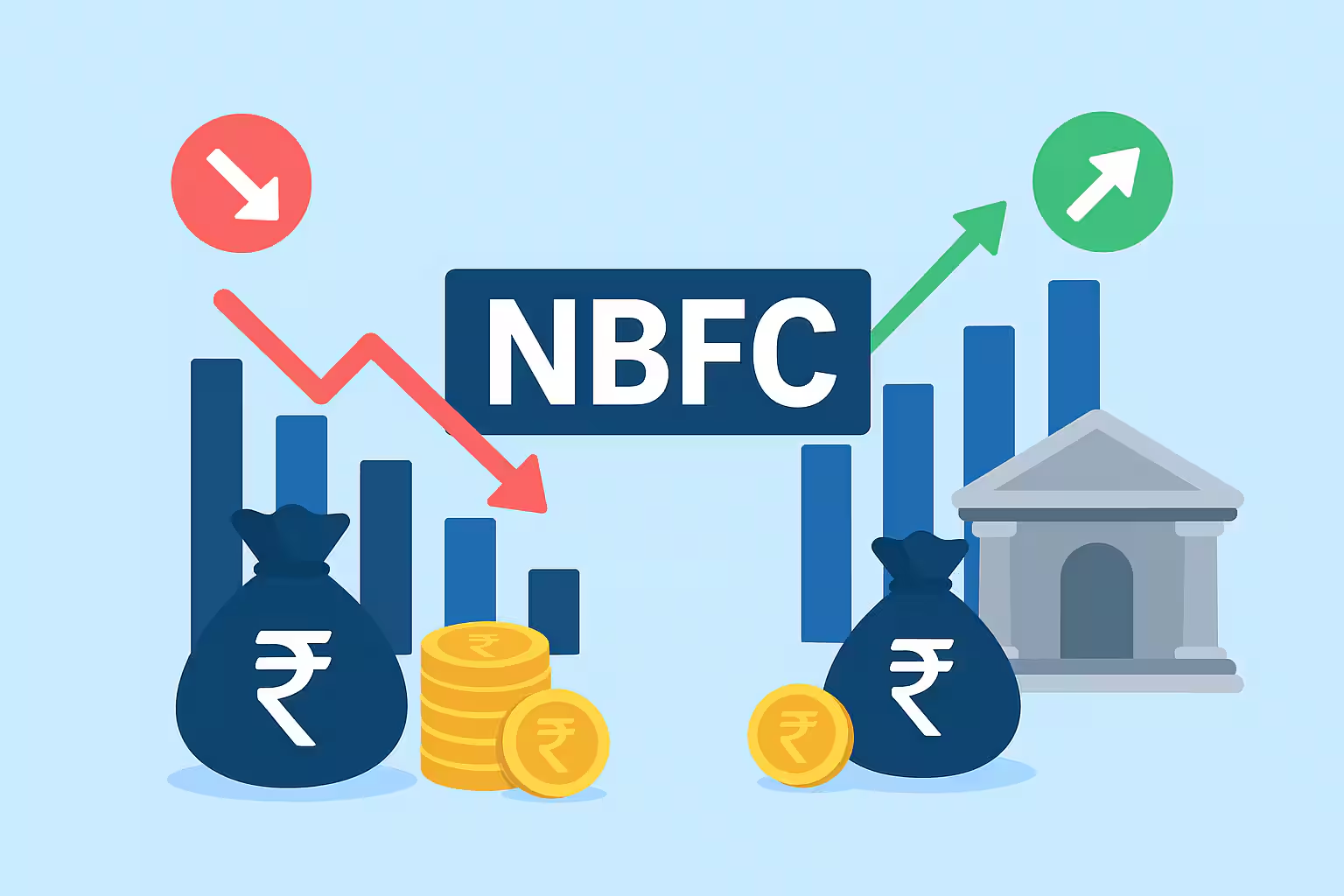
Non-banking financial companies are tightening credit filters as retail loan defaults show localized increases across select regions in India. The move reflects a cautious shift in lending strategy as NBFCs focus on asset quality and sustainable growth in FY26.
NBFCs tightening credit filters has emerged as a clear trend in India’s lending ecosystem as retail loan defaults show a localized rise in certain borrower segments. While the overall credit environment remains stable, lenders are responding to early stress signals by recalibrating their underwriting standards and risk assessment models.
Localised Rise in Retail Loan Defaults Triggers Caution
Retail loan defaults in India are not rising uniformly but are concentrated in specific geographies and borrower categories. Unsecured personal loans and small-ticket digital credit have shown signs of stress, particularly in segments with higher borrower leverage.
Industry data and lender disclosures indicate that repayment delays are more visible in pockets where rapid credit expansion occurred over the past two to three years. This includes parts of Tier-2 and Tier-3 markets where first-time borrowers entered the formal credit system through digital platforms.
NBFCs are closely monitoring these trends to avoid broader portfolio deterioration. The focus is on identifying early warning signals rather than reacting to large-scale defaults.
NBFC Credit Risk Management Strategies Strengthen
NBFC credit risk management has become more conservative in response to these developments. Lenders are tightening eligibility criteria, reducing loan-to-income ratios, and increasing scrutiny on borrower profiles.
Many NBFCs are also limiting exposure to high-risk segments such as repeat short-term borrowers and customers with multiple active loans across platforms. The use of bureau data has become more stringent, with lenders placing greater emphasis on repayment history and credit utilization patterns.
In addition, risk-based pricing is being adjusted. Borrowers perceived as higher risk are either offered lower loan amounts or face higher interest rates to compensate for potential defaults.
Digital Lending Slowdown in High-Risk Segments
The rapid growth of digital lending is now entering a phase of correction, particularly in unsecured credit categories. Fintech partnerships with NBFCs had enabled fast disbursal of small loans with minimal documentation.
However, lenders are now slowing down approvals in segments where delinquency rates have increased. Instant loan approvals are being replaced with additional verification layers, including income checks and behavioral analysis.
This does not signal a decline in digital lending overall but indicates a shift towards more responsible growth. Lenders are prioritizing portfolio quality over aggressive expansion.
Regulatory Oversight Shapes Lending Practices
The Reserve Bank of India has been actively monitoring the digital lending ecosystem and unsecured credit growth. Regulatory guidance has emphasized transparency, fair practices, and risk control.
NBFCs are aligning their policies with these expectations by strengthening compliance frameworks and improving disclosure standards. This includes clearer communication of loan terms, stricter recovery practices, and better grievance redressal mechanisms.
The regulatory environment is encouraging lenders to adopt a long-term approach to credit growth rather than short-term volume gains.
Impact on Borrowers and Credit Availability
For borrowers, tighter credit filters mean more disciplined access to loans. First-time borrowers and individuals with thin credit histories may face stricter approval processes.
At the same time, responsible borrowers with stable income profiles are likely to benefit from better loan terms and continued access to credit. The shift is expected to improve overall credit culture by discouraging over-borrowing.
Small businesses and MSMEs may also see more structured lending products with clearer eligibility norms, especially in secured and semi-secured categories.
Outlook for NBFC Lending in FY26
The current tightening cycle is expected to continue in the near term as NBFCs assess portfolio performance and macroeconomic conditions. However, the long-term outlook for retail lending remains positive.
India’s credit penetration is still relatively low compared to developed markets, and demand for retail loans is expected to grow. The key challenge for NBFCs will be balancing growth with risk management.
As data analytics and credit scoring models evolve, lenders will be better equipped to identify creditworthy borrowers even in underserved markets.
Takeaways
– NBFCs are tightening credit filters due to localized rise in retail loan defaults
– Unsecured digital lending segments are seeing higher stress levels
– Lenders are prioritizing risk management over rapid loan book growth
– Regulatory oversight is pushing for more responsible lending practices
FAQs
Q1. Why are NBFCs tightening credit filters in India?
NBFCs are responding to early signs of stress in retail loan repayments, particularly in unsecured lending segments and certain geographies.
Q2. Which loan segments are most affected by rising defaults?
Unsecured personal loans, small-ticket digital loans, and short-term credit products are seeing higher delinquency rates.
Q3. Will this impact loan availability for borrowers?
Yes, borrowers may face stricter eligibility criteria, but credit will remain available for those with strong repayment profiles.
Q4. Is this a sign of a larger financial crisis?
No, the issue is currently localized and manageable. Lenders are taking preventive steps to avoid broader systemic risks.












Leave a comment