

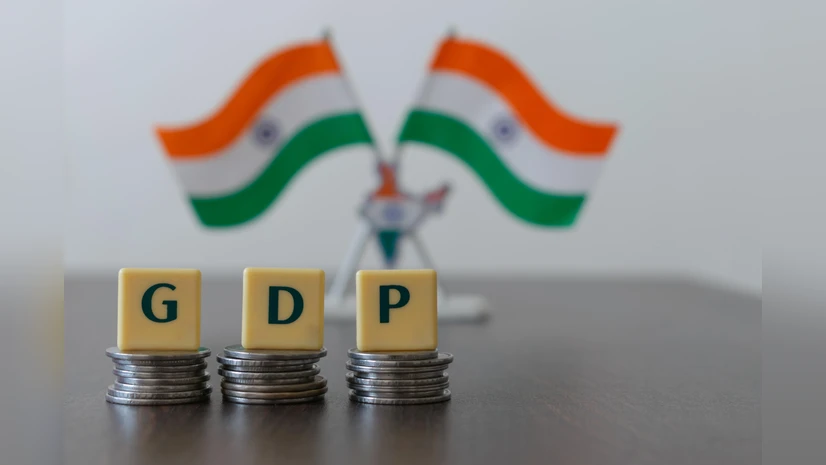
Short-term boost in India’s GDP growth could translate into stronger consumption demand in smaller cities — especially Tier-2 and Tier-3 — as rural incomes, retail demand and disposable income rise.
What a 7 %+ GDP Lift Means for Demand Growth
If India sustains a GDP growth of around 7 % in FY26 (as many economists expect), the immediate implication is more income circulating in the economy. With government capex and rural recovery contributing significantly, rural and semi-urban households—largely concentrated in non-metro areas—stand to benefit. Increased farm incomes, lower inflation and rising wages in rural hinterlands boost the purchasing power of millions of households. That ripple effect often translates into higher spending on daily essentials, household goods, transport and discretionary items.
This translates into a stronger demand base beyond metros. For fast-moving consumer goods (FMCG), retail, two-wheelers, small-ticket consumer durables, and even affordable luxury goods, Tier-2 and Tier-3 markets get a push. These markets tend to respond quickly to even modest upticks in disposable incomes, making them more sensitive to overall GDP momentum than big cities where saturation and higher costs dampen incremental demand.
Why Rural and Semi-Urban Demand Matters More Than Ever
Recent data shows that rural India remains the backbone of FMCG volume growth — often outpacing urban growth over consecutive quarters. Rising farm income (due to good monsoon and crop cycles), improved wage rates, and gradual inflation control all contribute to stronger rural consumption. As a result, companies targeting hinterland markets are reporting improved off-take, especially in value-segment products where affordability and utility drive purchases.
For retail chains, local manufacturers, regional distributors and SMEs, this shift changes the demand geography: no longer are metros the only growth engines. Smaller cities become hotspots for product launches, distribution expansion, and marketing campaigns tailored to value-conscious but aspirational consumers.
Impact on Local Businesses, MSMEs and Regional Retail
A rising consumption wave in non-metro hubs could benefit local businesses and small manufacturers. For MSMEs, increased demand for durable goods, consumer staples, building materials, and services in Tier-2/Tier-3 areas means an opportunity to scale volume without competing directly with big-ticket, metro-oriented players.
Retailers — especially those focusing on affordable housing, home-improvement, local manufacturing, small vehicles, two-wheelers — might see pick-up. Similarly, financial institutions offering loans for consumer durables, home improvement, and small businesses may find renewed demand as non-metro consumers gain confidence.
Caveats: Urban Demand & Investment Activity Still Mixed
That said, the boost is unlikely to be uniform. Urban demand remains patchy and sensitive to external factors. Private investment remains subdued — which could dampen growth of higher-ticket goods and services that rely on business or urban consumption cycles.
Also, structural constraints in smaller cities — such as limited retail infrastructure, weaker logistics, lower per-capita income compared with metros — mean that incremental demand may skew toward essentials and value-segment goods rather than premium offerings.
What It Means for Brands and Marketers
For brands, this economic environment calls for a recalibration of sales and marketing strategy. Instead of focusing disproportionately on metros, they need to build/expand distribution networks across smaller cities, tailor price points to value-sensitive buyers, and localize product mix and messaging.
Digital-first businesses (e-commerce, fintech, consumer-durables) should also increasingly consider Tier-2 and Tier-3 markets — as internet penetration climbs and rural-to-urban digital adoption narrows.
Takeaways:
- A 7 %+ GDP growth could significantly uplift consumption demand in Tier-2 and Tier-3 cities through rural income gains and rising disposable incomes.
- FMCG, affordable durables, two-wheelers, retail and small-value products are likely to see the earliest demand boost.
- SMEs, regional retailers and local manufacturers may reap benefits by targeting non-metro markets.
- Urban demand softness and structural limits in smaller cities may constrain growth mostly to value-segment goods, not luxury or premium products.
FAQ
Q: Does higher GDP growth always lead to more consumption in smaller cities?
A: Not always, but when growth is driven by rural income, government spending and agricultural recovery, the bottom and middle-income segments — prevalent in Tier-2/Tier-3 areas — tend to benefit directly.
Q: Will premium brands also benefit from this demand shift?
A: Premium brands might see limited gains initially; value-segment and mid-segment products are more likely to grab demand early as disposable incomes rise.
Q: Could inflation offset the boost in consumption demand?
A: If inflation spikes, it could erode real income gains. But current low inflation and stable food prices make a demand uptick more likely in the near term.
Q: How soon will smaller-city demand reflect GDP growth?
A: The effect can be visible within a quarter or two — through festive-season buying, rural income cycles, and timely supply-chain expansion by retailers.











Leave a comment