

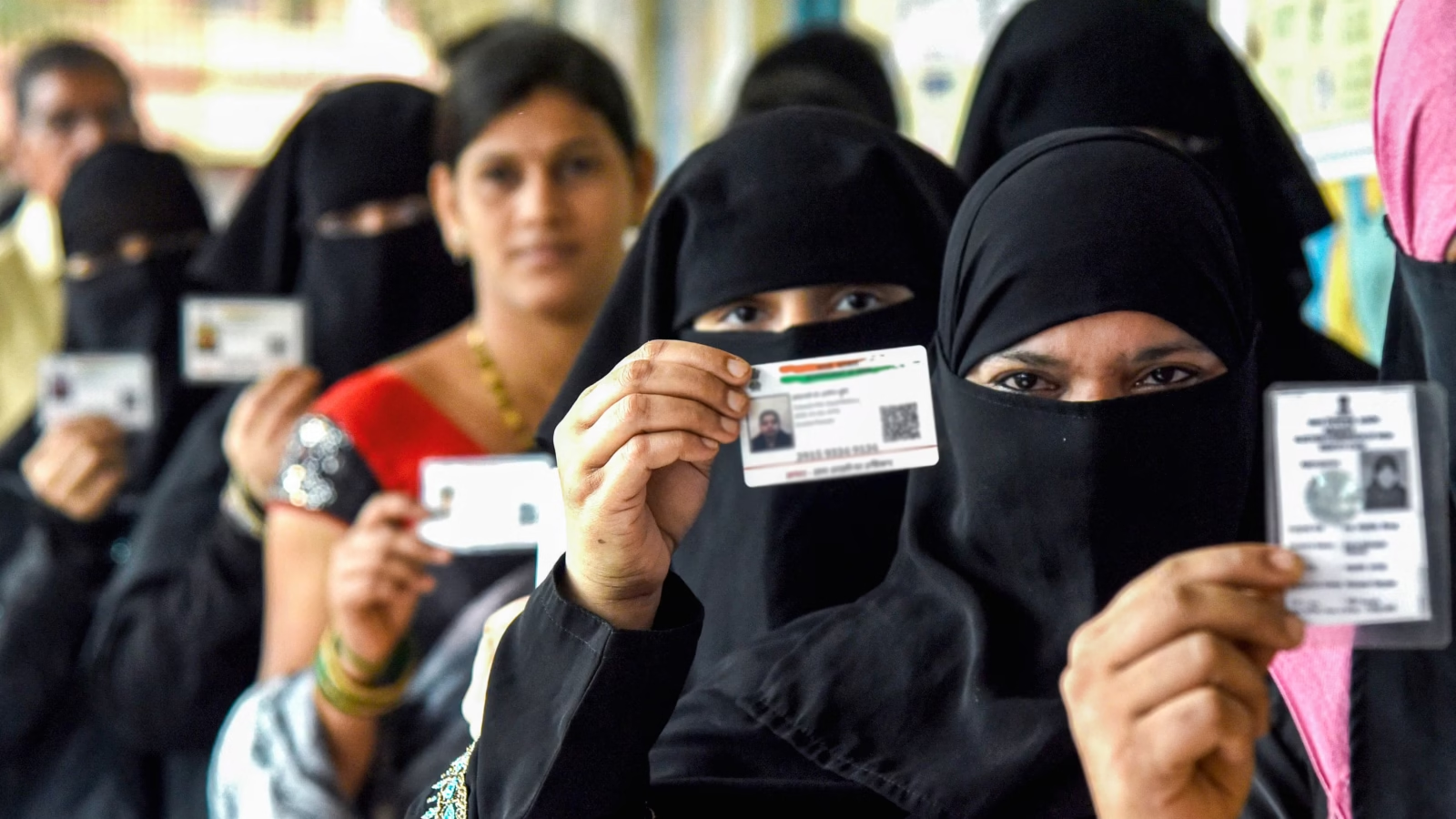
The economic fallout of Maharashtra local body election results is beginning to surface as mid-size enterprises assess policy continuity, local governance stability, and near-term spending priorities. The outcome is influencing business sentiment across manufacturing, services, and infrastructure-linked sectors in urban and semi-urban regions.
The economic fallout of Maharashtra local body election results is a time-sensitive development with direct implications for mid-size enterprises operating across the state. Municipal leadership changes affect decisions on local taxation, infrastructure execution, licensing efficiency, and vendor payments. For businesses with annual turnovers between small enterprise and large corporate thresholds, these local governance shifts can materially influence cash flows and expansion plans.
Why local body elections matter for business confidence
Local bodies play a critical role in urban administration, controlling approvals related to construction, trade licenses, utilities, and civic infrastructure. When election outcomes lead to changes in municipal leadership, businesses often face a temporary pause in decision-making as new administrations take charge.
Mid-size enterprises are particularly exposed during this transition period. Unlike large corporations, they lack the balance sheet strength to absorb prolonged delays. Unlike micro businesses, they are more dependent on predictable municipal services such as power connections, water supply, road access, and waste management. The election results therefore translate into short-term uncertainty rather than immediate disruption.
Policy continuity versus administrative reset
One key concern for businesses is whether the new local leadership will maintain policy continuity or initiate an administrative reset. In regions where the ruling alignment has changed, enterprises are watching for revisions in development priorities, contract reviews, and vendor empanelment processes.
Infrastructure-linked businesses such as construction contractors, logistics firms, and industrial suppliers are especially sensitive to this shift. Payments linked to municipal projects can slow down during transition phases, affecting working capital cycles. Service sector enterprises, including healthcare operators and education institutions, also depend on timely local approvals for capacity expansion.
Impact on manufacturing clusters and industrial estates
Maharashtra hosts several manufacturing clusters that rely on coordination between state agencies and local bodies. Election outcomes influence how effectively industrial estates receive civic support, including road maintenance, drainage, and compliance clearances.
Mid-size manufacturers operating in auto components, engineering goods, and food processing segments report heightened caution following election results. Expansion plans are often deferred until clarity emerges on administrative responsiveness. For export-oriented units, any delay in infrastructure support can affect delivery timelines and customer confidence.
Urban spending and consumer demand outlook
Local body election outcomes also shape urban spending patterns. Municipal priorities determine spending on roads, public transport, sanitation, and local employment programs. When new administrations take charge, budget reallocations can temporarily slow execution.
For mid-size enterprises catering to urban consumers, this has a ripple effect. Slower civic spending can dampen demand in allied sectors such as building materials, retail, and local services. Conversely, once spending resumes, businesses aligned with infrastructure and public works often see a pickup in orders.
Real estate and construction sector response
The real estate sector is closely tied to municipal approvals and land-use decisions. Mid-size developers and contractors are among the most affected by local political changes. Delays in plan approvals, occupancy certificates, and utility connections can stall project cash flows.
Following the Maharashtra local body election results, developers are adopting a wait-and-watch approach. New project launches are being timed cautiously, while ongoing projects focus on compliance and cost control. Ancillary businesses such as cement suppliers, electrical contractors, and interior service providers also feel the impact.
How enterprises are adjusting strategies
In response to the evolving local governance landscape, mid-size enterprises are prioritising risk management. Many are strengthening compliance documentation, diversifying supplier bases, and maintaining higher liquidity buffers. Engagement with industry associations has increased as businesses seek collective representation on municipal issues.
Some enterprises are also recalibrating geographic exposure, slowing investments in high-uncertainty regions while accelerating activity in areas with stable local administrations. This adaptive approach reflects the growing importance of political and administrative risk in business planning.
Outlook for the next two quarters
The near-term economic fallout of Maharashtra local body election results is likely to be transitional rather than structural. As new municipal administrations settle in, clarity on development priorities and approval timelines should improve. The speed of this stabilisation will determine how quickly business confidence recovers.
For mid-size enterprises, the next two quarters will be critical. Those able to navigate short-term uncertainty while maintaining operational discipline are better positioned to benefit once local spending and approvals normalise.
Takeaways
Local body election outcomes influence approvals, payments, and infrastructure delivery
Mid-size enterprises face short-term uncertainty rather than long-term disruption
Manufacturing, construction, and services are the most affected sectors
Business confidence will depend on how quickly new administrations stabilise operations
FAQs
Why do local body elections affect mid-size enterprises more?
Mid-size enterprises rely heavily on predictable municipal services and approvals but lack the financial buffers of large corporations to absorb prolonged delays.
Which sectors are most impacted by the election results?
Construction, manufacturing clusters, logistics, real estate, and urban services see the most immediate impact.
Is this impact temporary or long-term?
The impact is largely temporary and linked to administrative transitions. Long-term effects depend on policy continuity and execution speed.
How should businesses prepare during this period?
Enterprises should focus on compliance readiness, liquidity management, and active engagement with local authorities and industry bodies.












Leave a comment