

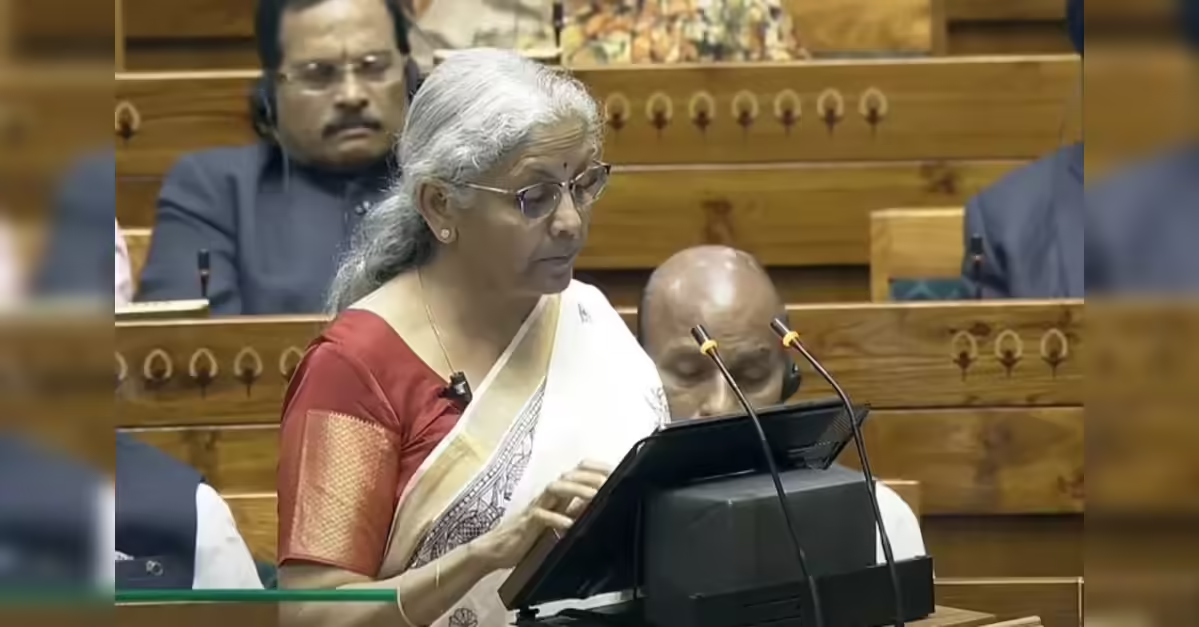
Budget 2026 cues point toward targeted support for MSMEs, gig workers, and local entrepreneurs as the government balances fiscal discipline with employment generation and grassroots growth. Early signals suggest policy continuity with sharper execution around credit access, social security, and ease of doing business.
Budget 2026 cues are time sensitive and policy driven, requiring a news reporting tone grounded in current economic direction. As the Union Budget approaches, expectations from MSMEs, gig workers, and local entrepreneurs are shaping pre-budget discourse. These segments collectively account for a significant share of employment and economic activity, making them central to growth stability in a mixed global environment.
MSME Priorities Likely to Dominate Budget 2026 Agenda
MSMEs remain the backbone of India’s non-farm employment and regional economies. Budget 2026 cues indicate continued focus on improving credit flow, reducing compliance friction, and strengthening formalisation. Over the past few years, schemes linked to collateral-free lending and digital onboarding have expanded reach, but challenges remain around working capital cycles and delayed payments.
In the upcoming budget, MSMEs are expected to seek enhanced credit guarantee coverage, faster settlement mechanisms for government dues, and rationalisation of compliance requirements across GST, labour codes, and income tax filings. There is also growing demand for sector-specific incentives for manufacturing clusters, export-oriented units, and rural enterprises.
Policy signals suggest the government may prefer targeted interventions rather than broad subsidies, aligning MSME support with productivity, technology adoption, and job creation.
Gig Workers and the Push for Social Security Frameworks
Gig workers have emerged as a visible segment in India’s labour market, driven by platform-based services, logistics, and digital marketplaces. Budget 2026 cues indicate that social security coverage for gig and platform workers will remain a key policy focus.
Existing frameworks recognise gig workers, but implementation gaps persist in areas such as health insurance, accident cover, and retirement benefits. The upcoming budget is expected to prioritise operationalising social security schemes through digital registries and employer-platform contributions.
Another area under discussion is income stability for gig workers. While flexibility remains a defining feature, policy conversations are shifting toward minimum earnings safeguards, skill upgradation, and grievance redress mechanisms. These measures are critical as gig work expands beyond metros into smaller cities and towns.
Local Entrepreneurs and Grassroots Business Growth
Local entrepreneurs, particularly in Tier-2 and Tier-3 cities, are increasingly shaping domestic consumption and employment. Budget 2026 cues suggest that the government may strengthen support for small traders, first-generation entrepreneurs, and self-employed professionals.
Simplified tax compliance, access to affordable credit, and digital enablement remain top priorities. Many local businesses struggle with scale due to limited access to formal finance and market linkages. Policy measures aimed at strengthening digital payments infrastructure, e-commerce onboarding, and regional supply chains could address these gaps.
There is also an expectation of renewed focus on skilling and entrepreneurship programs aligned with local economic strengths such as food processing, textiles, tourism, and repair services.
Credit Access and Formalisation as Common Themes
Across MSMEs, gig workers, and local entrepreneurs, credit access emerges as a unifying theme. Budget 2026 cues suggest a calibrated expansion of formal credit channels rather than aggressive fiscal spending.
The emphasis is likely to be on leveraging data from GST, digital payments, and platform activity to improve creditworthiness assessment. This approach reduces reliance on collateral and encourages responsible borrowing.
Formalisation also remains a priority. Incentives for businesses to transition into the formal economy could include tax benefits, simplified reporting, and access to government procurement. These measures help expand the tax base while improving worker protection and productivity.
Employment Generation and Fiscal Balance Considerations
While expectations are high, Budget 2026 will operate within fiscal constraints. The government is expected to balance social spending with capital expenditure and deficit targets. This means policy support may come through structural reforms rather than large direct outlays.
Employment generation remains a central objective. MSMEs and local enterprises are labour intensive, making them efficient vehicles for job creation. Gig platforms further absorb workforce segments that may not fit traditional employment models.
By aligning incentives with employment outcomes, the budget can support inclusive growth without significantly straining public finances.
What Market Participants and Businesses Should Watch
For businesses and entrepreneurs, Budget 2026 cues underline the importance of compliance readiness and digital integration. Those aligned with formal systems are more likely to benefit from policy support.
Market participants should watch for announcements related to credit guarantees, tax thresholds, and social security funding mechanisms. These signals will influence sentiment across small business lending, platform companies, and consumption-driven sectors.
The budget’s success will ultimately depend on execution. Clear guidelines, timely rollout, and coordination between central and state agencies will determine whether policy intent translates into on-ground impact.
Takeaways
- Budget 2026 is expected to prioritise MSME credit access and compliance simplification
- Gig worker social security frameworks are likely to move from intent to execution
- Local entrepreneurs may benefit from targeted digital and credit support
- Employment generation remains the core objective within fiscal limits
FAQs
Why are MSMEs central to Budget 2026 expectations?
MSMEs contribute significantly to employment and regional economic activity, making them critical for inclusive growth and stability.
What support can gig workers expect from Budget 2026?
The focus is likely on implementing social security schemes, improving income stability, and expanding skill development initiatives.
How does the budget impact local entrepreneurs in smaller cities?
Policy measures around credit access, digital enablement, and simplified compliance can help local businesses scale sustainably.
Will Budget 2026 involve large subsidies for these groups?
The approach is expected to be targeted and reform-driven rather than subsidy-heavy, balancing support with fiscal discipline.












Leave a comment