

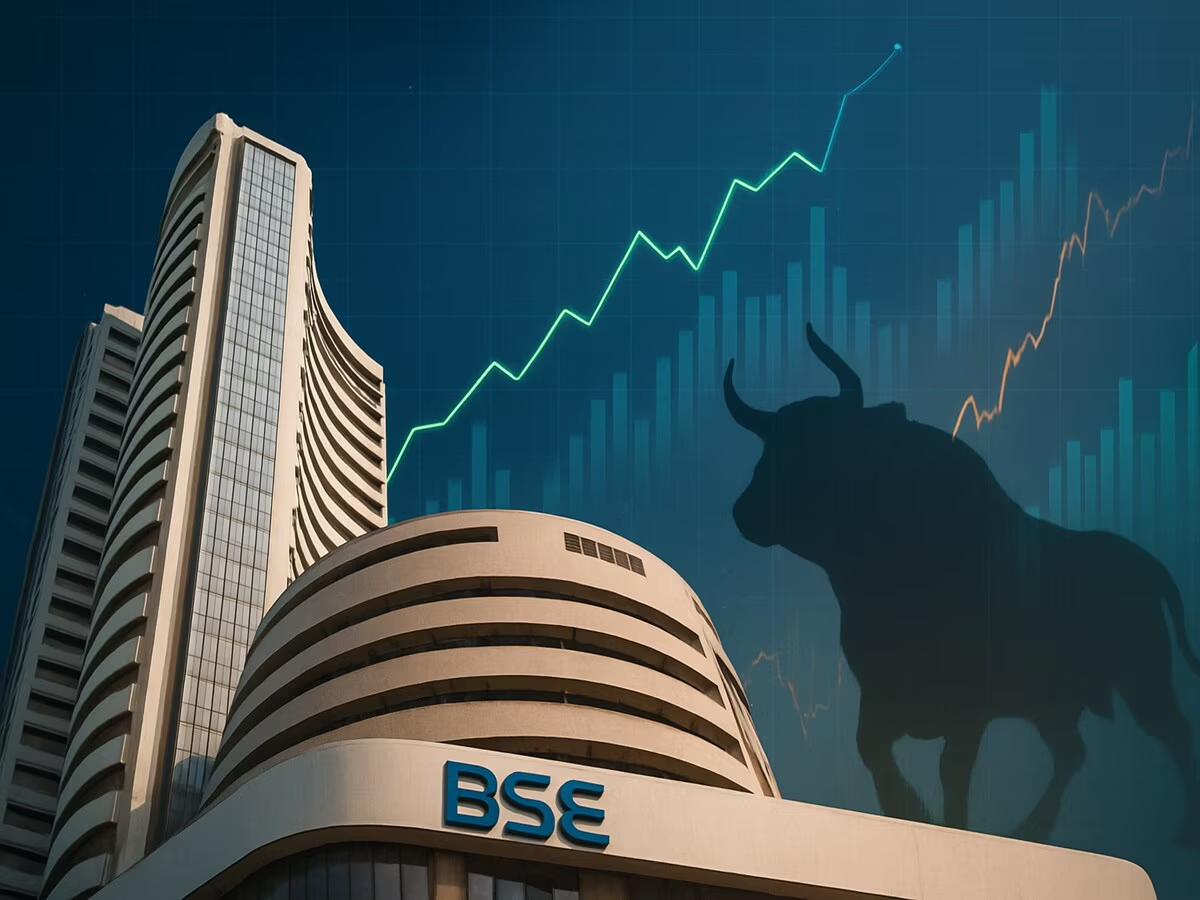
The Sensex and local equity markets will remain key wealth-building avenues for new investors in 2026, especially across Tier 2 cities where participation is rising fast. This primer explains how first-time investors can enter markets practically, manage risk, and build long-term portfolios without speculation.
Equity investing is no longer limited to metro cities or finance professionals. Digital platforms, lower entry barriers, and growing financial awareness have brought the Sensex and broader stock markets within reach of investors in Tier 2 and Tier 3 regions. As 2026 approaches, understanding how markets work and how to start investing sensibly has become essential for first-time participants.
Understanding the Sensex and Its Role for Beginners
The Sensex represents 30 large, well-established companies listed on Indian stock exchanges. For new investors, it acts as a benchmark that reflects the overall health of the economy and corporate sector. Movements in the Sensex are influenced by earnings growth, interest rates, global trends, and domestic policy signals.
For beginners, the Sensex should be viewed as a reference point rather than a trading tool. Long-term wealth creation comes from staying invested through market cycles instead of reacting to daily index fluctuations. New investors should focus on understanding how index movements relate to broader economic conditions rather than chasing short-term gains.
Choosing the Right Entry Route into Equity Markets
First-time investors often struggle with the question of where to begin. Direct stock investing offers ownership in individual companies but requires time, research, and discipline. Mutual funds and index funds provide diversification and professional management, making them suitable for beginners with limited market experience.
Systematic investment plans allow investors to invest fixed amounts regularly, reducing the impact of market volatility. This approach is particularly effective for salaried individuals and small business owners in Tier 2 cities who prefer predictable cash outflows. Exchange traded funds tracking the Sensex or broader indices offer low-cost exposure to the market without stock selection risk.
Risk Management for New Investors in Local Markets
Managing risk is more important than chasing high returns, especially during the early years of investing. New investors should avoid concentrating their entire savings in equities. A balanced allocation across equity, fixed income, and emergency savings helps protect against unexpected market downturns.
Diversification within equities is equally important. Investing across sectors such as banking, consumer goods, infrastructure, and technology reduces dependence on a single industry. Investors should also avoid overtrading based on market tips or social media trends, which often lead to losses rather than consistent returns.
How Tier 2 Investors Can Build Long-Term Discipline
Investors in smaller cities often benefit from a long-term mindset, as they are less exposed to speculative trading culture. Building discipline involves setting clear financial goals such as education, home purchase, or retirement and aligning investments accordingly.
Regular reviews, rather than daily monitoring, help investors stay focused. Rebalancing portfolios once or twice a year ensures that asset allocation remains aligned with risk tolerance. Staying invested during market corrections has historically rewarded disciplined investors, while frequent entry and exit increases costs and emotional stress.
What to Expect from Markets Heading into 2026
Market volatility is a natural feature of equity investing and is likely to continue in 2026 due to global economic shifts, interest rate changes, and domestic policy developments. However, India’s long-term growth drivers such as consumption, infrastructure spending, and digital adoption remain intact.
For new investors, the key is to separate short-term noise from long-term opportunity. Equity markets reward patience, consistency, and informed decision-making. Investors who start early, invest regularly, and avoid emotional reactions are better positioned to benefit from compounding over time.
Takeaways
The Sensex serves as a benchmark, not a short-term trading tool
Mutual funds and index funds are ideal entry points for beginners
Risk management and diversification matter more than quick returns
Long-term discipline helps Tier 2 investors build sustainable wealth
FAQs
Is it safe for first-time investors to enter the market in 2026?
Markets always carry risk, but long-term investing with proper diversification and discipline reduces the impact of volatility.
Should new investors focus on Sensex stocks only?
Sensex stocks offer stability, but investors can also diversify through broader index funds and sector funds over time.
How much money is needed to start investing?
Many platforms allow investments to start with small amounts through systematic plans, making equity accessible even with limited capital.
How often should beginners track market movements?
Beginners should avoid daily tracking and instead review portfolios periodically, focusing on long-term goals rather than short-term price changes.












Leave a comment