

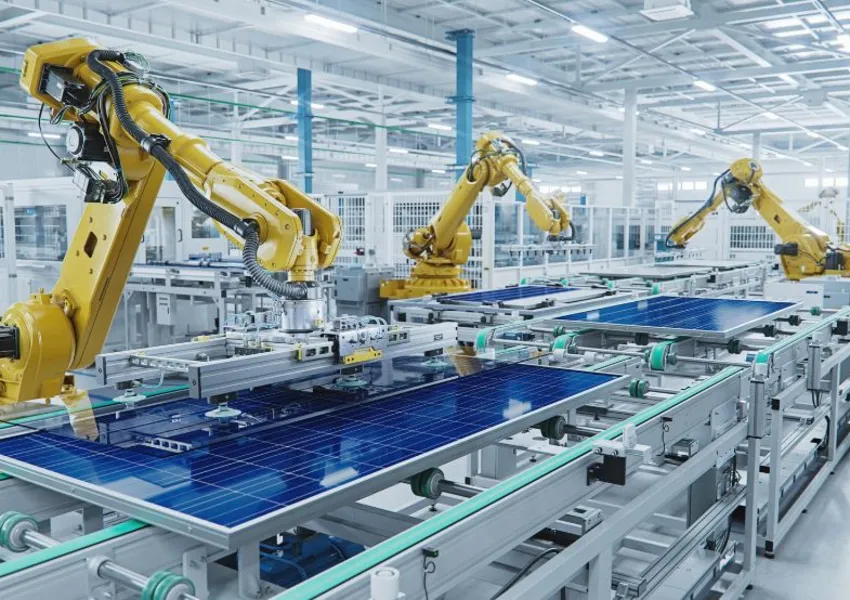
India’s manufacturing push highlighted at ET Now Global Business Summit 2026 signals a structural shift in how growth may spread beyond metro cities. The focus on industrial expansion, infrastructure and supply chain resilience could significantly reshape regional economies across Tier 2 and Tier 3 India.
India’s manufacturing strategy took center stage at the ET Now Global Business Summit 2026, with policymakers and industry leaders aligning around one core objective: accelerate domestic production to power long term economic growth. The emphasis was clear. Manufacturing is no longer just a sectoral priority. It is being positioned as a multiplier for jobs, exports, and regional development.
India currently aims to raise manufacturing’s share of GDP toward the 25 percent target under Make in India. Production Linked Incentive schemes across electronics, auto components, pharmaceuticals, textiles and renewable energy are already driving capacity creation. What makes the 2026 summit important is the sharper articulation of regional manufacturing clusters rather than metro concentrated growth.
Manufacturing as a Regional Growth Engine
The renewed focus on manufacturing is directly tied to regional economic expansion. Industrial corridors such as the Delhi Mumbai Industrial Corridor, Chennai Bengaluru Industrial Corridor and Amritsar Kolkata Industrial Corridor are designed to stimulate economic activity across multiple states. These projects combine logistics hubs, smart cities and industrial townships to reduce cost disadvantages faced by manufacturers outside major metros.
Tier 2 and Tier 3 cities stand to benefit the most. Cities like Coimbatore, Indore, Rajkot, Aurangabad and Lucknow already have sector specific strengths in textiles, auto components, engineering goods and food processing. With better connectivity through dedicated freight corridors and expressways, these cities can integrate into global supply chains more efficiently.
Supply Chain Diversification and Export Growth
Global supply chain realignment has created an opportunity for India to attract manufacturing investment. Companies seeking alternatives to single country sourcing are increasingly evaluating India for electronics, specialty chemicals and defense production. The summit discussions reinforced India’s ambition to position itself as a trusted manufacturing partner.
Export linked manufacturing has direct implications for regional economies. When a plant is set up in a semi urban district, it creates direct factory jobs, indirect logistics demand, MSME vendor opportunities and local service sector growth. For example, mobile phone manufacturing clusters in states such as Uttar Pradesh and Tamil Nadu have triggered ancillary industries including packaging, tooling and transport services.
The result is a multiplier effect. A large manufacturing unit typically generates two to three times indirect employment compared to direct jobs. This employment intensity matters for states with high youth populations.
MSMEs and Local Industrial Ecosystems
Another strong theme emerging from the manufacturing push is MSME integration. India has over 63 million micro, small and medium enterprises, many located outside major urban centers. Large scale manufacturing expansion without MSME linkage would limit regional benefits. The policy direction discussed at the summit highlighted cluster development and vendor ecosystem strengthening.
Industrial parks tailored for specific sectors can significantly improve productivity. Textile parks in Gujarat and Tamil Nadu, toy manufacturing clusters in Karnataka and defense corridors in Uttar Pradesh and Tamil Nadu illustrate how specialization can raise competitiveness. When MSMEs become suppliers to anchor manufacturers, they gain access to technology, formal financing and export markets.
For regional economies, this formalization is transformative. It improves credit access, raises wage quality and boosts tax collections at the state level.
Infrastructure, Logistics and Cost Efficiency
Manufacturing growth is inseparable from infrastructure. Over the past few years, India has expanded its highway network, modernized ports and accelerated railway electrification. The logistics cost as a percentage of GDP has historically been high compared to global benchmarks. Reducing this cost is central to making regional manufacturing viable.
Multi modal logistics parks, inland container depots and improved port connectivity lower transportation time for inland producers. For a manufacturer operating from a Tier 3 district, reduced transit delays can determine competitiveness in export markets.
Power reliability and digital infrastructure also play a critical role. Stable electricity supply and high speed internet allow even smaller towns to support advanced manufacturing operations, including precision engineering and electronics assembly.
Social Impact and Workforce Transformation
Manufacturing expansion has strong socio economic implications. Unlike services, manufacturing can absorb semi skilled labor at scale. This is particularly relevant for states where agriculture still employs a large share of the workforce but contributes a smaller portion of GDP.
Skill development initiatives aligned with industrial clusters can reduce migration pressure toward metros. When jobs are created closer to home, regional consumption rises. This stimulates housing, retail and local entrepreneurship.
Women’s workforce participation can also improve in organized manufacturing settings such as electronics assembly and textiles, where structured employment opportunities are expanding in smaller cities.
Long Term Structural Shift
The manufacturing emphasis at the 2026 summit signals a shift from consumption led growth toward production led resilience. If executed consistently, this strategy can rebalance India’s economic geography. Instead of growth being concentrated in a few metropolitan regions, industrial corridors and cluster based development can create multiple growth nodes across states.
The success of this strategy depends on policy stability, faster approvals, land availability and continued investment in logistics. But the direction is clear. Manufacturing is being positioned as the backbone of India’s next growth cycle, with regional economies at the center of the transformation.
Takeaways
• Manufacturing expansion can decentralize economic growth beyond metros
• Industrial corridors and logistics upgrades are key to regional competitiveness
• MSME integration will determine how inclusive the growth becomes
• Production linked policies can drive exports and local job creation
FAQs
Q1. Why is manufacturing important for regional economies in India?
Manufacturing creates direct and indirect employment, stimulates MSME activity and increases local income levels, which drives consumption and infrastructure development.
Q2. Which regions are likely to benefit the most?
Tier 2 and Tier 3 cities located near industrial corridors or sector specific clusters such as electronics, textiles and auto components are positioned to gain significantly.
Q3. How do industrial corridors help manufacturers?
They provide integrated infrastructure including roads, logistics hubs and utilities, reducing transportation time and operational costs.
Q4. Can manufacturing reduce migration to metro cities?
Yes. When quality jobs are created in smaller cities, local employment opportunities improve and dependence on migration for livelihood can decline.










Leave a comment